
What industries are medium and heavy S700MC steel for cranes structure cutting used in
Explore the industrial applications and technical advantages of S700MC high-strength steel for crane structures, including mechanical properties, cutting, and welding.
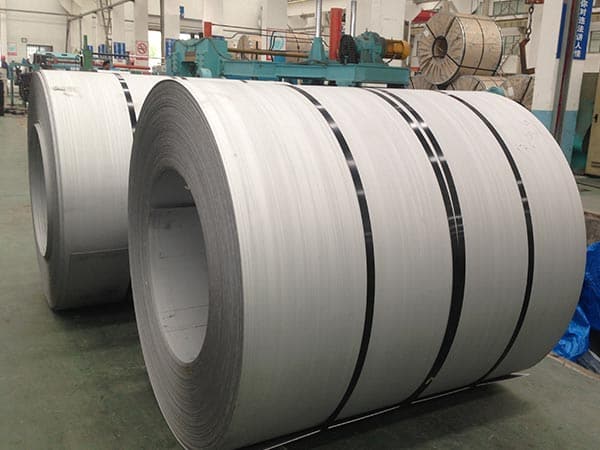
The Evolution of S700MC in High-Performance Structural Engineering
Modern engineering demands materials that combine extreme strength with reduced weight, a requirement that has led to the widespread adoption of S700MC. As a thermomechanically rolled (TMCP) high-strength cold-forming steel, S700MC follows the EN 10149-2 standard. This material is not merely a steel plate; it is a sophisticated metallurgical solution designed to push the boundaries of load-bearing capacity and structural efficiency. The "S" denotes structural steel, "700" represents its minimum yield strength of 700 MPa, and "MC" indicates its thermomechanically rolled condition with excellent cold-forming properties. The shift from traditional S355 grades to S700MC has revolutionized how heavy machinery is designed, allowing for thinner sections that do not compromise on safety or durability.
Metallurgical Excellence: The Secret Behind the Strength
The superior performance of S700MC stems from its unique production process. Unlike traditional normalized steels, S700MC undergoes thermomechanical rolling, where the temperature and deformation are strictly controlled during the rolling process. This creates a fine-grained microstructure that is virtually impossible to achieve through conventional heat treatment. The addition of micro-alloying elements such as Niobium (Nb), Vanadium (V), and Titanium (Ti) facilitates grain refinement and precipitation hardening. These elements ensure that the steel maintains high toughness even at low temperatures, which is critical for equipment operating in harsh climates. By keeping the carbon content low (typically below 0.12%), the steel achieves exceptional weldability and ductility, making it an ideal candidate for complex structural cutting and forming.
Precision Cutting and Processing of Medium and Heavy S700MC Plates
When dealing with medium and heavy S700MC plates, the choice of cutting technology is paramount to maintaining the integrity of the material. Because S700MC relies on its TMCP microstructure, excessive heat input during cutting can lead to a localized softening of the edges. Laser cutting is often the preferred method for thicknesses up to 20mm-25mm due to its narrow heat-affected zone (HAZ) and high precision. For heavier plates used in crane booms, high-definition plasma cutting offers a balance between speed and edge quality. It is essential to manage the cooling rates to prevent the formation of brittle phases at the cut edge. For the thickest sections, waterjet cutting is sometimes employed to completely eliminate thermal influence, though it is less common in high-volume industrial crane production due to cost constraints.
| Property | S700MC Value (Typical) | Comparison to S355 |
|---|---|---|
| Yield Strength (MPa) | Min. 700 | Approx. 100% Higher |
| Tensile Strength (MPa) | 750 - 950 | Significantly Higher | Elongation (%) | Min. 12 (at t < 3mm) | Lower but sufficient for forming |
| Carbon Equivalent (CEV) | ~0.30 - 0.38 | Excellent Weldability |
Mobile and All-Terrain Crane Manufacturing
The mobile crane industry is perhaps the largest consumer of S700MC structural cutting components. The primary challenge for mobile cranes is the weight-to-capacity ratio. Every kilogram saved in the boom structure translates directly into a higher lifting capacity or a longer reach. S700MC is used extensively in the fabrication of telescopic boom sections, where the steel must withstand immense compressive and bending stresses. The high yield strength allows designers to use thinner plates for the U-shaped or hexagonal boom shells. These sections are typically laser or plasma cut with high precision and then bent using large-scale CNC press brakes. The consistency of S700MC's mechanical properties ensures that the springback during bending is predictable, which is vital for the smooth telescoping action of the crane sections.
Concrete Pump Trucks and Firefighting Ladders
Equipment that requires long, cantilevered reach, such as concrete pump truck booms and aerial fire ladders, relies heavily on S700MC. In these applications, the material must handle not only static loads but also dynamic oscillations and fatigue. The high fatigue strength of S700MC, combined with its weight-saving potential, allows for the construction of booms that can reach heights of over 60 meters while remaining mounted on a standard truck chassis. The cutting of these components involves intricate geometries to accommodate hydraulic lines and pivot points. Using S700MC ensures that these critical connection points do not suffer from premature wear or structural deformation under the high-pressure cycles of concrete delivery.
Heavy Transportation and Trailer Chassis
The logistics and heavy haulage sector utilizes S700MC for the main longitudinal beams of semi-trailers and low-loaders. By replacing standard S355 steel with S700MC, manufacturers can reduce the weight of the trailer frame by up to 30%. This reduction in tare weight allows for a higher payload, increasing the economic efficiency of the vehicle and reducing fuel consumption. The processing of these frames involves long-form cutting and specialized welding. Because S700MC has a low carbon equivalent, it can be welded using standard MIG/MAG processes without the need for extensive preheating, provided that the heat input is carefully monitored to protect the TMCP-enhanced properties of the base metal.
Forestry, Mining, and Agricultural Machinery
In the forestry and mining sectors, equipment is subjected to some of the most punishing environments on earth. Forwarders, harvesters, and mining support structures require materials that can resist impact and abrasion while maintaining structural integrity. S700MC is used for the chassis and articulated joints of these machines. Its ability to remain ductile at sub-zero temperatures makes it particularly valuable for forestry operations in northern climates. The structural cutting for these machines often involves complex interlocking parts that must be welded into rigid boxes. S700MC's resistance to cold cracking during welding is a major advantage here, ensuring that the equipment can withstand the constant vibration and shock loads typical of off-road heavy-duty work.
Optimizing Welding and Fabrication for S700MC
Successful fabrication with S700MC requires an understanding of its thermal limits. While the steel is highly weldable, the high-strength properties are a result of the TMCP process, meaning that if the steel is held at high temperatures for too long, the grain size can increase, leading to a loss of strength in the heat-affected zone. Welders should use low-heat input techniques and ensure that the interpass temperature remains below 200°C. Matching or slightly under-matching filler metals are often recommended depending on the specific stress state of the joint. When cutting S700MC for crane structures, removing the oxide scale from the cut edges before welding is a critical step to ensure high-quality, X-ray-clear welds that meet the stringent safety standards of the lifting industry.
Environmental Impact and Sustainability in Steel Choice
Choosing S700MC is also a step toward more sustainable engineering. The primary environmental benefit comes from material reduction. By using a steel that is twice as strong as conventional grades, engineers can use half the volume of material for certain components. This leads to a decrease in the total energy required for steel production, lower transportation costs, and reduced CO2 emissions over the lifecycle of the crane or vehicle. Furthermore, the lightweight structures made from S700MC contribute to better fuel economy for the mobile units they are part of. As global regulations on carbon footprints become stricter, the transition to high-strength steels like S700MC is no longer just a technical choice but an environmental necessity.
Future Trends in High-Strength Steel Applications
The demand for even higher strength grades, such as S900MC and S960MC, is growing, but S700MC remains the "sweet spot" for many industries due to its balance of cost, availability, and ease of processing. We are seeing increased use of S700MC in the renewable energy sector, specifically for the structural components of wind turbine installation cranes and offshore lifting frames. The ability to cut and form this steel into complex, high-load-bearing shapes ensures it will remain a cornerstone of heavy engineering for decades to come. As cutting technologies like fiber lasers continue to evolve, the efficiency of processing S700MC will only improve, further solidifying its position as the material of choice for the next generation of heavy-duty structural applications.
Leave a message