
What is the S900MC mechanical properties raw material
Explore the comprehensive technical specifications of S900MC high-strength steel, including its chemical composition, mechanical properties, welding capabilities, and industrial applications.
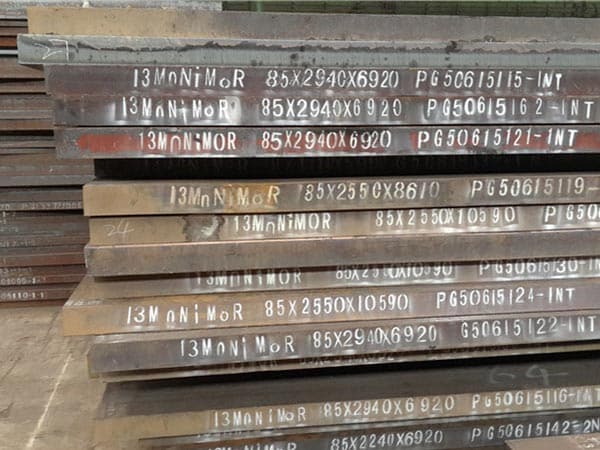
Defining S900MC: The Evolution of High-Strength Low-Alloy Steel
S900MC represents a pinnacle in the engineering of high-strength low-alloy (HSLA) steels, specifically categorized under the EN 10149-2 standard. The nomenclature itself reveals its core identity: 'S' denotes structural steel, '900' signifies a minimum yield strength of 900 MPa, and 'MC' indicates that the material is thermomechanically rolled (M) and possesses high cold-forming (C) properties. Unlike traditional quenched and tempered steels, S900MC achieves its extraordinary strength through a meticulously controlled rolling process combined with micro-alloying techniques.
The drive for lightweight construction in modern engineering has pushed S900MC to the forefront. By utilizing a material with such high yield strength, engineers can significantly reduce plate thickness without compromising structural integrity. This weight reduction translates directly into higher payloads for transport vehicles, lower fuel consumption, and reduced carbon footprints during the lifecycle of the machinery.
The Raw Material Composition and Micro-Alloying Strategy
The performance of S900MC is rooted in its chemical blueprint. The raw material is not merely iron and carbon; it is a sophisticated matrix of alloying elements designed to optimize grain refinement and precipitation hardening. To maintain excellent weldability, the carbon content is kept strictly low, typically below 0.20%.
The 'magic' of S900MC lies in the addition of micro-alloying elements such as Niobium (Nb), Vanadium (V), and Titanium (Ti). These elements form fine carbides and nitrides during the thermomechanical rolling process, which pin grain boundaries and prevent grain growth. This results in an ultra-fine grain structure that provides both high strength and remarkable toughness. Below is a typical chemical composition breakdown for S900MC:
| Element | Maximum Percentage (%) |
|---|---|
| Carbon (C) | 0.20 |
| Manganese (Mn) | 2.20 |
| Silicon (Si) | 0.60 |
| Phosphorus (P) | 0.025 |
| Sulphur (S) | 0.010 |
| Aluminium (Al) | 0.015 |
| Niobium (Nb) | 0.09 |
| Vanadium (V) | 0.20 |
| Titanium (Ti) | 0.25 |
The low Carbon Equivalent (CEV) is a critical factor. It ensures that the steel does not easily form brittle martensite in the heat-affected zone (HAZ) during welding, which is a common failure point in lower-grade high-carbon steels.
Mechanical Properties: Strength, Ductility, and Toughness
The primary reason for selecting S900MC is its mechanical profile. With a minimum yield strength of 900 MPa, it is nearly three times stronger than standard S355 structural steel. This allows for a massive reduction in cross-sectional area for load-bearing components.
However, strength is only half the story. S900MC is designed to be ductile enough for complex cold-forming operations. While the elongation values are lower than those of mild steel, they remain sufficient for bending and folding. The following table outlines the key mechanical requirements according to EN 10149-2:
| Property | Value (Metric) |
|---|---|
| Min. Yield Strength (ReH) | 900 MPa |
| Tensile Strength (Rm) | 930 - 1200 MPa |
| Min. Elongation (A5) | 8% - 10% (depending on thickness) |
| Bending Radius (90°) | Min. 3.0 x Thickness (t) |
Impact toughness is another vital metric. Although EN 10149-2 does not always mandate impact testing for all thicknesses, most high-quality S900MC plates are tested at -20°C or -40°C to ensure they can withstand shock loads in arctic or high-altitude environments without brittle fracture.
Thermomechanical Rolling (TMCP) vs. Traditional Heat Treatment
Understanding the 'M' in S900MC is crucial for fabricators. Thermomechanical Control Process (TMCP) involves specific temperature ranges during the rolling stages and controlled cooling rates. This process creates a microstructure that cannot be replicated by simple reheating.
Important Note: Because S900MC derives its strength from TMCP, it should never be heat-treated above 580°C. High-temperature stress relieving or normalizing will destroy the fine-grained structure, leading to a drastic drop in yield strength. Fabricators must rely on cold-forming and precise welding parameters to maintain the material's integrity.
Processing Performance: Bending and Cutting
Despite its extreme hardness, S900MC is engineered for excellent cold formability. It is widely used in the production of U-beams, C-channels, and complex chassis parts. To achieve a successful bend without cracking, several factors must be considered:
- Bending Radius: Always follow the recommended minimum radius (typically 3t to 4t).
- Die Width: Use a wider V-die to reduce the required force and minimize surface tension.
- Rolling Direction: Bending transverse to the rolling direction is generally safer, though S900MC is designed to handle longitudinal bends better than many other HSLA grades.
- Surface Quality: Ensure the edges are deburred before bending, as small notches can act as stress risers and lead to cracks.
For cutting, S900MC responds well to laser, plasma, and waterjet processes. Laser cutting is particularly effective for thin to medium gauges, providing a narrow heat-affected zone and high precision. When using oxygen-fuel cutting, preheating is usually not required due to the low carbon content, but careful monitoring of the edge hardness is advised.
Advanced Welding Techniques for S900MC
Welding S900MC requires a shift in mindset compared to welding mild steel. The goal is to match the high strength of the base metal while preventing softening in the heat-affected zone (HAZ). Since the strength is derived from TMCP, excessive heat input will cause 'over-aging' of the microstructure.
Recommended Welding Practices:
- Low Heat Input: Use multi-pass welding with low energy input (kJ/mm) to limit the width of the HAZ.
- Consumables: Select high-strength welding wires (e.g., ER110S or ER120S type) that provide matching tensile properties.
- Cooling Time (t8/5): Monitor the cooling time between 800°C and 500°C. If the cooling is too slow, the HAZ softens; if too fast, there is a risk of hydrogen-induced cracking.
- Gas Shielding: Use high-purity Argon/CO2 mixtures to ensure stable arc characteristics and deep penetration.
Industrial Applications and Structural Advantages
The application of S900MC is found wherever high load-bearing capacity and low weight are non-negotiable. The transport industry is the largest consumer, utilizing this steel for truck chassis, trailers, and specialized heavy-haulage equipment. By switching from S355 to S900MC, a manufacturer can often reduce the weight of a frame by 30% to 50%.
In the lifting and mobile crane sector, S900MC is used for telescopic booms and outriggers. The high strength-to-weight ratio allows cranes to reach higher and lift heavier loads while remaining mobile enough for road transport. Other applications include:
- Agricultural Machinery: Large-scale plows and harvesters that require durability without excessive weight.
- Waste Management: Refuse collection vehicle bodies and compactors.
- Mining Equipment: Support structures and conveyor systems where abrasion resistance and strength are needed.
- Forestry: Log loaders and forwarders operating in rugged environments.
Environmental Adaptability and Fatigue Life
S900MC exhibits excellent fatigue resistance, which is critical for components subjected to cyclic loading, such as vehicle axles or crane booms. The fine-grained structure hinders the initiation and propagation of fatigue cracks. Furthermore, its performance in low-temperature environments makes it suitable for global distribution, from tropical heat to Siberian cold.
Corrosion resistance of S900MC is comparable to standard carbon steels. Therefore, appropriate surface treatments such as painting, powder coating, or galvanizing are recommended for outdoor exposure. If galvanizing, the high strength of the steel requires careful attention to the pickling process to avoid hydrogen embrittlement, although the risk is lower than with quenched and tempered steels.
Cost-Efficiency in the Long Run
While the per-ton price of S900MC is higher than that of S355 or S700MC, the total project cost often decreases. The reduction in material volume means less steel to purchase, lower shipping costs, and significantly reduced welding time and consumable usage due to thinner plates. When factoring in the operational savings from increased payloads and fuel efficiency, S900MC emerges as a highly economical choice for modern high-performance engineering.
Leave a message