
S960MC steel for car safety parts with low and intermediate tensile strength
Detailed analysis of S960MC high-strength steel in automotive safety components, focusing on mechanical performance, processing technology, and industry applications.
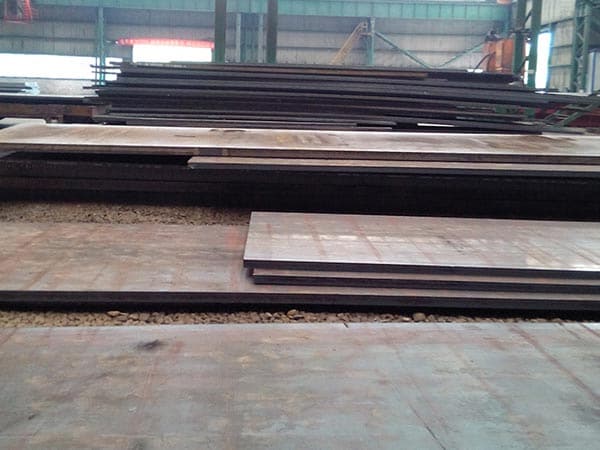
The Evolution of High-Performance S960MC Steel in Automotive Engineering
In the contemporary automotive manufacturing landscape, the pursuit of vehicle safety and weight reduction has driven the development of advanced materials. S960MC steel stands at the forefront of this evolution. Although traditionally categorized under high-strength low-alloy (HSLA) thermomechanically rolled steels, its application in safety parts often replaces systems that previously relied on intermediate tensile strength materials. By offering a yield strength of at least 960 MPa, this material allows engineers to design components that are significantly thinner yet more resilient than those made from conventional grades.
The transition from low and intermediate tensile strength steels to S960MC is not merely a jump in numbers; it represents a fundamental shift in how energy absorption and structural integrity are managed during a collision. Safety parts such as bumper beams, chassis reinforcements, and cross-members require a delicate balance between rigidity and ductility. S960MC provides this balance through a refined microstructure achieved via precise thermomechanical rolling processes.
Chemical Composition and Microstructural Integrity
The superior performance of S960MC is rooted in its chemical architecture. Unlike standard carbon steels, S960MC utilizes micro-alloying elements such as Niobium (Nb), Vanadium (V), and Titanium (Ti). These elements facilitate grain refinement, which is the only mechanism that simultaneously increases strength and toughness. The low carbon content (typically below 0.12%) ensures excellent weldability, a critical factor for automated automotive assembly lines.
| Element | Maximum Content (%) | Function in S960MC |
|---|---|---|
| Carbon (C) | 0.20 | Provides basic strength and hardness. | Manganese (Mn) | 2.20 | Enhances hardenability and solid solution strengthening. | Silicon (Si) | 0.60 | Deoxidizer and improves yield strength. | Niobium (Nb) | 0.09 | Refines grain size and prevents grain growth during welding. | Titanium (Ti) | 0.22 | Forms stable carbides for high-temperature stability. |
This chemical synergy results in a fine-grained ferritic-bainitic or martensitic microstructure. For automotive safety parts, this means the material can withstand extreme stress without brittle failure, a common risk in lower-grade steels when pushed to their limits.
Mechanical Properties: Beyond the Yield Point
While the name S960MC highlights its 960 MPa yield strength, its tensile strength typically ranges between 980 and 1250 MPa. However, for safety components, the elongation and impact toughness are equally vital. Modern S960MC grades offer an elongation (A5) of at least 7%, which is remarkable for a material of such high strength. This ductility allows the steel to undergo significant plastic deformation during an impact, absorbing kinetic energy and protecting the vehicle's occupants.
- Yield Strength (ReH): Min 960 MPa
- Tensile Strength (Rm): 980 - 1250 MPa
- Elongation (A5): Min 7%
- Bending Radius: 3.0t (for 90-degree bends, depending on thickness)
In comparison to intermediate strength steels (like S355 or S500), S960MC allows for a weight reduction of up to 30-40% in specific structural components. This weight saving is crucial for meeting global emission standards and improving the range of electric vehicles (EVs) without compromising safety.
Processing Performance: Cold Forming and Welding
One of the primary reasons S960MC is preferred for car safety parts is its exceptional cold forming capability. Despite its high strength, it can be bent and shaped into complex geometries required for modern car frames. This is achieved through the thermomechanical rolling process (indicated by the 'MC' suffix), which ensures the material remains soft enough for processing while reaching its final strength through work hardening and micro-alloying.
Welding S960MC requires precision but is highly feasible. Due to its low carbon equivalent (CET), it is less prone to cold cracking in the heat-affected zone (HAZ) compared to traditional quenched and tempered steels. However, to maintain the integrity of safety parts, it is recommended to use low heat input welding techniques. Excessive heat can lead to softening of the grain structure, potentially reducing the local strength of the joint.
Environmental Adaptability and Durability
Automotive components are exposed to diverse environmental conditions, from road salts and moisture to extreme temperature fluctuations. S960MC exhibits good atmospheric corrosion resistance, though for safety-critical parts, it is often combined with advanced coating technologies such as zinc-nickel plating or cathodic e-coating. The material's fatigue resistance is also a standout feature; it can endure millions of cyclic loads, making it ideal for chassis components that face constant vibration and stress during the vehicle's lifespan.
Expanding Applications in the Automotive Industry
The use of S960MC is expanding beyond traditional heavy-duty trucks into passenger vehicles. Current applications include:
- Bumper Beams: Providing high energy absorption in frontal and rear collisions.
- Side Impact Beams: Protecting passengers from lateral intrusions.
- Chassis Cross-members: Maintaining structural rigidity while reducing overall vehicle mass.
- Seat Frames: Ensuring seat integrity during high-G deceleration events.
As the industry moves toward autonomous driving and enhanced crashworthiness, the demand for materials that can provide maximum protection with minimum weight will only increase. S960MC bridges the gap between traditional heavy steels and expensive carbon fiber composites, offering a cost-effective, recyclable, and high-performance solution for the next generation of car safety parts.
Optimizing Production with S960MC
Manufacturers looking to integrate S960MC into their production lines must consider the tooling requirements. Because of the high yield strength, the springback effect during bending is more pronounced than with intermediate strength steels. Advanced simulation software and high-tonnage presses are often necessary to achieve the tight tolerances required for automotive assembly. By mastering these processing parameters, manufacturers can produce safety parts that are not only lighter but also significantly safer than those made from traditional materials.
Leave a message