
How to select the qualified S900MC cold forming steel sheet
Discover how to identify and procure high-quality S900MC cold forming steel. This guide covers chemical composition, mechanical properties, and processing standards for high-strength applications.
The Fundamentals of S900MC High-Strength Steel
S900MC is a high-strength, thermomechanically rolled steel specifically designed for cold forming. As defined by the EN 10149-2 standard, this material offers a minimum yield strength of 900 MPa, making it a critical component for industries seeking weight reduction without compromising structural integrity. The 'S' denotes structural steel, '900' indicates the minimum yield strength, and 'MC' signifies the thermomechanical rolling process (TMCP) intended for cold forming applications.
Selecting a qualified S900MC sheet requires a deep understanding of its metallurgical structure. Unlike traditional quenched and tempered steels, S900MC achieves its strength through a combination of precise chemical alloying and controlled cooling during the rolling process. This results in a fine-grained microstructure that provides excellent toughness and weldability despite its high hardness levels.
Chemical Composition: The Foundation of Performance
The performance of S900MC is dictated by its chemistry. A qualified sheet must adhere to strict limits on carbon and alloying elements to ensure that the material remains weldable and ductile. High-quality S900MC typically utilizes micro-alloying elements such as Niobium (Nb), Vanadium (V), and Titanium (Ti) to refine the grain size.
| Element | Maximum Content (%) |
|---|---|
| Carbon (C) | 0.20 |
| Manganese (Mn) | 2.20 |
| Silicon (Si) | 0.60 |
| Phosphorus (P) | 0.025 |
| Sulfur (S) | 0.015 |
| Aluminium (Al) | 0.015 (min) |
When reviewing a Material Test Report (MTR), pay close attention to the Carbon Equivalent (CEV). A lower CEV is essential for preventing cold cracking during welding. Qualified suppliers will provide a CEV value that allows for welding without extensive preheating, which is a major operational advantage for large-scale manufacturing.
Mechanical Property Verification
Mechanical properties are the primary reason engineers specify S900MC. A qualified sheet must meet or exceed the following parameters across the entire length and width of the coil or plate. Variations in strength can lead to springback issues during bending or structural failure under load.
- Yield Strength (ReH): Minimum 900 MPa. This is the stress level at which the steel begins to plastically deform.
- Tensile Strength (Rm): Usually ranges between 930 and 1200 MPa. This represents the ultimate load-bearing capacity.
- Elongation (A5): Typically 7% to 10% depending on the thickness. While high-strength steels are less ductile than mild steel, S900MC must retain enough elongation to survive complex forming processes.
- Impact Toughness: Often tested at -20°C or -40°C. For applications in cold climates, ensure the steel meets the Charpy V-notch energy requirements specified in the purchase order.
Evaluating Cold Forming and Bending Capabilities
The 'MC' designation implies that the steel is optimized for cold forming. However, the high yield strength means that the material has a significant amount of springback. When selecting S900MC, verify the minimum recommended bending radius. For a qualified S900MC sheet, the bending radius is typically calculated based on the thickness (t).
For a 90-degree bend, a common guideline for S900MC is a minimum inner radius of 3.0t to 4.0t for transverse bending. If the material cracks at these radii, it likely suffers from non-metallic inclusions or an improper grain structure. High-quality S900MC undergoes calcium treatment for inclusion shape control, which ensures that the steel is equally capable of being bent in both longitudinal and transverse directions.
Surface Quality and Dimensional Tolerances
Surface defects can act as stress concentrators, leading to premature fatigue failure in high-stress components like crane booms or truck chassis. A qualified S900MC sheet should have a clean, smooth surface free from scales, pits, or deep scratches. Standard EN 10163-2 Class A is often the benchmark for surface quality.
Flatness is another critical factor. Because S900MC is used in automated laser cutting and robotic welding cells, even minor deviations in flatness can cause production delays. Ensure the material complies with EN 10051 for dimensional tolerances. High-precision leveling during the finishing stage is a hallmark of a premium S900MC producer.
Weldability and Processing Considerations
One of the biggest challenges with ultra-high-strength steel is maintaining the properties of the Heat Affected Zone (HAZ). S900MC is designed to be weldable using standard methods such as MAG, TIG, and Laser welding. However, because it relies on a fine-grained structure for its strength, excessive heat input can cause grain coarsening and softening in the HAZ.
A qualified supplier will provide welding guidelines, including recommended cooling times (t8/5) and filler metal suggestions. Typically, matching or slightly under-matching filler metals are used to ensure the ductility of the weld joint. If the material shows excessive softening or cracking during standard welding tests, it does not meet the functional requirements of S900MC.
Advanced Industry Applications
S900MC is not a general-purpose steel; it is a specialized material for high-performance engineering. Its selection is often driven by the need to reduce weight (lightweighting) to increase payload or fuel efficiency. Common applications include:
- Lifting Equipment: Telescopic crane booms and aerial work platforms where weight at the tip must be minimized.
- Transport: Chassis frames for heavy-duty trailers and timber trucks, allowing for higher legal payloads.
- Agriculture and Forestry: Harvester heads and structural frames that require high strength-to-weight ratios and impact resistance.
- Mechanical Engineering: Wear-resistant parts and structural components subjected to high static loads.
How to Verify a Supplier and Material Origin
The market for high-strength steel is complex, and not all mills have the technology to produce S900MC consistently. To ensure you are receiving a qualified product, follow these verification steps:
1. Material Test Certificate (MTC): Demand an EN 10204 3.1 certificate (or 3.2 for critical applications). The MTC must show the actual heat analysis and the results of mechanical testing for the specific batch.
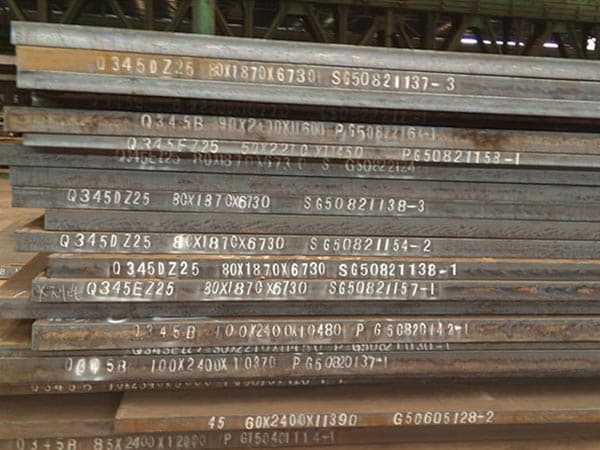
2. Traceability: Each sheet or coil must be clearly marked with the heat number, batch number, and manufacturer's logo. This allows for full traceability back to the melting process.
3. Third-Party Testing: For large projects, consider independent laboratory testing to verify yield strength and impact energy, especially if the material is sourced from a new or unproven mill.
4. Processing Support: A qualified supplier does more than sell steel; they provide technical data on bending forces, springback angles, and welding parameters tailored to their specific chemistry.
Environmental Adaptability and Longevity
S900MC exhibits good atmospheric corrosion resistance compared to standard carbon steels, but it is not stainless. In harsh environments, proper surface treatment such as painting or galvanizing is required. However, be cautious with hot-dip galvanizing, as the high strength of S900MC can make it susceptible to Hydrogen Embrittlement or Liquid Metal Embrittlement (LME) if the pickling and dipping processes are not strictly controlled. A qualified supplier will advise on the suitability of their S900MC for galvanizing based on the silicon and phosphorus content (Sandelin effect).
Fatigue life is another area where S900MC excels. Due to its fine grain structure, it resists crack initiation better than lower-grade steels. When designing components, ensure that weld toes are ground smooth to take full advantage of the material's fatigue properties, as the weld geometry often becomes the limiting factor rather than the steel itself.
Leave a message