
What is the difference between wear resistant steel plate and S460MC cold rolled steel for construction machinery
Explore the critical differences between wear resistant steel plates and S460MC high-strength steel. Learn about their mechanical properties, processing capabilities, and specific applications in construction machinery.
Defining the Core Roles: Surface Hardness vs. Structural Integrity
In the complex ecosystem of construction machinery manufacturing, selecting the right steel grade is not merely a matter of cost, but a strategic decision that dictates the equipment's lifespan and operational efficiency. Two materials often discussed in the same breath but serving vastly different functions are wear resistant steel plates (such as the NM series or AR grades) and S460MC high-strength steel. While both fall under the umbrella of advanced steel products, their metallurgical DNA is optimized for different stress environments.
Wear resistant steel is engineered primarily to combat abrasive forces. Its defining characteristic is its high surface hardness, achieved through precise quenching and tempering processes. On the other hand, S460MC is a thermomechanically rolled high-strength steel designed for cold forming. It focuses on a high yield strength (minimum 460 MPa) combined with excellent ductility, making it the backbone of structural components that must support heavy loads without fracturing.
Chemical Composition and the Alchemy of Alloying
The performance divergence begins at the atomic level. Wear resistant steels typically contain higher levels of carbon and alloying elements like chromium, nickel, and molybdenum. These elements are essential for increasing hardenability and forming hard carbides within the steel matrix, which act as barriers against abrasive particles like sand, gravel, and rocks.
Conversely, S460MC relies on a low-carbon, micro-alloyed design. By utilizing small amounts of niobium (Nb), vanadium (V), and titanium (Ti), manufacturers achieve grain refinement during the thermomechanical rolling process. This allows S460MC to maintain high strength while remaining exceptionally clean and weldable. The low carbon equivalent (CEV) of S460MC is a significant advantage for fabricators who need to avoid cold cracking during the welding of complex frames.
| Feature | Wear Resistant Steel (e.g., NM450) | S460MC High Strength Steel |
|---|---|---|
| Primary Goal | Surface Hardness & Abrasion Resistance | Yield Strength & Structural Load Bearing |
| Hardness (HBW) | 420 - 480 Typical | 140 - 180 Typical |
| Yield Strength (MPa) | Approx. 1000 - 1200 | Min. 460 |
| Carbon Content | Relatively High (up to 0.25%+) | Very Low (typically < 0.12%) |
| Formability | Limited; requires large radii | Excellent; designed for cold bending |
Mechanical Performance: Hardness vs. Ductility
The most striking difference lies in the trade-off between hardness and ductility. Wear resistant steel plates are measured by their Brinell hardness (HBW). A plate with 450 HBW is incredibly difficult to scratch or gouge, which is vital for the interior liners of a dump truck body or the cutting edge of a bulldozer blade. However, this hardness often comes at the expense of elongation. These plates are less forgiving when subjected to extreme bending or sudden structural impacts that require the material to stretch.
S460MC prioritizes yield strength and elongation. In construction machinery, the chassis, crane booms, and telescopic arms are subjected to massive bending moments and tensile stresses. S460MC provides the necessary strength to reduce the weight of these components (lightweighting) without sacrificing safety. Its high elongation (typically >14%) ensures that the material can absorb energy and deform slightly under extreme loads rather than snapping, providing a critical safety margin for heavy lifting equipment.
Processing and Fabrication Performance
From a manufacturing perspective, the two materials require different handling strategies. S460MC is a favorite among production managers because of its consistency in cold forming and bending. Because it is thermomechanically rolled, it has very low internal stress, meaning it doesn't "spring back" unpredictably after being bent in a CNC press brake. This allows for the creation of complex, multi-angled structural profiles that are both light and strong.
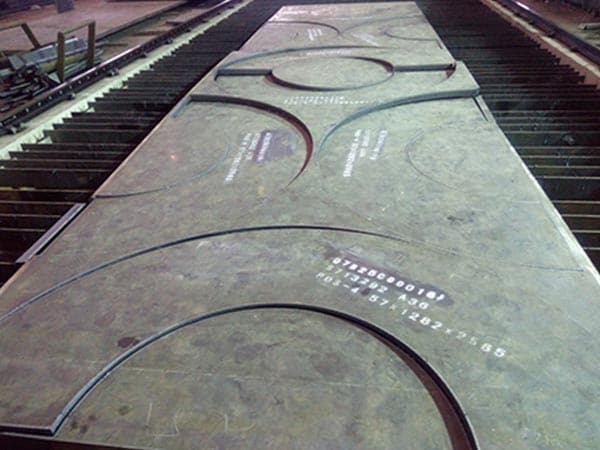
Wear resistant steel is more temperamental. While it can be bent, it requires much larger bending radii and significantly higher pressure. Furthermore, cutting wear resistant steel requires specialized techniques (like underwater plasma or laser cutting) to minimize the Heat Affected Zone (HAZ). If the edges are overheated during cutting, the hardness in that area can drop significantly, creating a "soft spot" where wear will accelerate. S460MC is much more robust during thermal cutting and welding, maintaining its structural integrity even in high-throughput welding environments.
Environmental Adaptability and Fatigue Life
Construction machinery operates in some of the harshest environments on earth, from sub-zero arctic mines to scorching desert infrastructure projects. S460MC is often specified for its low-temperature impact toughness. Many variants are tested at -20°C or -40°C to ensure they won't become brittle in cold climates. This makes S460MC ideal for the primary structural skeleton of machines that must operate year-round.
Wear resistant steel plates excel in high-friction environments. In a gravel processing plant or a mining excavator bucket, the primary threat is not structural fatigue but surface depletion. The microstructure of wear-resistant steel is designed to work-harden slightly under impact, further increasing its resistance to the constant scrubbing action of abrasive media. However, in extremely cold environments, standard wear plates can be prone to cracking if they are not specifically alloyed for low-temperature toughness, a factor that engineers must carefully weigh during the design phase.
Industry-Specific Application Mapping
To visualize where these steels diverge, one only needs to look at a modern hydraulic excavator. The S460MC steel is likely found in the main frame, the undercarriage, and the internal reinforcements of the boom. These are the parts that hold the machine together and provide the "muscle" to lift heavy loads. The material's weldability allows for the massive, deep-penetration welds required for these heavy-duty joints.
The wear resistant steel plate, however, is found where the machine meets the earth. The bucket teeth, the side cutters, the floor of the bucket, and the wear strips on the underside of the arm are all crafted from wear-resistant grades. These parts are often designed as "consumables"—they are expected to wear down over time and be replaced or hard-faced, protecting the more expensive S460MC structural components underneath.
- S460MC Applications: Crane booms, truck chassis, agricultural machinery frames, cold-pressed profiles, and cross members.
- Wear Resistant Steel Applications: Mining truck liners, concrete mixer drums, recycling shredders, excavator buckets, and conveyor chutes.
Economic Considerations and Lifecycle Value
While wear resistant steel generally carries a higher price tag per ton due to its complex heat treatment and higher alloy content, its value is found in reduced downtime. Using a lower-grade steel in a high-wear area would result in frequent repairs and part replacements, which are far more costly than the initial investment in premium wear plate.
S460MC offers economic value through weight reduction. By using a 460 MPa yield steel instead of a standard 355 MPa steel, engineers can use thinner plates to achieve the same structural strength. This reduces the overall weight of the machine, leading to lower fuel consumption for the end-user and higher payload capacities. The synergy of using both materials in their respective optimal roles—S460MC for the skeleton and wear-resistant steel for the skin—creates the most competitive and durable machinery in the modern market.
Leave a message