
How to identify shoddy S315MC pickled steel coil
Comprehensive guide to identifying low-quality S315MC pickled steel coils. Learn to evaluate surface defects, mechanical properties, and chemical composition to ensure industrial safety.
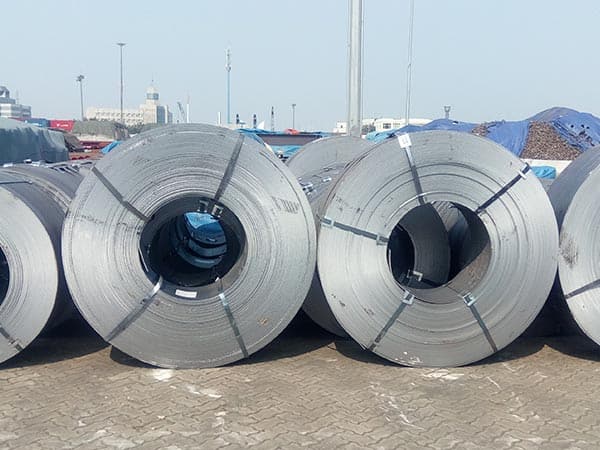
The Critical Importance of S315MC Steel Integrity
S315MC is a high-yield-strength, hot-rolled steel designed for cold forming, governed by the EN 10149-2 standard. Its popularity in the automotive and machinery industries stems from its excellent weldability and toughness. However, the market is often flooded with substandard materials that bypass rigorous quality controls. Identifying shoddy S315MC pickled steel coil is not merely a cost-saving measure; it is a fundamental safety requirement for structural integrity.
Low-quality steel often hides behind a clean, pickled surface. Because the pickling process removes the protective scale using hydrochloric or sulfuric acid, the bare metal is exposed. This exposure makes it easier to spot surface flaws but also allows unscrupulous suppliers to mask internal structural weaknesses with superficial treatments. Distinguishing genuine S315MC from inferior substitutes requires a multi-dimensional approach involving visual, dimensional, and metallurgical analysis.
Visual Inspection: Beyond the Oiled Surface
The first line of defense is a thorough visual examination. High-quality S315MC pickled coils should exhibit a uniform, silvery-grey matte finish. Shoddy materials often display tell-tale signs of poor processing during the pickling or rolling stages.
- Under-pickling: Look for patches of dark iron oxide scale that were not fully removed. These spots interfere with subsequent welding and coating processes.
- Over-pickling: If the steel was left in the acid bath too long, the surface may appear pitted or feel rough. This 'pitting' significantly reduces the fatigue life of the component.
- Oil Film Inconsistency: Pickled steel must be oiled to prevent flash rust. If the oil is uneven, or if there are yellowish-brown rust spots (often called 'pepper rust'), the material's environmental adaptability is compromised.
- Edge Defects: Check for cracked edges or 'burrs'. S315MC is designed for cold forming; if the edges are already compromised, they will propagate into large cracks during bending or stamping.
Dimensional Accuracy and Tolerance Checks
Precision is a hallmark of premium S315MC. Shoddy steel coils often suffer from 'thickness variation' across the width and length of the coil. Using a digital micrometer, inspectors should verify that the material meets the strict tolerances defined in DIN EN 10051.
| Feature | Standard S315MC Requirement | Shoddy Material Indicators |
|---|---|---|
| Thickness Tolerance | Strict adherence to EN 10051 | Fluctuations exceeding 0.15mm in a single coil |
| Width Consistency | Uniform edge-to-edge width | Wavy edges or 'camber' issues |
| Flatness | High flatness for automated laser cutting | Visible 'oil canning' or center buckles |
Poor dimensional control suggests that the rolling mill used was either outdated or improperly calibrated. For automated production lines, even a minor deviation in thickness can lead to tool damage or inconsistent spring-back during the bending process.
Mechanical Performance: The Core of S315MC
The '315' in S315MC represents the minimum yield strength of 315 MPa. Shoddy steel often fails to meet this threshold or, conversely, is too hard, leading to brittle fractures. A genuine S315MC coil must demonstrate a balance between strength and ductility.
Yield and Tensile Strength: Authentic S315MC typically has a yield strength between 315 and 430 MPa. If a sample tests significantly higher, it may be a different grade entirely, which could be too brittle for cold forming. If it is lower, the structural safety of the final part is at risk.
Elongation and Bending: For a thickness of 3mm, the elongation should be at least 20-24%. A critical test for S315MC is the 180-degree cold bend test. Shoddy steel will show micro-cracks on the outer radius of the bend. This failure indicates a coarse grain structure or excessive non-metallic inclusions, both of which are hallmarks of cheap, poorly refined steel.
Chemical Composition and Micro-alloying
S315MC achieves its properties through thermomechanical rolling and precise micro-alloying with elements like Niobium (Nb), Vanadium (V), or Titanium (Ti). These elements refine the grain size. Shoddy steel manufacturers often cut costs by reducing these micro-alloys or by using scrap metal with high levels of 'tramp elements' like Sulfur and Phosphorus.
- Sulfur (S) and Phosphorus (P): These should be kept below 0.020% and 0.025% respectively. High levels make the steel 'hot short' or 'cold short', leading to cracking during welding or forming.
- Carbon Content: Should be low (typically <0.12%) to ensure excellent weldability. High carbon in shoddy steel makes the Heat Affected Zone (HAZ) of a weld brittle.
- Grain Size: Under a microscope, S315MC should show a fine, uniform ferrite-pearlite grain structure. Shoddy steel often exhibits large, uneven grains, which drastically reduces impact toughness at low temperatures.
Environmental Adaptability and Storage Signs
Pickled steel is sensitive to the environment. How a coil reacts to storage can reveal its quality. Shoddy S315MC often lacks a high-quality electrostatic oiling layer. If you notice 'white rust' or deep oxidation within weeks of delivery in a controlled warehouse, the pickling line's rinsing and drying stages were likely deficient. Residual chlorides from the acid bath can remain on the surface if not properly neutralized, leading to accelerated corrosion that eats through the metal even under an oil film.
Verifying Documentation and Traceability
A common tactic for distributing shoddy S315MC is the use of forged Mill Test Certificates (MTC). A legitimate MTC should comply with EN 10204 3.1. To verify authenticity, cross-reference the heat number stamped on the coil's metal tag with the MTC. If the printing on the tag is blurry, hand-written, or easily wiped off, treat the material with suspicion. High-quality mills use automated inkjet or laser marking systems that provide clear traceability back to the specific furnace charge.
Purchasing from reputable Tier-1 mills or authorized distributors is the most effective way to avoid shoddy material. While the initial price per ton might be lower for 'unbranded' or 'secondary' S315MC, the hidden costs—including high scrap rates, broken dies, and potential product liability—far outweigh the perceived savings. Rigorous incoming inspection remains the best practice for any manufacturing operation relying on the high-performance characteristics of S315MC pickled steel.
Leave a message