
What is the S355MC hot-rolled pickled strip price export to Thailand
Explore the current market dynamics, technical specifications, and pricing factors for exporting S355MC hot-rolled pickled and oiled (HRPO) steel strips to Thailand.
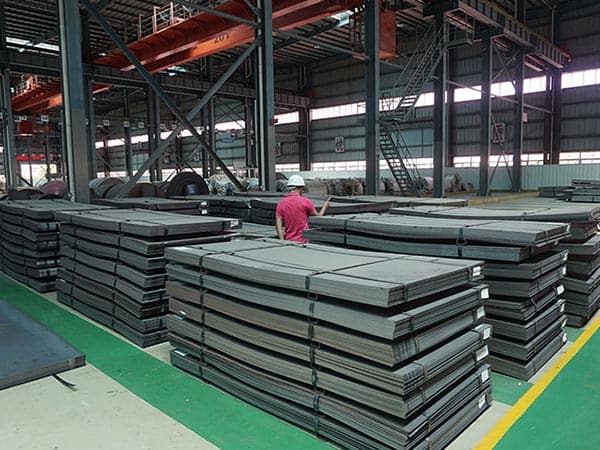
Market Dynamics of S355MC HRPO Strip Export to Thailand
Thailand remains one of the most significant hubs for automotive manufacturing and industrial engineering in Southeast Asia. For procurement managers and engineers, understanding the S355MC hot-rolled pickled strip price involves more than just looking at a daily ticker. It requires a deep dive into the material's metallurgical value, the logistical costs of shipping to ports like Laem Chabang or Bangkok, and the specific industrial requirements of the Thai market.
S355MC, governed by the EN 10149-2 standard, is a high-yield-strength steel designed for cold forming. When supplied in a pickled and oiled (HRPO) condition, it offers a superior surface finish compared to black hot-rolled coils. This makes it a premium choice for Thai manufacturers who demand precision and aesthetic quality in their final products. The price for export typically fluctuates based on iron ore costs, coking coal prices, and the specific thickness and width requirements of the order.
Technical Profile: Why S355MC is Preferred
The technical superiority of S355MC lies in its micro-alloyed composition. Unlike standard carbon steels, S355MC utilizes elements like niobium (Nb), vanadium (V), or titanium (Ti) to achieve high strength without sacrificing ductility. This is critical for the Thai automotive sector, where weight reduction and structural integrity are paramount.
The chemical composition is strictly controlled to ensure weldability and formability. Below is a typical breakdown of the chemical constituents that define this grade:
| Element | Maximum Content (%) |
|---|---|
| Carbon (C) | 0.12 |
| Manganese (Mn) | 1.50 |
| Silicon (Si) | 0.50 |
| Phosphorus (P) | 0.025 |
| Sulfur (S) | 0.020 |
| Aluminium (Al) | 0.015 |
The low carbon content ensures that the material remains highly weldable, a vital feature for the complex assembly lines found in Thailand's industrial zones like Rayong or Chonburi.
Mechanical Properties and Performance Benchmarks
The "355" in S355MC represents the minimum yield strength of 355 MPa. This strength-to-weight ratio allows designers to use thinner gauges while maintaining the same structural load capacity as thicker, lower-grade steels. For the Thai market, where efficiency is key, this translates to significant cost savings in raw material volume.
- Yield Strength: Min 355 MPa (for thicknesses ≤ 16mm).
- Tensile Strength: 430–550 MPa.
- Elongation: Min 19% to 23% depending on thickness.
- Bending Properties: Excellent cold-bending capabilities, allowing for tight radii without cracking.
These properties ensure that the S355MC strip can withstand rigorous stamping and folding processes. In the production of chassis components or heavy-duty racking systems, the consistency of these mechanical values is what justifies the export price premium over standard Q235B or S235JR grades.
The Pickling Advantage: Surface Quality and Tool Life
Why do Thai importers specifically request "Pickled and Oiled" (HRPO) instead of standard hot-rolled? The pickling process involves passing the steel through an acid bath to remove the iron oxide scale formed during hot rolling. This results in a clean, smooth, and scale-free surface.
For a manufacturer in Thailand, using S355MC HRPO offers several operational benefits:
- Extended Tool Life: The abrasive scale on black hot-rolled steel can significantly wear down expensive stamping dies. HRPO steel extends the life of these tools.
- Superior Coating Adhesion: Whether the final part is painted, powder-coated, or galvanized, the clean surface of pickled steel ensures much better adhesion and corrosion resistance.
- Dimensional Accuracy: Pickled strips often undergo a skin-pass process, which improves flatness and thickness tolerances.
These factors contribute to the total cost of ownership. While the initial export price per ton might be higher than black coil, the reduction in secondary processing costs and scrap rates makes S355MC HRPO a more economical choice for high-end applications.
Factors Influencing Export Prices to Thailand
When calculating the S355MC hot-rolled pickled strip price for Thailand, several variables must be considered beyond the base steel price. The Thai market is sensitive to both global commodity trends and local regulatory environments.
1. Trade Barriers and Duties: Thailand has various anti-dumping (AD) duties on steel imports from specific countries. Importers must verify if the S355MC source is subject to these duties, which can add 5% to 30% to the landed cost. Utilizing Free Trade Agreements (FTAs) like the ASEAN-China FTA or RCEP can significantly reduce these costs.
2. Logistics and Freight: Shipping costs from major steel hubs (like Shanghai, Tianjin, or Kaohsiung) to Laem Chabang fluctuate based on fuel surcharges and container availability. Break-bulk shipping is often more cost-effective for large tonnage, while containers are preferred for high-precision pickled strips to prevent moisture damage.
3. TISI Certification: The Thai Industrial Standards Institute (TISI) regulates steel quality. Ensuring the S355MC material complies with TISI requirements is mandatory for many construction and automotive applications. Certification costs and compliance checks are factored into the final export quotation.
Applications in Thailand's Industrial Landscape
The demand for S355MC in Thailand is driven by several key sectors. Its versatility makes it a staple in the following industries:
- Automotive Manufacturing: Used for seat frames, chassis components, and cross-members where high strength and weight reduction are required.
- Solar Energy: Thailand's growing solar farm sector uses S355MC for mounting structures and brackets that require high yield strength to withstand wind loads.
- Construction Machinery: Parts for excavators, cranes, and agricultural machinery benefit from the impact resistance and formability of this grade.
- Warehouse Racking: High-density storage systems utilize the strength of S355MC to build taller, safer racking units with less material.
Environmental Adaptability and Longevity
Thailand's tropical climate, characterized by high humidity and salinity in coastal regions, poses a challenge for steel longevity. S355MC HRPO, when properly oiled, provides a temporary barrier against rust during transit. However, its real strength in this environment comes from its clean surface, which allows for high-quality protective coatings. The low impurity levels (low Sulfur and Phosphorus) also reduce the risk of stress corrosion cracking, ensuring that structures built with S355MC have a longer service life in Southeast Asian conditions.
Procurement Strategy for Thai Importers
To secure the best S355MC export price, buyers should focus on timing and specification. Bulk purchasing during the off-peak seasons (typically around the Lunar New Year or mid-summer) can yield better rates. Furthermore, specifying precise widths through slitting services at the mill can reduce processing waste upon arrival in Thailand.
Working with suppliers who provide comprehensive Mill Test Certificates (MTC) according to EN 10204 3.1 is non-negotiable. This document confirms the chemical and mechanical properties, ensuring the material will perform as expected in the hydraulic presses and welding stations of Thai factories.
The price of S355MC hot-rolled pickled strip for export to Thailand is a reflection of its high-tech manufacturing process and its essential role in modern engineering. By balancing technical requirements with an understanding of logistics and trade policy, businesses can optimize their supply chains for this critical material.
Leave a message