
Who makes S960MC high strength alloy steel steel plates
Discover the leading global manufacturers of S960MC high-strength steel plates. This guide covers technical specifications, processing capabilities, and industrial applications.
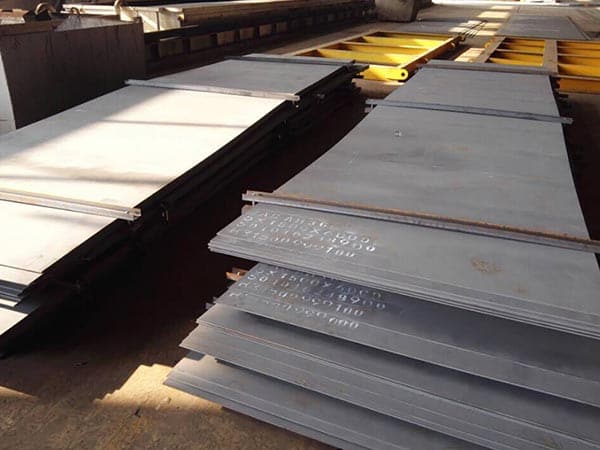
Understanding the Landscape of S960MC Steel Production
When engineering projects demand the ultimate balance between weight reduction and structural integrity, S960MC high-strength alloy steel stands out as a premier choice. This thermomechanically rolled steel, governed by the EN 10149-2 standard, offers a minimum yield strength of 960 MPa. However, producing such a high-performance material requires sophisticated rolling technology and precise metallurgical control, which limits the number of global manufacturers capable of meeting these stringent requirements.
Identifying who makes S960MC high strength alloy steel plates involves looking at Tier-1 steel mills that specialize in Thermomechanically Controlled Processing (TMCP). This process allows the steel to achieve high strength through grain refinement and micro-alloying rather than heavy alloying elements, ensuring excellent weldability and cold forming properties.
Top Global Manufacturers of S960MC High Strength Steel
Several elite steel producers dominate the market for S960MC. These manufacturers often market the grade under their own proprietary brand names, which are synonymous with the S960MC specification.
- SSAB (Sweden): Perhaps the most recognized name in high-strength steel, SSAB produces S960MC under the Strenx 960MC brand. Their plates are known for exceptional flatness and surface consistency.
- ThyssenKrupp (Germany): They offer S960MC within their PERFORM series. ThyssenKrupp focuses on fine-grained structural steels that provide superior processing reliability for automotive and crane industries.
- Voestalpine (Austria): Their alform 960 x-treme is a leading S960MC equivalent, often used in highly stressed welded structures where weight saving is critical.
- Baosteel (China): As a global giant, Baosteel has developed high-end S960MC plates that meet international standards, serving the massive Asian and Middle Eastern infrastructure markets.
- TATA Steel (Europe): TATA provides high-strength hot-rolled products like YMPRESS S960, which are optimized for laser cutting and complex bending operations.
- Dillinger (Germany): While often focused on heavy plates (S960QL), they also contribute to the high-strength market through specialized thin-gauge high-yield products.
Chemical Composition and Metallurgical Excellence
The secret behind S960MC’s performance lies in its chemical makeup. Unlike traditional quenched and tempered steels, S960MC utilizes micro-alloying elements such as Niobium (Nb), Vanadium (V), and Titanium (Ti). These elements facilitate grain refinement during the thermomechanical rolling process.
| Element | Maximum Content (%) |
|---|---|
| Carbon (C) | 0.20 |
| Manganese (Mn) | 2.20 |
| Silicon (Si) | 0.60 |
| Phosphorus (P) | 0.025 |
| Sulfur (S) | 0.010 |
| Aluminium (Al) | 0.015 |
The low carbon equivalent (CEV) is a critical factor. It ensures that the steel remains highly weldable without the need for extensive preheating, a common challenge with high-strength materials. By maintaining low impurity levels (P and S), manufacturers ensure the steel has high impact toughness even at lower temperatures.
Mechanical Properties: Strength Meets Ductility
The "960" in S960MC represents the minimum yield strength of 960 MPa. This allows engineers to use thinner plates to support the same loads as thicker, lower-grade steels, effectively reducing the overall weight of the structure.
- Yield Strength (ReH): Minimum 960 MPa.
- Tensile Strength (Rm): Ranges between 980 and 1250 MPa.
- Elongation (A5): Minimum 7% to 12% depending on thickness and rolling direction.
- Impact Energy: Typically tested at -20°C or -40°C to ensure brittle fracture resistance.
These properties make S960MC an ideal candidate for dynamic loading environments. The high yield-to-tensile ratio means the material can absorb significant energy before failure, which is a safety-critical requirement in the transport and lifting sectors.
Processing Performance: Bending, Cutting, and Welding
One of the primary reasons manufacturers choose S960MC over S960QL (Quenched and Tempered) is its superior cold forming capability. Because it is thermomechanically rolled, the internal stresses are lower, and the grain structure is more uniform.
Bending and Folding: S960MC can be bent to tight radii without cracking, provided the manufacturer's guidelines for minimum mandrel diameter are followed. It is essential to account for "springback," which is more pronounced in 960 MPa steel compared to standard S355 grades.
Laser and Plasma Cutting: The consistent chemical composition and low internal stress of S960MC plates from top-tier mills like SSAB or ThyssenKrupp ensure that the plates remain flat after cutting. This is vital for automated welding processes where tolerances are tight.
Welding Considerations: While S960MC is highly weldable, the Heat Affected Zone (HAZ) must be managed carefully. Excessive heat input can lead to softening in the HAZ, reducing the local strength. Using low-hydrogen consumables and controlling the cooling rate (t8/5 time) are standard practices for maintaining the integrity of the 960 MPa yield strength across the joint.
Expanding Applications: Where S960MC Shines
The adoption of S960MC has revolutionized several heavy industries. By switching from S355 or S700MC to S960MC, manufacturers can achieve weight savings of up to 30-50% in specific components.
Mobile Cranes and Lifting Equipment: Telescopic booms and outriggers require maximum strength with minimum weight to increase reach and lifting capacity. S960MC is the industry standard for these high-stress components.
Heavy Transportation: Chassis for trailers, timber trucks, and low-loaders benefit from the high strength of S960MC. Reducing the tare weight of the vehicle directly translates to higher payloads and lower fuel consumption, enhancing the environmental sustainability of the fleet.
Mining and Earthmoving: In the harsh environments of open-pit mines, equipment like dumper bodies and excavator buckets face extreme wear and structural stress. S960MC provides the necessary toughness to withstand impact while remaining light enough to improve cycle times.
Agricultural Machinery: Modern large-scale sprayers and tillage equipment use S960MC to ensure durability over vast acreages without compacting the soil with excessive machine weight.
How to Source and Verify Quality S960MC
When sourcing S960MC, it is not enough to simply look for the grade name. Buyers must ensure the material comes with a 3.1 or 3.2 Inspection Certificate according to EN 10204. This document verifies the chemical analysis and mechanical testing results for the specific heat of steel.
Key factors to evaluate when choosing a supplier include:
- Dimensional Tolerances: Does the mill meet EN 10051 or tighter internal standards?
- Surface Quality: Is the scale tight and suitable for direct painting or galvanizing?
- Flatness: For laser cutting applications, superior flatness (e.g., 3mm/m) is often required.
- Technical Support: Does the manufacturer provide welding and forming parameters specific to their product?
Working with established stockholders who have direct relationships with mills like SSAB or Voestalpine ensures that you receive genuine material that performs consistently during fabrication. S960MC is a high-performance alloy; using sub-par material can lead to catastrophic structural failure, making the choice of manufacturer a critical engineering decision.
Leave a message