
What grade is equal to the BS700MC cold forming autobobile steel for car parts
Discover the international equivalents of BS700MC steel, including S700MC (EN 10149-2). This guide covers mechanical properties, chemical composition, and automotive applications.
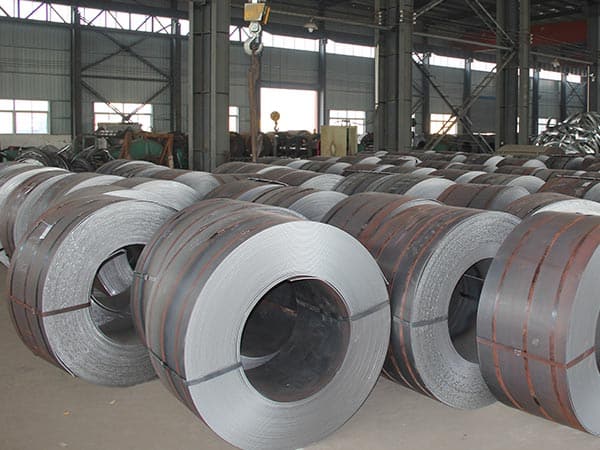
Understanding BS700MC and Its International Equivalents
nIn the pursuit of automotive lightweighting and enhanced safety, BS700MC has emerged as a cornerstone material. This high-strength, cold-forming steel is primarily defined by its yield strength of at least 700 MPa. When engineers and procurement specialists look for equivalents, the most direct match is the European standard EN 10149-2 S700MC. Additionally, it aligns closely with ISO 6930-2 Grade 700 and certain high-strength low-alloy (HSLA) specifications under ASTM A1011/A1011M, specifically Grade 80 in terms of performance targets.
nBS700MC is a thermomechanically rolled steel, where the 'M' signifies the rolling process and 'C' denotes its suitability for cold forming. The Baosteel enterprise standard (Q/BQB 310) is the origin of the 'BS' prefix, which has become a benchmark in the Asian automotive supply chain. Comparing it to S700MC, both materials share nearly identical metallurgical DNA, focusing on grain refinement through micro-alloying elements like Niobium (Nb), Vanadium (V), and Titanium (Ti).
nChemical Composition and Micro-Alloying Strategy
nThe performance of BS700MC is not merely a result of heat treatment but a sophisticated chemical balance. Unlike traditional carbon steels, BS700MC maintains a very low carbon content (typically below 0.12%) to ensure excellent weldability and toughness. The strength is derived from precipitation hardening and grain size refinement.
n| Element | nBS700MC (Mass %) | nS700MC (EN 10149-2) | n
|---|---|---|
| Carbon (C) | n≤ 0.12 | n≤ 0.12 | nManganese (Mn) | n≤ 2.10 | n≤ 2.10 | nnSilicon (Si) | n≤ 0.60 | n≤ 0.60 | nnPhosphorus (P) | n≤ 0.025 | n≤ 0.025 | nnSulfur (S) | n≤ 0.015 | n≤ 0.015 | nnNb+Ti+V | n≤ 0.22 | n≤ 0.22 | nnn
The inclusion of Titanium and Niobium creates stable carbonitride precipitates during the cooling process. These precipitates pin the grain boundaries, preventing grain growth and resulting in an ultra-fine ferrite structure. This microstructure is what allows the steel to remain ductile despite its immense strength, a critical factor for complex automotive stampings.
nMechanical Properties and Cold Forming Capabilities
nThe primary reason for selecting BS700MC or its equivalent S700MC is the high strength-to-weight ratio. By using 700MPa steel instead of conventional 355MPa steel, manufacturers can reduce the thickness of structural components by up to 30-40% without sacrificing load-bearing capacity.
n- n
- Yield Strength (ReH): Minimum 700 MPa. n
- Tensile Strength (Rm): 750 – 950 MPa. n
- Elongation (A5): Minimum 12% to 14% (depending on thickness). n
- Bending Radius: Typically 1.5 to 2.0 times the thickness (180° bend). n
The cold forming performance is exceptional. Even at high strength levels, BS700MC exhibits minimal springback compared to other advanced high-strength steels (AHSS) like Dual Phase (DP) steels. This makes it ideal for chassis members, crossbeams, and longitudinal beams where dimensional precision is paramount.
nAdvanced Processing: Welding and Cutting
nProcessing BS700MC requires an understanding of its thermomechanical history. Because the strength is derived from the grain structure rather than high carbon content, the Carbon Equivalent (CEV) is low. This results in excellent weldability using standard methods such as MIG/MAG, Laser welding, and Resistance Spot Welding.
nWhen welding BS700MC, it is vital to control the heat input. Excessive heat can lead to grain coarsening in the Heat Affected Zone (HAZ), which may locally reduce the yield strength. Using low-hydrogen consumables and optimized welding parameters ensures that the joint remains as robust as the base metal. For laser cutting, the clean chemical composition and low impurity levels (low Sulfur and Phosphorus) result in smooth edges with minimal dross, facilitating immediate subsequent assembly.
nEnvironmental Adaptability and Fatigue Resistance
nAutomotive parts are subjected to dynamic loads and harsh environments. BS700MC is engineered to handle cyclic loading, making it a preferred choice for truck frames and crane arms. Its fatigue strength is significantly higher than that of standard structural steels, allowing for longer service lives in heavy-duty applications.
nRegarding corrosion, while BS700MC is not a stainless grade, its surface quality (often supplied in pickled and oiled or cold-rolled conditions) provides an excellent substrate for E-coating (electrophoretic coating) and galvanizing. The fine-grained structure ensures that the protective layers adhere uniformly, protecting the structural integrity of the car parts from road salts and moisture.
nIndustry Applications and GEO-Specific Availability
nThe adoption of BS700MC is widespread across various sectors beyond just passenger cars. In the commercial vehicle industry, it is used for lightweight trailer frames, bumper brackets, and cabin reinforcements. In the construction machinery sector, it serves as the primary material for telescopic booms and cold-formed sections.
nFrom a global procurement perspective, while Baosteel dominates the supply in Asia with the BS700MC designation, European mills like SSAB (under the Domex 700MC brand) and ArcelorMittal provide the S700MC equivalent. In North America, similar performance can be found in specialized HSLAS-F (Fine grain) products. Understanding these regional brand names is essential for global supply chain management, ensuring that the specified mechanical properties are met regardless of the mill's location.
nWhen substituting BS700MC with S700MC or other equivalents, engineers must verify the minimum impact energy requirements. While BS700MC focuses on forming, some applications require guaranteed toughness at -20°C or -40°C. Always consult the specific mill test certificate (MTC) to ensure the batch meets both the strength and the low-temperature ductility required for safety-critical automotive components.
nTechnical Comparison: BS700MC vs. S700MC
n| Property | nBS700MC (Q/BQB 310) | nS700MC (EN 10149-2) | n
|---|---|---|
| Yield Strength (MPa) | n≥ 700 | n≥ 700 | nTensile Strength (MPa) | n750 - 950 | n750 - 950 | nnMin. Elongation (Lo=5.65√So) | n12% | n12% | nn180° Cold Bend (t≤6mm) | nd=2a | nd=2a | nnn
As shown in the comparison, the standards are functionally interchangeable for the vast majority of automotive engineering tasks. The choice between them often comes down to regional availability, shipping costs, and specific OEM approvals rather than technical disparity.
"}}
Leave a message