
Sell 20mm plate alloy steel S500MC thermomechanically rolled steels
Technical analysis of 20mm S500MC thermomechanically rolled steel plates. Discover mechanical properties, welding advantages, and industrial applications for high-strength structural projects.
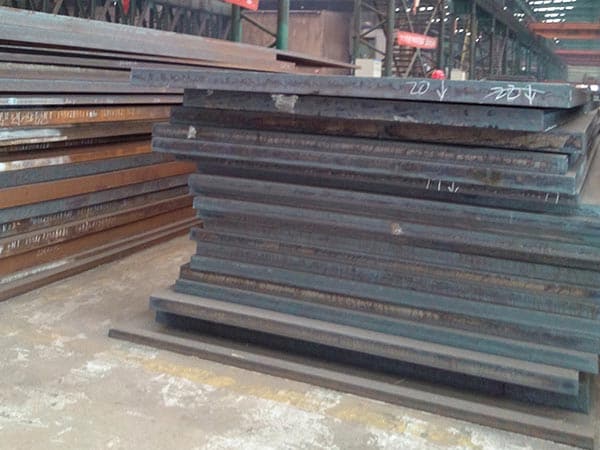
Understanding the Superiority of S500MC Thermomechanically Rolled Steel
S500MC is a high-strength low-alloy (HSLA) steel grade specifically designed for cold-forming applications where weight reduction and high load-bearing capacity are paramount. Governed by the EN 10149-2 standard, this material represents the evolution of metallurgical engineering, moving away from traditional normalized steels toward more sophisticated thermomechanically controlled processing (TMCP). When we discuss the 20mm plate thickness, we are looking at a versatile medium-to-heavy gauge that bridges the gap between light structural components and heavy-duty industrial frameworks.
The 'S' in S500MC denotes structural steel, while '500' refers to the minimum yield strength of 500 MPa. The 'MC' suffix indicates that the material is thermomechanically rolled (M) and possesses high cold-forming properties (C). This combination is achieved through a precise cooling and rolling schedule that refines the grain structure to a degree unattainable through conventional heat treatments. For engineers and procurement specialists, the 20mm S500MC plate offers a unique opportunity to optimize structural weight without compromising safety or durability.
The Metallurgy of TMCP: Why 20mm S500MC Outperforms Traditional Grades
The thermomechanical rolling process is the secret behind the exceptional performance of S500MC. Unlike traditional rolling followed by heat treatment, TMCP involves strict control of the temperature and deformation during the rolling process. This prevents grain growth and promotes the formation of a fine-grained ferrite-pearlite or even bainitic microstructure. For a 20mm plate, maintaining uniformity from the surface to the core is essential, and the TMCP route ensures that the mechanical properties remain consistent throughout the cross-section.
Chemical Composition and Micro-Alloying
The chemical design of S500MC is characterized by its low carbon content and the strategic use of micro-alloying elements such as Niobium (Nb), Vanadium (V), and Titanium (Ti). These elements serve two primary purposes: they pin grain boundaries during rolling to maintain a fine structure and provide precipitation hardening. Because the carbon equivalent (CEV) is kept significantly lower than that of traditional S355 or S460 grades, the weldability of S500MC is vastly superior.
| Element | Max % (Cast Analysis) |
|---|---|
| Carbon (C) | 0.12 |
| Manganese (Mn) | 1.60 |
| Silicon (Si) | 0.50 |
| Phosphorus (P) | 0.025 |
| Sulfur (S) | 0.015 |
| Aluminium (Al) | 0.015 (min) |
The low sulfur and phosphorus content are critical for ensuring high impact toughness and preventing lamellar tearing, especially in plates as thick as 20mm where internal stresses can be more pronounced during fabrication.
Mechanical Performance and Structural Integrity
The primary reason for selecting S500MC is its high yield-to-weight ratio. By utilizing a 500 MPa yield steel instead of a standard 355 MPa grade, designers can reduce the thickness of components by up to 30%, leading to significant savings in material costs, transport energy, and welding consumables.
- Yield Strength: Minimum 500 MPa for thicknesses up to 20mm.
- Tensile Strength: Ranges between 550 and 700 MPa, providing a robust safety margin.
- Elongation: Minimum 12% to 14% depending on the rolling direction, ensuring the material can withstand plastic deformation without sudden failure.
- Impact Toughness: Typically tested at -20°C or -40°C, S500MC maintains its ductility even in harsh, cold environments.
For the 20mm plate, the flatness and surface quality are held to tighter tolerances than standard structural steels. This is vital for automated laser or plasma cutting systems, where deviations in flatness can disrupt the focal length and lead to inconsistent cut quality.
Fabrication Excellence: Welding and Cold Forming
One of the most significant advantages of S500MC is its ease of processing. Despite its high strength, the low carbon equivalent makes it exceptionally weldable. Preheating is generally not required for 20mm thicknesses under standard conditions, which drastically reduces production time and energy costs in the workshop.
Welding Considerations
When welding S500MC, it is important to manage the heat input. Excessive heat can cause grain coarsening in the Heat Affected Zone (HAZ), which may lead to a localized reduction in strength. However, due to the fine-grained nature of the TMCP steel, the HAZ remains much tougher than that of traditional quenched and tempered steels. Common methods such as MIG/MAG, submerged arc welding (SAW), and laser welding are all highly effective for 20mm plates.
Cold Forming and Bending
The 'C' in S500MC signifies its suitability for cold forming. Even at 20mm thickness, this steel can be bent to tight radii without cracking. This is particularly useful for manufacturing U-beams, C-channels, and complex chassis components. The internal cleanliness of the steel (low inclusions) ensures that the outer fibers of the bend do not initiate tears during the forming process.
Industrial Applications of 20mm S500MC Plates
The demand for 20mm S500MC plates is driven by industries that require a balance of extreme strength and manageable weight. As global standards for fuel efficiency and CO2 reduction become stricter, the shift toward HSLA steels has accelerated.
Heavy Transportation and Automotive
In the manufacture of heavy-duty truck chassis, trailers, and specialized transport vehicles, S500MC is the gold standard. The 20mm plate is often used for critical load-bearing cross-members and hitch plates where the stress concentration is highest. By using S500MC, manufacturers can increase the payload capacity of the vehicle by reducing the dead weight of the frame.
Lifting and Earthmoving Equipment
Crane booms, excavator arms, and agricultural machinery benefit immensely from the high yield strength of S500MC. In these applications, the 20mm plate provides the necessary stiffness to prevent buckling while remaining light enough to allow for faster hydraulic movements and lower fuel consumption.
Renewable Energy and Infrastructure
For wind turbine components, solar tracking supports, and modular bridge systems, S500MC offers a cost-effective alternative to more expensive alloy steels. Its resistance to atmospheric corrosion (when properly coated) and its ability to withstand cyclic loading make it ideal for long-term structural installations.
Environmental Adaptation and Sustainability
S500MC is not just a high-performance material; it is a sustainable choice. The TMCP process itself is more energy-efficient than traditional quenching and tempering because it utilizes the heat from the rolling process rather than requiring a separate reheating cycle. Furthermore, the ability to design lighter structures directly translates to a lower carbon footprint over the lifecycle of the product—less steel produced, less fuel burned during transport, and easier recycling at the end of life.
In maritime or coastal environments, the fine-grained structure of S500MC provides a slightly better resistance to pitting compared to coarse-grained steels, although standard protective coatings are still recommended for long-term exposure. Its performance in sub-zero temperatures makes it a reliable choice for oil and gas infrastructure in arctic or high-latitude regions.
Comparative Analysis: S500MC vs. s355jr
To truly appreciate the value of 20mm S500MC, one must compare it to the industry-standard S355JR. While S355 is widely available and inexpensive, it requires much thicker sections to achieve the same load-bearing capacity as S500MC. For a project requiring a specific stiffness, a 25mm S355 plate might be replaced by a 20mm S500MC plate. This 20% reduction in thickness leads to:
- Lower shipping costs per unit.
- Faster welding speeds due to reduced joint volume.
- Fewer welding consumables (wire and gas).
- Easier handling and assembly on-site.
While the price per ton of S500MC is higher than S355, the total project cost is often lower when the reduction in material volume and processing time is factored in.
Procurement and Quality Assurance
When sourcing 20mm S500MC thermomechanically rolled steel, it is imperative to verify the Mill Test Certificate (MTC) according to EN 10204 3.1. Key parameters to check include the yield strength, the CEV value, and the impact test results. Given the specialized nature of TMCP, sourcing from reputable mills that have mastered the cooling technology is essential to ensure that the 20mm thickness does not exhibit "soft spots" or internal laminations.
Proper storage is also vital. Although S500MC has excellent mechanical properties, the plates should be stored in a dry environment to prevent surface oxidation, which can interfere with laser cutting or welding if not removed. For 20mm plates, ensuring flatness during storage by using adequate support blocking is necessary to prevent permanent set or warping.
By integrating S500MC into your engineering designs, you are not just choosing a steel grade; you are adopting a philosophy of efficiency, strength, and modern metallurgical excellence. Whether for heavy transport, lifting, or complex structural engineering, the 20mm S500MC plate stands as a testament to what modern steel technology can achieve.
Leave a message