
What is the available size of S700MC steel for large truss truck boom?
Explore the comprehensive size availability, mechanical properties, and technical advantages of S700MC steel specifically tailored for large truss truck booms and heavy lifting equipment.
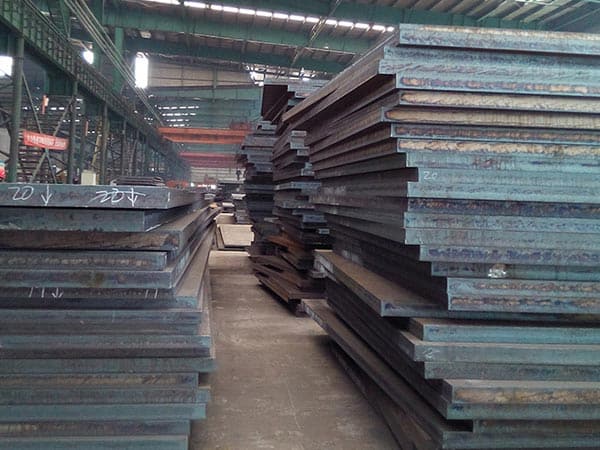
The Critical Role of S700MC in Modern Truss Boom Engineering
The engineering of large truss truck booms represents a pinnacle of structural efficiency, where the balance between dead weight and lifting capacity is scrutinized at every millimeter. S700MC steel, a high-yield strength structural steel produced through thermomechanical rolling, has emerged as the industry standard for these demanding applications. Unlike traditional structural steels, S700MC offers a minimum yield strength of 700 MPa, allowing engineers to significantly reduce wall thickness without compromising the structural integrity of the boom. This weight reduction is not merely a technical achievement; it directly translates to higher payload capacities, lower fuel consumption for the carrier vehicle, and a lower center of gravity, which enhances overall stability during complex lifting operations.
When discussing the available size of S700MC for truss booms, it is essential to understand that these structures often rely on a combination of plate, sheet, and sometimes specialized hollow sections formed from flat products. The availability is governed by the EN 10149-2 standard, which specifies the delivery conditions for thermomechanically rolled steels. Because truss booms are subjected to immense dynamic loads and environmental stressors, the dimensional precision and surface quality of the S700MC plates are just as critical as their nominal size.
Standard and Custom Dimensions: Breaking Down S700MC Size Availability
The availability of S700MC steel is generally categorized by thickness, width, and length, with each dimension playing a specific role in the fabrication of a truss boom. For large-scale lifting equipment, manufacturers typically seek the widest and longest plates possible to minimize the number of circumferential and longitudinal weld seams, which are often the weakest points in a high-stress structure.
Thickness Range: S700MC is most commonly available in thicknesses ranging from 3.0 mm to 20.0 mm. For specialized heavy-duty truss sections, some premium mills can produce plates up to 25 mm, though this often requires custom rolling cycles. In the context of a truss boom, thinner gauges (3mm to 8mm) are frequently used for the lattice members and internal bracing, while thicker plates (10mm to 20mm) are reserved for the main chords and pivot points where stress concentration is highest.
Width Availability: Standard widths for S700MC plates typically include 1000 mm, 1250 mm, and 1500 mm. However, for large truck booms, widths of 2000 mm or even 2500 mm are highly sought after. Utilizing wider plates allows for the creation of larger box-section components or more complex laser-cut lattice patterns from a single sheet, reducing the labor-intensive welding process and improving the aesthetic and structural uniformity of the boom.
Length Specifications: To accommodate the long spans of modern truck booms, S700MC is available in lengths starting from 2000 mm up to 12000 mm. Some specialized suppliers can provide extra-long plates up to 16000 mm for telescopic or massive fixed truss sections. The ability to source 12-meter plates is particularly advantageous for minimizing splice joints in the main longitudinal members of the truss.
| Dimension Category | Typical Range (Standard) | Extended Range (Special Order) |
|---|---|---|
| Thickness (mm) | 3.0 - 12.0 | 15.0 - 25.0 |
| Width (mm) | 1000, 1250, 1500 | 2000, 2500 |
| Length (mm) | 2000 - 6000 | 8000 - 16000 |
| Flatness Tolerance | Class N (EN 10029) | Class S (High Precision) |
Mechanical Excellence: Beyond the 700MPa Yield Strength
The "700" in S700MC denotes a minimum yield strength of 700 MPa, but the utility of this steel for truss booms extends far beyond this single figure. The thermomechanical rolling process (indicated by the 'MC' suffix) creates a fine-grained microstructure that provides an exceptional combination of strength, toughness, and ductility. This is vital for truss booms which must withstand not only the static weight of the load but also the kinetic energy of wind gusts and sudden movements.
The tensile strength of S700MC typically falls between 750 and 950 MPa, ensuring a robust safety margin. Furthermore, the elongation properties (typically A5 ≥ 12% for thicknesses < 3mm and higher for thicker sections) ensure that the material can absorb energy and undergo plastic deformation before catastrophic failure occurs. This "warning" capability is a critical safety feature in the lifting industry. Additionally, S700MC exhibits excellent low-temperature impact toughness, often maintaining its integrity at temperatures as low as -20°C or -40°C, which is essential for equipment operating in arctic or high-altitude environments.
Advanced Processing: Welding and Cold Forming for Truss Structures
One of the primary reasons S700MC is preferred for large truss truck booms is its superior processing characteristics. Despite its high strength, it behaves remarkably well during fabrication. The low carbon equivalent (CEV) of S700MC ensures excellent weldability. Conventional welding methods such as MAG (Metal Active Gas) and laser-hybrid welding can be used without the need for extensive preheating, provided that the heat input is carefully controlled to maintain the fine-grained structure in the heat-affected zone (HAZ).
Cold forming is another area where S700MC excels. Truss booms often require components with tight bends or folded profiles to increase stiffness. S700MC can be bent to very small radii relative to its thickness. For instance, a typical 10mm plate can often be bent with a minimum radius of 2.0 to 2.5 times the thickness, depending on the orientation relative to the rolling direction. This allows for the design of streamlined, aerodynamic boom profiles that reduce wind resistance during transport.
- Laser Cutting Precision: The consistent flatness and low internal stress of S700MC make it ideal for high-speed laser cutting, ensuring that complex truss geometries are accurate to within fractions of a millimeter.
- Surface Quality: Usually delivered with a chemically descaled or pickled and oiled surface, S700MC provides an excellent substrate for high-performance coatings, protecting the boom from corrosion in maritime or industrial environments.
- Fatigue Resistance: The fine-grained structure contributes to a high fatigue limit, allowing the truss boom to endure hundreds of thousands of load cycles over its operational lifespan.
Weight Optimization and Environmental Adaptability
The transition from traditional S355 steel to S700MC in the construction of large truss booms can result in weight savings of up to 40%. This massive reduction in dead weight allows for longer boom reaches and higher tip heights, which are essential for modern infrastructure projects and wind turbine installations. By reducing the mass of the boom, the energy required to move and stabilize the crane is significantly lowered, contributing to a more sustainable and cost-effective operation.
Environmental adaptability is another hallmark of S700MC. Large truss booms are often exposed to extreme weather, from the scorching heat of desert construction sites to the freezing conditions of offshore oil rigs. The chemical composition of S700MC, which includes micro-alloying elements like Niobium, Vanadium, and Titanium, provides a stable performance profile across a wide temperature range. This stability ensures that the boom's deflection characteristics remain predictable, which is vital for the computerized load moment indicators (LMI) used in modern cranes.
Strategic Selection of S700MC Dimensions
Selecting the optimal size of S700MC requires a holistic view of the manufacturing process. While larger plates reduce welding, they may require larger overhead cranes and specialized cutting tables. Conversely, smaller sheets are easier to handle but increase the total length of weld seams, which increases inspection costs (such as X-ray or ultrasonic testing). For large truss truck booms, the industry trend is moving toward custom-tailored blanks where the steel mill or a service center provides pre-cut, high-precision shapes, further optimizing the supply chain and reducing scrap rates.
The availability of S700MC in a wide range of thicknesses and widths ensures that it remains the material of choice for the next generation of lifting technology. As the demand for taller and stronger cranes grows, the synergy between metallurgical advancement and structural design will continue to push the boundaries of what is possible with S700MC steel.
Leave a message