
What is the rolling en 10149 pdf plate
Explore the technical depths of EN 10149 rolling plates. This guide covers S315MC to S700MC grades, focusing on thermomechanical rolling processes, mechanical properties, and industrial utility.
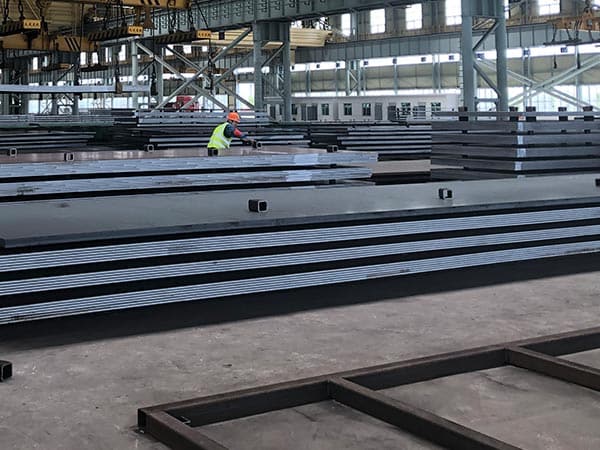
Understanding the Fundamentals of EN 10149 Rolling Plates
The EN 10149 standard represents a sophisticated category of European steel specifications designed specifically for hot-rolled flat products made of high yield strength steels intended for cold forming. Unlike traditional structural steels governed by EN 10025, the EN 10149 series is engineered to provide a unique balance of extreme strength and exceptional formability. This makes it a cornerstone material for industries where weight reduction and structural integrity are non-negotiable. The 'rolling' aspect mentioned in technical documentation usually refers to the specific delivery conditions: thermomechanically rolled (MC) or normalized/normalized rolled (NC).
The Metallurgy of Thermomechanical Rolling (TMCP)
The core of the EN 10149-2 specification lies in the Thermomechanical Control Process (TMCP). This is not a standard hot rolling procedure; it involves a highly controlled temperature regime and specific deformation sequences. By rolling the steel at temperatures where austenite recrystallization is retarded, engineers can achieve a significantly refined grain structure. Fine-grained steel is inherently tougher and stronger than coarse-grained alternatives. The addition of micro-alloying elements such as Niobium (Nb), Vanadium (V), and Titanium (Ti) facilitates this grain refinement and provides precipitation hardening. These elements allow the steel to reach yield strengths of up to 700 MPa or higher without the need for high carbon content, which is the primary reason for its superior weldability.
Mechanical Performance and Grade Classification
The EN 10149 standard is divided into several parts, with Part 2 (thermomechanically rolled) and Part 3 (normalized) being the most common. The 'MC' suffix denotes thermomechanically rolled steel with high ductility, while 'NC' denotes normalized or normalized rolled steel with similar cold-forming properties but typically lower maximum yield strengths. Below is a detailed look at the mechanical properties of the most utilized grades under EN 10149-2.
| Grade | Min. Yield Strength (MPa) | Tensile Strength (MPa) | Min. Elongation (%) |
|---|---|---|---|
| S315MC | 315 | 390-510 | 20-24 |
| S355MC | 355 | 430-550 | 19-23 |
| S420MC | 420 | 480-620 | 16-19 |
| S460MC | 460 | 520-670 | 14-17 |
| S500MC | 500 | 550-700 | 12-14 |
| S600MC | 600 | 650-820 | 11-13 |
| S700MC | 700 | 750-950 | 10-12 |
These values demonstrate the impressive range of strengths available. For instance, S700MC offers nearly double the yield strength of standard s355jr structural steel, allowing designers to use thinner plates to support the same loads, thereby reducing the overall weight of the structure by up to 30-40%.
Cold Forming and Bending Capabilities
One of the defining characteristics of EN 10149 plates is their suitability for cold forming. Manufacturers of heavy machinery and automotive components rely on the ability to bend these high-strength plates without cracking. The minimum bending radius is a critical parameter. For a grade like S700MC, the minimum recommended bending radius for a 90-degree bend is typically 1.5 to 2 times the thickness of the plate, depending on the orientation (longitudinal vs. transverse). This level of formability is achieved through strict control of inclusion shapes (often through calcium treatment) to ensure isotropic properties.
Weldability and Fabrication Advantages
Fabrication efficiency is a major driver for the adoption of EN 10149 rolling plates. Due to the low carbon equivalent (CEV) values—often below 0.40 even for the highest grades—these steels exhibit excellent weldability. Standard welding processes such as MAG, TIG, and submerged arc welding can be used without the extensive preheating requirements typically associated with high-strength steels. Furthermore, the low impurity levels (low Phosphorus and Sulfur) reduce the risk of hot cracking and improve the fatigue life of welded joints. When laser cutting EN 10149 plates, the narrow heat-affected zone (HAZ) ensures that the mechanical properties of the surrounding material remain largely intact, which is vital for precision engineering.
Environmental Adaptability and Low-Temperature Toughness
In demanding environments, such as Arctic conditions or high-altitude operations, the impact toughness of the material becomes paramount. EN 10149 grades are often specified with guaranteed impact energy values at temperatures as low as -20°C or -40°C. The fine-grained ferrite-pearlite or bainitic microstructure resulting from the TMCP process provides a high resistance to brittle fracture. This environmental resilience ensures that structures like crane booms and offshore equipment maintain their safety margins under extreme thermal stress.
Expanding Industry Applications
The versatility of EN 10149 rolling plates has led to their widespread adoption across multiple high-stakes sectors.
- Automotive Industry: Used for truck chassis, cross members, and safety-critical components where high strength-to-weight ratios are essential for fuel efficiency and payload capacity.
- Lifting and Mobile Equipment: Telescopic crane booms, aerial platforms, and forklift frames benefit from the high yield strength of S700MC, allowing for longer reaches and higher lift capacities.
- Agricultural Machinery: Plows, trailers, and harvesters utilize these plates for their combination of wear resistance and structural durability in harsh soil conditions.
- Construction and Infrastructure: Cold-pressed profiles and specialized structural sections leverage the formability of the steel to create complex shapes that would be impossible with standard structural grades.
Comparing EN 10149 with Traditional Structural Steels
It is important to distinguish EN 10149 from the more common EN 10025 series. While EN 10025-2 (e.g., S355J2) is the standard for general construction, it lacks the specialized grain refinement and inclusion control of EN 10149. EN 10025 steels are generally thicker and heavier for the same strength level and do not offer the same degree of cold-forming reliability. For applications involving complex bending or significant weight reduction, EN 10149 is the technically superior choice. The transition from S355J2 to S500MC or S700MC represents a shift towards advanced engineering where material performance is optimized for specific manufacturing processes.
Surface Quality and Finishing
The surface of EN 10149 plates is typically characterized by a thin, tightly adherent scale layer, which is a byproduct of the hot rolling process. For applications requiring high-quality finishes, such as powder coating or painting, the plates can be supplied in a pickled and oiled condition. This removes the scale and provides a clean, reactive surface that enhances the adhesion of protective coatings. The uniformity of the surface is also beneficial for automated robotic welding and high-speed laser cutting, as it ensures consistent beam absorption and arc stability.
Future Trends in High-Strength Rolling Plates
The evolution of EN 10149 continues with the development of even higher strength grades, such as S900MC and S960MC, which are pushing the boundaries of what is possible with thermomechanical rolling. These materials are becoming increasingly relevant as the global focus shifts towards sustainability and carbon footprint reduction. By using less steel to achieve the same structural performance, manufacturers can reduce raw material consumption, lower transportation costs, and decrease the energy required for fabrication. The technical integration of these plates into modern CAD/CAM workflows allows for the realization of lighter, stronger, and more efficient mechanical systems.
Leave a message