
What is the difference between ordinary carbon steel and en 10149-2 equivalent
Explore the technical differences between ordinary carbon steel and EN 10149-2 equivalent grades. This guide covers metallurgy, mechanical properties, and processing advantages for high-strength applications.
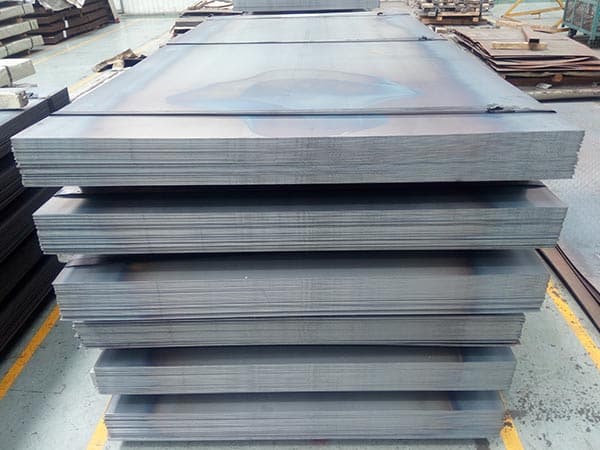
The Fundamental Shift: From Basic Structural Steel to High-Strength Engineering
When discussing the structural integrity of modern machinery, the comparison between ordinary carbon steel and EN 10149-2 equivalent grades represents a significant leap in metallurgical technology. Ordinary carbon steel, typically represented by standards like S235JR, Q235B, or ASTM A36, has been the backbone of construction for decades. These materials are characterized by a simple chemical composition, primarily iron and carbon, with limited alloying elements. Their strength is derived from basic hot-rolling processes, making them reliable for general structural use where weight is not a critical constraint.
In contrast, EN 10149-2 specifies hot-rolled flat products made of high yield strength steels for cold forming. These are not your standard structural steels. The grades within this standard, such as S315MC, S355MC, S420MC, up to S700MC, are produced using Thermomechanically Rolled (TMCP) processes. The "MC" suffix is crucial: "M" denotes thermomechanical rolling, and "C" indicates the material is suitable for cold forming. This distinction is the primary technical bridge between basic carbon steel and high-performance engineering alloys.
Metallurgical Architecture and the TMCP Advantage
The most profound difference lies in the grain structure. Ordinary carbon steel often features a relatively coarse grain size, which limits its yield strength and toughness. EN 10149-2 steels utilize micro-alloying techniques, incorporating trace amounts of Niobium (Nb), Vanadium (V), and Titanium (Ti). These elements, combined with the TMCP process, facilitate grain refinement at a microscopic level. During thermomechanical rolling, the temperature and deformation are strictly controlled to prevent grain growth, resulting in a fine-grained ferrite-pearlite or even bainitic microstructure.
This fine grain structure allows EN 10149-2 equivalents to achieve much higher yield strengths without the need for high carbon content. While ordinary carbon steel might increase strength by adding carbon—which unfortunately reduces weldability and toughness—EN 10149-2 maintains a very low Carbon Equivalent (CEV). This ensures that a grade like S700MC, with nearly three times the yield strength of S235JR, remains exceptionally easy to weld and highly resistant to brittle fracture.
Mechanical Performance: A Comparative Analysis
To understand the practical implications, one must look at the data. Ordinary structural steels are defined by their minimum yield strength, usually ranging from 235 MPa to 355 MPa. EN 10149-2 starts where ordinary steel often peaks and extends far beyond.
| Property | Ordinary Carbon Steel (S235JR) | EN 10149-2 (S355MC) | EN 10149-2 (S700MC) |
|---|---|---|---|
| Yield Strength (min MPa) | 235 | 355 | 700 |
| Tensile Strength (MPa) | 360 - 510 | 430 - 550 | 750 - 950 |
| Elongation (min %) | 24 | 19 | 12 |
| Micro-alloying | None/Minimal | Nb, V, Ti | Nb, V, Ti |
| Processing | Hot Rolled | TMCP | TMCP |
The data highlights a critical engineering opportunity: weight reduction. By replacing a 10mm plate of ordinary S235JR with a 4mm plate of S700MC, an engineer can achieve similar load-bearing capacity while reducing the component weight by over 50%. This is a primary driver in industries where fuel efficiency and payload capacity are paramount.
Processing Performance: Cold Forming and Weldability
One common misconception is that higher strength leads to poorer workability. For EN 10149-2 steels, the opposite is often true regarding cold forming. These steels are specifically designed to be bent, folded, and stamped. The "C" designation guarantees that the material can withstand tight bending radii without cracking. For instance, S355MC can typically be bent 180 degrees with a radius as small as 0.5 to 1.5 times the thickness, depending on the orientation. Ordinary carbon steel, while ductile, does not always offer the same consistency in high-precision stamping operations due to its coarser grain structure and potential for non-metallic inclusions.
Weldability is another area where EN 10149-2 excels. Because the strength is derived from grain refinement rather than high carbon or alloy content, the Heat Affected Zone (HAZ) remains relatively stable during welding. In ordinary steels with higher carbon content to reach higher strengths, the HAZ can become brittle, requiring pre-heating or post-weld heat treatment. EN 10149-2 grades generally eliminate these requirements, streamlining the manufacturing process and reducing labor costs.
Environmental Adaptability and Fatigue Resistance
The fine-grained nature of EN 10149-2 equivalents provides superior resistance to fatigue and low-temperature impact. In mobile machinery or transport vehicles, components are subjected to cyclic loading. Coarse-grained ordinary steel is more susceptible to crack initiation and propagation at grain boundaries. The dense, refined structure of TMCP steel acts as a barrier to crack growth, significantly extending the service life of the equipment.
Furthermore, EN 10149-2 steels often exhibit better performance in cold climates. While ordinary S235JR might become brittle at temperatures below zero, many EN 10149-2 grades are tested for impact energy at -20°C or -40°C, ensuring structural integrity in harsh environments. This makes them the preferred choice for telescopic cranes, truck chassis, and agricultural equipment operating in diverse geographical regions.
Strategic Industry Applications
The transition from ordinary carbon steel to EN 10149-2 is most visible in the automotive and heavy transport sectors. Truck chassis frames are a prime example. Using S500MC or S700MC allows manufacturers to create lighter, more flexible frames that can handle higher payloads while resisting the torsional stresses of off-road driving. Ordinary carbon steel would require much thicker sections, leading to a heavy, inefficient vehicle.
In the lifting and crane industry, the boom sections of mobile cranes rely almost exclusively on EN 10149-2 equivalents or even higher-strength quenched and tempered steels. The high strength-to-weight ratio allows for longer reach and higher lift capacities. Similarly, in the agricultural sector, the complex shapes of plowshares and trailer components benefit from the cold-forming capabilities of S355MC and S420MC, which allow for aerodynamic and structurally optimized designs that would be impossible with standard structural grades.
Economic Impact and Material Selection
While the per-ton price of EN 10149-2 steel is higher than that of ordinary carbon steel, the total cost of ownership often favors the high-strength option. The reduction in material volume leads to lower shipping costs, reduced welding consumables, and faster assembly times. More importantly, the end-user benefits from a product that is lighter, more durable, and more efficient. For a manufacturer, switching to an EN 10149-2 equivalent is not just a material change; it is a strategic move toward higher engineering standards and market competitiveness.
When selecting between these materials, the decision should be based on the specific stress profiles of the application. If the design is stiffness-critical (where the modulus of elasticity is the limiting factor), the advantage of high-strength steel is minimized because all steels have roughly the same Young's modulus. However, if the design is strength-critical or weight-sensitive, EN 10149-2 is the clear winner. Understanding the nuances of these equivalents allows engineers to push the boundaries of what is possible in modern steel fabrication.
Leave a message