
The usage of s460mc mechanical properties
A comprehensive analysis of S460MC mechanical properties, chemical composition, and industrial applications. Learn how this high-strength steel optimizes structural design and weight reduction.
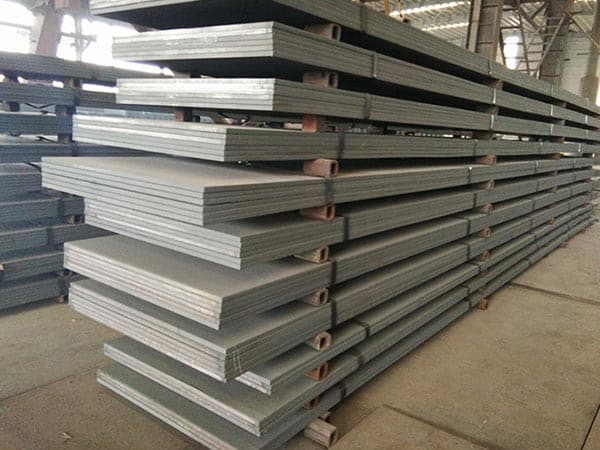
The Technical Core of S460MC: Beyond Basic Strength
S460MC represents a pinnacle of thermomechanically rolled steel technology, categorized under the EN 10149-2 standard. This high-yield-strength steel is specifically engineered for cold forming, offering a sophisticated balance between extreme durability and exceptional workability. Unlike traditional carbon steels, S460MC achieves its mechanical prowess through a process known as Thermomechanically Controlled Processing (TMCP). This metallurgical approach refines the grain structure to a microscopic level, ensuring that the material can withstand significant stress without sacrificing its ability to be shaped into complex geometries. Engineers prioritize S460MC when the objective is to reduce the overall weight of a structure while maintaining or even enhancing its load-bearing capacity. The 'S' denotes structural steel, '460' indicates the minimum yield strength in Megapascals (MPa), and 'MC' signifies its suitability for cold forming in a thermomechanically rolled condition.
Chemical Composition and Grain Refinement
The superior mechanical properties of S460MC are not accidental; they are the result of a meticulously controlled chemical blueprint. The alloy utilizes micro-alloying elements such as Niobium (Nb), Vanadium (V), and Titanium (Ti). These elements act as grain refiners, preventing the growth of large crystals during the rolling process. A finer grain structure directly translates to higher toughness and better resistance to crack propagation. By keeping the carbon content relatively low, S460MC maintains excellent weldability, a critical factor in modern manufacturing where automated welding processes are standard.
| Element | Carbon (C) % | Manganese (Mn) % | Silicon (Si) % | Phosphorus (P) % | Sulfur (S) % | Aluminium (Al) % |
|---|---|---|---|---|---|---|
| Max Content | 0.12 | 1.60 | 0.50 | 0.025 | 0.015 | 0.015 (min) |
In addition to these primary elements, the combined content of Nb, V, and Ti is strictly limited to 0.22% to ensure that the steel remains ductile. This chemical precision allows S460MC to exhibit a consistent performance across different batches, which is vital for high-precision industries like automotive chassis manufacturing.
Mechanical Properties: A Deep Dive into Performance
The defining characteristic of S460MC is its yield strength. With a minimum yield of 460 MPa, it provides a significant upgrade over the more common S355 series. This leap in strength allows designers to utilize thinner plates, which directly reduces the weight of the final product. Tensile strength, which measures the maximum stress the material can handle before breaking, ranges between 520 and 670 MPa. This range ensures that the material is not overly brittle, providing a safety margin during extreme loading conditions.
| Property | Value (Thickness < 3mm) | Value (Thickness ≥ 3mm) |
|---|---|---|
| Min. Yield Strength (MPa) | 460 | 460 |
| Tensile Strength (MPa) | 520 - 670 | 520 - 670 |
| Min. Elongation (A80mm %) | 14 | - |
| Min. Elongation (A5 %) | - | 17 |
Elongation is another critical metric. For S460MC, an elongation of 14% to 17% (depending on thickness) indicates its high ductility. This means the steel can undergo significant deformation before failure, making it an ideal candidate for parts that require deep drawing or complex bending. Furthermore, the impact energy of S460MC is often tested at -20°C or -40°C to ensure its reliability in cold climates, making it suitable for global logistics and heavy-duty outdoor equipment.
Cold Forming and Bending Dynamics
The 'MC' designation highlights the steel's primary usage: cold forming. S460MC is designed to be bent, pressed, and folded without the risk of surface cracking or structural failure. This is particularly important in the production of longitudinal beams for trucks and trailers. When working with S460MC, fabricators must account for the material's higher yield strength by using more powerful bending equipment and considering the springback effect. Springback is the tendency of the metal to return to its original shape after the bending force is removed; because S460MC is stronger than standard mild steel, it exhibits more springback, requiring precise over-bending calculations.
- Bending Radius: For thicknesses up to 3mm, a minimum internal bending radius of 0.8 times the thickness is recommended.
- Thickness Influence: As thickness increases (3mm to 6mm), the radius should increase to approximately 1.0 to 1.5 times the thickness to maintain integrity.
- Surface Quality: The thermomechanical rolling process ensures a clean surface with minimal scale, which reduces wear on forming tools and improves the quality of subsequent coatings.
Weldability and Fabrication Excellence
Despite its high strength, S460MC is remarkably easy to weld. The low carbon equivalent (CEV) ensures that the heat-affected zone (HAZ) does not become excessively hard or brittle, which is a common issue with high-strength steels. Standard welding methods such as Manual Metal Arc (MMA), Metal Active Gas (MAG), and Laser Beam Welding are all highly effective. Because of its fine-grain structure, the weld joints maintain high toughness, provided that the heat input is carefully controlled. Excessive heat can lead to grain coarsening in the HAZ, which might slightly reduce the local yield strength, so following a qualified Welding Procedure Specification (WPS) is essential for maintaining the mechanical integrity of the assembly.
Weight Reduction and Economic Efficiency
The strategic use of S460MC mechanical properties is often driven by the need for lightweighting. In the transportation industry, every kilogram saved in the chassis or frame translates to an increase in payload capacity and a reduction in fuel consumption. By switching from a 6mm S355 plate to a 4mm or 5mm S460MC plate, manufacturers can achieve a weight reduction of 15% to 25% without compromising the structural safety of the vehicle. This not only improves the vehicle's environmental footprint but also provides a significant competitive advantage in terms of operational efficiency. The initial higher cost per ton of S460MC is frequently offset by the reduction in material volume required and the long-term fuel savings for the end-user.
Diverse Industry Applications
The versatility of S460MC makes it a staple in several high-demand sectors. In the heavy machinery industry, it is used for crane booms, excavator arms, and agricultural equipment where high stress and dynamic loads are constant. The material's ability to withstand fatigue makes it perfect for components that undergo repeated loading cycles. In the construction sector, S460MC is utilized for cold-formed sections and profiles that require high load-bearing capacity with minimal profile depth.
- Automotive: Chassis frames, cross members, and suspension parts.
- Lifting Equipment: Telescopic crane sections and outriggers.
- Storage Systems: High-density racking and heavy-duty shelving.
- Energy: Support structures for solar panels and wind turbine components.
Environmental Adaptability and Longevity
S460MC exhibits good atmospheric corrosion resistance compared to standard carbon steels, although it is not stainless. In harsh environments, it is typically protected by galvanizing, painting, or powder coating. The fine-grain structure provides an excellent substrate for these coatings, ensuring long-lasting adhesion and protection. Furthermore, the fatigue resistance of S460MC ensures that structures have a long service life even under fluctuating stresses, reducing the need for frequent repairs or replacements. This durability contributes to the overall sustainability of the projects where S460MC is employed, as the life-cycle cost is significantly lower than that of lower-grade alternatives.
Strategic Selection: S460MC vs. Other Grades
Choosing S460MC over S355MC or S500MC depends on the specific balance of strength and ductility required for a project. While S500MC offers even higher strength, it comes with a trade-off in terms of slightly reduced ductility and a more challenging forming process. S460MC sits at the 'sweet spot' for many engineers, providing enough strength for substantial weight savings while remaining easy to process with standard workshop equipment. It is the workhorse of the HSLA (High-Strength Low-Alloy) world, bridging the gap between standard structural steels and ultra-high-strength grades.
The usage of S460MC mechanical properties allows for a more nuanced approach to engineering. It encourages the design of leaner, more efficient, and more durable structures. By understanding the interplay between its yield strength, ductility, and weldability, manufacturers can push the boundaries of what is possible in metal fabrication, creating products that are both high-performing and economically viable in a demanding global market.
Leave a message