
Is s460mc grade or Q235B steel stronger?
Compare S460MC and Q235B steel grades. Analyze yield strength, chemical composition, processing performance, and industry applications to determine which is stronger and more efficient.
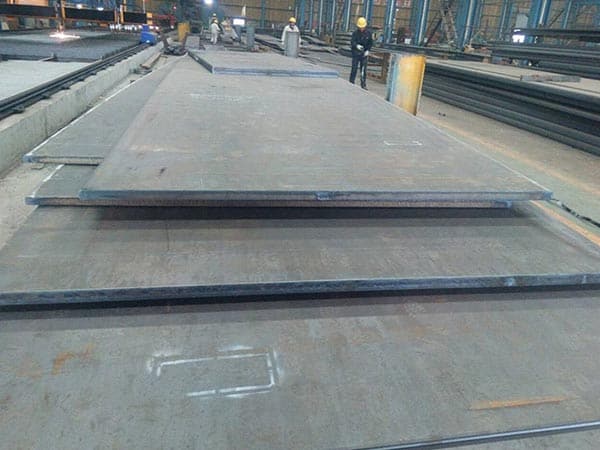
Defining the Strength Hierarchy: S460MC vs. Q235B
When engineers and procurement specialists evaluate materials for structural integrity, the term strength often takes center stage. To answer the question directly: S460MC is significantly stronger than Q235B. However, strength is not a monolithic concept. It encompasses yield strength, tensile strength, and the ability of the material to withstand stress without permanent deformation. S460MC is a high-yield strength steel for cold forming, governed by the European standard EN 10149-2, while Q235B is a carbon structural steel following the Chinese standard GB/T 700.
The numerical designation in both grades provides the first clue to their performance. The '460' in S460MC refers to a minimum yield strength of 460 MPa, whereas the '235' in Q235B indicates a minimum yield strength of 235 MPa. This nearly twofold difference dictates how these materials are utilized across global industries, from heavy-duty truck chassis to simple civil construction projects.
Mechanical Properties: A Data-Driven Comparison
To understand the magnitude of the difference, we must look at the specific mechanical parameters. S460MC belongs to the High-Strength Low-Alloy (HSLA) family, specifically designed for weight reduction and high load-bearing capacity. Q235B, conversely, is the workhorse of mild steel, valued for its versatility and low cost rather than its raw power.
| Property | S460MC (EN 10149-2) | Q235B (GB/T 700) |
|---|---|---|
| Yield Strength (MPa) | ≥ 460 | ≥ 235 |
| Tensile Strength (MPa) | 520 - 670 | 370 - 500 |
| Elongation (%) | ≥ 14 (t < 3mm) | ≥ 25 |
| Impact Energy (Charpy V-Notch) | Tested at -20°C (optional) | 27J at 20°C |
The data reveals that S460MC offers a yield strength that is approximately 95% higher than that of Q235B. This means that for a given cross-sectional area, S460MC can support nearly double the load before it begins to plastically deform. This advantage is the primary driver for its adoption in sectors where lightweighting is critical.
The Role of Chemical Composition and Grain Refinement
The superior strength of S460MC is not accidental; it is the result of precise metallurgical engineering. While Q235B relies on a simple carbon-manganese chemistry, S460MC utilizes Thermomechanically Rolled (TMCP) processes and micro-alloying elements.
- Micro-alloying Elements: S460MC contains small amounts of Niobium (Nb), Vanadium (V), and Titanium (Ti). These elements facilitate grain refinement, creating a much finer microstructure compared to the relatively coarse grains of Q235B.
- Carbon Content: Interestingly, S460MC often maintains a lower carbon content (max 0.12%) than Q235B (max 0.17-0.20%). This lower carbon content is crucial for maintaining excellent weldability and toughness despite the higher strength.
- Sulfur and Phosphorus Control: S460MC has much stricter limits on impurities, which reduces the risk of lamellar tearing and improves the overall purity of the steel.
By refining the grain size, manufacturers can increase both strength and toughness simultaneously—a feat that traditional carbon steels like Q235B cannot achieve without increasing thickness and weight.
Processing Performance: Cold Forming and Weldability
A common misconception is that stronger steel is harder to work with. While S460MC is much harder than Q235B, it is specifically engineered for cold forming. The "MC" suffix denotes its suitability for cold pressing and bending.
Cold Bending: S460MC can be bent to tight radii without cracking, provided the correct tools are used. Because it is stronger, it exhibits more "springback" than Q235B, requiring operators to over-bend slightly to achieve the desired angle. Q235B, being softer and more ductile, is exceptionally easy to form but lacks the structural resilience needed for high-stress components.
Weldability: Both grades are considered highly weldable. However, because S460MC derives its strength from the TMCP process, excessive heat input during welding can potentially soften the heat-affected zone (HAZ). Welders must manage cooling rates more carefully with S460MC than with the more forgiving Q235B to ensure the joint retains the base metal's high-strength properties.
Environmental Adaptability and Fatigue Resistance
In dynamic environments, such as the chassis of a heavy truck or the boom of a crane, fatigue resistance is more important than static strength. S460MC excels here. Its fine-grained structure inhibits the initiation and propagation of cracks under cyclic loading. Q235B, while ductile, will reach its fatigue limit much sooner under high-stress cycles.
Regarding environmental adaptability, Q235B is often used in general atmospheric conditions. S460MC, due to its micro-alloyed nature, often exhibits slightly better resistance to atmospheric corrosion than plain carbon steel, though neither is a substitute for galvanized or stainless steel in highly corrosive environments. For low-temperature applications, S460MC is frequently specified with guaranteed impact toughness at sub-zero temperatures, making it safer for use in cold climates compared to standard Q235B.
Economic Efficiency: Strength vs. Cost
At first glance, Q235B appears more economical because its price per ton is lower. However, a professional analysis must consider the total cost of ownership and material efficiency. Because S460MC is twice as strong, designers can use thinner sections to achieve the same load-bearing capacity.
Using S460MC instead of Q235B often results in a 30% to 50% reduction in weight for the final structure. This leads to several cost-saving benefits:
- Lower Shipping Costs: Lighter components are cheaper to transport.
- Increased Payload: In the automotive industry, a lighter chassis means a higher cargo capacity, directly increasing the vehicle's revenue potential.
- Reduced Welding Volume: Thinner plates require less filler metal and fewer welding passes, reducing labor and consumable costs.
- Energy Efficiency: Lighter vehicles consume less fuel, contributing to lower carbon emissions and operational costs.
Strategic Application: Where Each Grade Shines
The choice between S460MC and Q235B depends entirely on the application's requirements. They serve different niches in the industrial ecosystem.
S460MC Applications:
- Automotive Industry: Truck frames, cross members, and structural reinforcements where weight reduction is paramount.
- Heavy Machinery: Crane booms, excavator arms, and agricultural equipment components.
- Cold Pressed Parts: Complex structural shapes that require both high strength and precise geometry.
Q235B Applications:
- Construction: Secondary structural members, factory sheds, and simple brackets where high strength-to-weight ratios are not required.
- General Manufacturing: Base plates, storage tanks, and non-critical hardware.
- Infrastructure: Guardrails and simple supports where cost is the primary constraint.
Technical Summary of the Strength Advantage
S460MC is the clear winner in terms of mechanical performance. It offers nearly double the yield strength of Q235B, superior fatigue resistance, and excellent cold-forming capabilities. While Q235B remains a vital material for low-stress, budget-sensitive applications, S460MC represents the modern shift toward high-efficiency, lightweight engineering. The decision to upgrade from Q235B to S460MC is often a move toward higher safety margins and long-term operational savings, particularly in the transport and heavy equipment sectors.
Leave a message