
What is the S500MC thermomechanically rolled steels with hot rolled
Explore the comprehensive guide on S500MC thermomechanically rolled steel, covering its mechanical properties, chemical composition, processing advantages, and industrial applications.
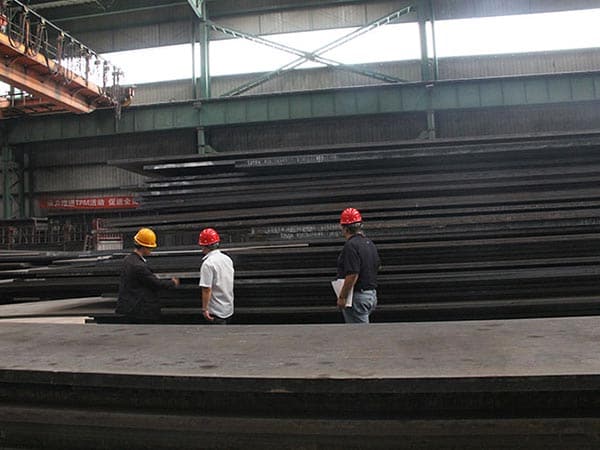
The Essence of S500MC: High-Strength Thermomechanically Rolled Steel
S500MC is a high-strength, low-alloy (HSLA) steel grade specifically designed for cold-forming applications. Defined under the European standard EN 10149-2, this material represents a significant leap in metallurgical engineering, offering a unique combination of high yield strength, excellent toughness, and superior weldability. The "S" in its name stands for structural steel, "500" indicates a minimum yield strength of 500 MPa, and "MC" denotes that the material is thermomechanically rolled (M) and possesses high cold-forming capacity (C).
Unlike conventional hot-rolled steels, S500MC achieves its mechanical properties through a sophisticated production process known as Thermomechanical Control Process (TMCP). This method allows for a reduction in alloying elements while simultaneously refining the grain structure, resulting in a steel that is both stronger and more ductile than traditional carbon steels of similar thickness.
Understanding the Thermomechanical Rolling (TMCP) Process
The core identity of S500MC lies in how it is manufactured. Traditional hot rolling involves heating the steel to high temperatures and rolling it while it is fully austenitic. In contrast, thermomechanical rolling involves precise control of the temperature and the deformation during the rolling process. This typically occurs at temperatures lower than those used in standard hot rolling, often in the region where recrystallization is suppressed.
- Grain Refinement: The controlled deformation creates a very fine ferrite-pearlite or bainitic grain structure. Smaller grains impede dislocation movement more effectively, increasing strength without sacrificing toughness.
- Micro-alloying Precipitation: During the cooling phase, micro-alloying elements like Niobium (Nb), Vanadium (V), and Titanium (Ti) form fine carbides and nitrides. these precipitates further strengthen the matrix.
- Energy Efficiency: Because the strength is derived from the rolling process and chemistry rather than subsequent heat treatment (like quenching and tempering), the production of S500MC is more energy-efficient.
Chemical Composition and Its Impact on Performance
The chemical makeup of S500MC is engineered to ensure high strength while maintaining a low carbon equivalent (CEV). This low CEV is critical for the steel's exceptional weldability. By minimizing carbon and relying on micro-alloys, manufacturers prevent the formation of brittle phases in the heat-affected zone (HAZ) during welding.
| Element | Maximum Content (%) |
|---|---|
| Carbon (C) | 0.12 |
| Manganese (Mn) | 1.60 |
| Silicon (Si) | 0.50 |
| Phosphorus (P) | 0.025 |
| Sulphur (S) | 0.015 |
| Aluminium (Al) | 0.015 |
| Nb + V + Ti | 0.22 |
The inclusion of Niobium and Titanium is particularly vital. These elements act as grain refiners and stabilizers. The low sulfur content ensures high purity, which translates to better impact resistance and prevents lamellar tearing in complex structural joints.
Mechanical Properties: Strength Meets Flexibility
S500MC is prized for its balance. While it offers a minimum yield strength of 500 MPa, it retains enough elongation to allow for complex bending and folding operations. This makes it an ideal candidate for parts that require both structural integrity and intricate geometry.
| Property | Value (Nominal Thickness < 3mm) | Value (Nominal Thickness > 3mm) |
|---|---|---|
| Yield Strength (MPa) | Min 500 | Min 500 |
| Tensile Strength (MPa) | 550 - 700 | 550 - 700 |
| Elongation A80mm (%) | Min 12 | - |
| Elongation A5 (%) | - | Min 14 |
It is important to note that the bendability of S500MC is superior to many other steels in its class. For a 90-degree bend, the minimum recommended mandrel radius is typically 0.5 to 1.5 times the thickness of the plate, depending on the orientation (transverse or longitudinal). This flexibility allows engineers to design lighter components by using thinner sections of high-strength steel without fearing cracks during fabrication.
Processing Performance: Welding, Cutting, and Forming
The industrial utility of S500MC is largely defined by how easily it can be processed in a factory environment. Because it is a low-carbon steel, it does not require pre-heating or post-weld heat treatment in most standard applications.
Welding Excellence: S500MC can be welded using all standard methods, including MAG (Metal Active Gas), MIG, TIG, and laser welding. The fine grain structure remains relatively stable, though care should be taken with heat input to avoid excessive grain growth in the HAZ, which could slightly reduce local toughness.
Laser and Plasma Cutting: The clean chemical composition and consistent surface quality of thermomechanically rolled plates make them excellent for automated laser cutting. The absence of heavy scale and internal stresses ensures high dimensional accuracy and clean edges.
Cold Forming: As a "C" grade steel, S500MC is optimized for cold pressing and cold drawing. It is frequently used in the production of complex profiles and chassis components where weight reduction is a priority. The material's high yield-to-tensile ratio means that while it is strong, it requires powerful forming equipment compared to mild steel.
Environmental Adaptation and Sustainability
In the modern era of green manufacturing, S500MC plays a pivotal role. The primary environmental benefit comes from lightweighting. By replacing standard s355jr steel with S500MC, engineers can reduce the weight of a structure by up to 30% while maintaining the same load-bearing capacity.
- Reduced Fuel Consumption: In the automotive and transport sectors, lighter vehicles consume less fuel and emit fewer greenhouse gases.
- Material Efficiency: Using less steel to achieve the same structural goal reduces the overall carbon footprint of the project, from mining and smelting to transport.
- Recyclability: Like all steel, S500MC is 100% recyclable. Its low alloy content makes it easy to integrate back into the circular economy without complex separation processes.
Broadening Industry Applications
The versatility of S500MC has led to its adoption across a wide range of demanding sectors. It is no longer confined to niche engineering but is a staple in high-performance infrastructure.
Automotive and Heavy Transport: This is the most common application. S500MC is used for truck frames, longitudinal beams, cross members, and trailer chassis. The ability to withstand dynamic loads and fatigue while keeping the tare weight low is invaluable for logistics efficiency.
Construction Machinery: Components for cranes, excavators, and bulldozers often utilize S500MC. The high yield strength is essential for telescopic crane booms and support structures that must handle immense pressure.
Energy and Infrastructure: In the renewable energy sector, S500MC is used for mounting systems in solar farms and structural components in wind turbine assemblies. Its resistance to atmospheric corrosion (when properly coated) and its high strength-to-weight ratio make it ideal for remote installations.
Cold-Pressed Profiles: Many structural C and Z purlins used in industrial buildings are manufactured from S500MC. These profiles offer higher spans and better load resistance than those made from conventional hot-rolled strips.
Comparison: S500MC vs. Traditional Hot Rolled Steels
When choosing between S500MC and a standard grade like S355, the decision usually hinges on the trade-off between material cost and total project cost. While S500MC may have a higher price per ton, the reduction in material volume, lower welding costs (due to thinner plates), and decreased transport costs often result in a lower total cost of ownership.
Furthermore, compared to quenched and tempered (Q&T) steels, S500MC offers better formability. Q&T steels often become brittle if bent too sharply, whereas the thermomechanical process preserves the ductility needed for aggressive cold-forming operations. This makes S500MC the "sweet spot" for manufacturers looking for high strength without the processing headaches of ultra-high-strength martensitic steels.
Leave a message