
Why choose the S460MC special steel for automobiles steel sheet
Discover why S460MC high-strength low-alloy steel is the premier choice for automotive manufacturing. This guide covers mechanical properties, processing advantages, and its role in vehicle lightweighting and safety.
The Evolution of High-Strength Materials in Automotive Engineering
Modern vehicle design demands a delicate balance between weight reduction, structural integrity, and cost-efficiency. As global emissions standards tighten, manufacturers are pivoting toward materials that offer superior strength-to-weight ratios without compromising passenger safety. S460MC, a thermomechanically rolled high-yield-strength steel, has emerged as a cornerstone in this transition. This special steel grade, governed by the EN 10149-2 standard, is specifically engineered for cold forming, making it an ideal candidate for complex automotive components.
The shift from traditional carbon steels to S460MC is driven by the necessity to reduce the curb weight of vehicles, which directly correlates to lower fuel consumption and reduced CO2 emissions. Unlike standard structural steels, S460MC provides a significantly higher yield strength, allowing engineers to use thinner gauges of material while maintaining the same, or even superior, load-bearing capacity. This capability is not merely a technical advantage but a strategic necessity in the competitive landscape of automotive manufacturing.
Metallurgical Excellence: The Chemical Composition of S460MC
The performance of S460MC is rooted in its precise chemical makeup and the thermomechanical rolling process (TMCP). By strictly controlling the levels of carbon and incorporating micro-alloying elements, the steel achieves a fine-grained microstructure that is both tough and ductile.
| Element | Maximum Content (%) |
|---|---|
| Carbon (C) | 0.12 |
| Manganese (Mn) | 1.60 |
| Silicon (Si) | 0.50 |
| Phosphorus (P) | 0.025 |
| Sulfur (S) | 0.015 |
| Aluminium (Al) | 0.015 |
| Niobium (Nb) | 0.09 |
| Titanium (Ti) | 0.15 |
| Vanadium (V) | 0.20 |
The low carbon content (max 0.12%) is critical for ensuring excellent weldability and preventing the formation of brittle phases during the cooling process. The addition of Niobium (Nb) and Titanium (Ti) serves as a grain refiner. During thermomechanical rolling, these elements form stable carbides and nitrides that pin grain boundaries, preventing grain growth and resulting in a fine ferritic-pearlitic structure. This microscopic refinement is what grants S460MC its characteristic high yield strength and exceptional low-temperature toughness.
Mechanical Properties and Structural Reliability
When evaluating S460MC for automotive steel sheets, the mechanical properties are the primary metrics of interest. The "460" in its designation refers to its minimum yield strength of 460 MPa. This is a substantial leap from standard S355 grades, providing a wider safety margin for structural components.
- Yield Strength (ReH): Minimum 460 MPa, ensuring the material resists permanent deformation under high stress.
- Tensile Strength (Rm): Ranges between 520 and 670 MPa, providing the necessary resistance against fracture.
- Elongation (A80): Typically 14% or higher, indicating the steel can undergo significant deformation before failure, which is vital for energy absorption during a collision.
- Impact Strength: Excellent performance even at low temperatures, ensuring the vehicle's chassis remains resilient in diverse climates.
These properties allow for the design of "thin-walled" structures. In heavy-duty trucks and passenger cars alike, replacing thicker S355MC sheets with thinner S460MC sheets can result in weight savings of up to 20-30% in specific sub-assemblies. This weight reduction is achieved without sacrificing the stiffness or the fatigue life of the component.
Superior Cold Forming and Processing Performance
One of the standout features of S460MC is its exceptional cold-forming capability. Despite its high strength, the material behaves predictably during bending, pressing, and flanging operations. This is particularly important for automotive parts that require complex geometries, such as longitudinal beams and cross members.
The minimum recommended bending radius for S460MC is generally 1.0 times the thickness (1.0t) for bending transverse to the rolling direction. This tight bending radius allows designers to create compact and space-efficient components. Furthermore, the consistent mechanical properties across the entire coil ensure that springback is predictable, reducing the need for expensive tooling adjustments and minimizing scrap rates during mass production.
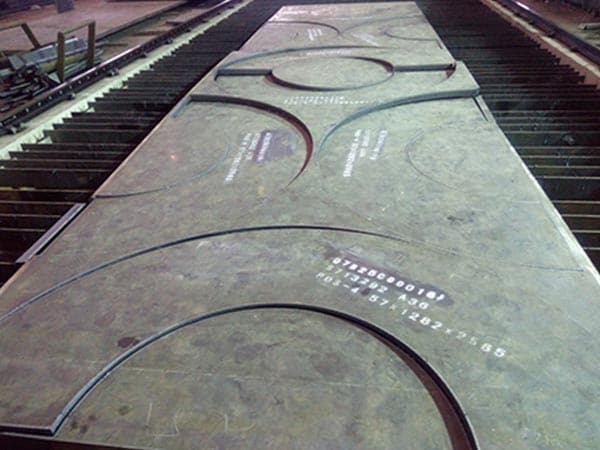
In terms of cutting, S460MC is highly compatible with modern laser and plasma cutting technologies. The clean edges produced during thermal cutting require minimal post-processing, further streamlining the manufacturing workflow. The stability of the material during cutting—free from significant internal stresses—prevents warping, which is essential for maintaining the tight tolerances required in automated assembly lines.
Weldability: A Critical Factor for Automated Assembly
Automotive manufacturing relies heavily on robotic welding processes, including MIG, MAG, and spot welding. The low carbon equivalent (CEV) of S460MC makes it inherently suitable for these high-speed joining techniques. Because the material is less prone to hardening in the heat-affected zone (HAZ), the risk of cold cracking is significantly reduced.
Maintaining the integrity of the HAZ is paramount for the long-term durability of the vehicle frame. S460MC's micro-alloyed design ensures that the strength loss in the welded area is kept to a minimum, preserving the overall structural performance of the assembly. This weldability also facilitates the repair of vehicles, as standard welding procedures can be applied without the need for complex pre-heating or post-weld heat treatments.
Environmental Adaptability and Corrosion Resistance
Automobiles are exposed to a wide range of environmental stressors, from road salts and humidity to extreme temperature fluctuations. S460MC demonstrates robust environmental adaptability. While it is not a stainless grade, its fine-grained structure provides a uniform surface that accepts high-quality coatings and galvanization exceptionally well.
The adhesion of protective layers is enhanced by the clean surface finish typical of thermomechanically rolled products. When combined with modern e-coating and painting processes, S460MC components exhibit excellent long-term corrosion resistance, ensuring that the structural safety of the vehicle is maintained throughout its service life. Furthermore, the material's fatigue resistance is a key factor in its environmental performance. Under cyclic loading—the constant vibration and stress changes a vehicle undergoes—S460MC maintains its structural integrity longer than lower-grade steels, reducing the likelihood of stress-induced cracking.
Strategic Applications in the Automotive Industry
The versatility of S460MC leads to its widespread use across various vehicle segments. In the heavy-vehicle sector, it is the preferred choice for truck chassis frames, where high load capacity and weight optimization are critical. By using S460MC, manufacturers can increase the payload of the truck while keeping the gross vehicle weight within legal limits.
In passenger vehicles, S460MC is found in:
- Chassis Components: Suspension arms, subframes, and reinforcement brackets.
- Seat Frames: Where high strength is needed to protect occupants during impact while keeping the seat assembly lightweight.
- Bumper Supports: Providing the necessary energy absorption during low-speed and high-speed impacts.
- Longitudinal and Cross Members: Forming the backbone of the vehicle's structural cage.
Beyond traditional internal combustion engine (ICE) vehicles, S460MC is gaining traction in the Electric Vehicle (EV) market. The heavy weight of battery packs necessitates even more aggressive weight-saving measures in the rest of the vehicle structure. S460MC provides the high-strength solution needed to offset the battery weight, helping to maximize the driving range of EVs.
Economic Impact and Future Trends
While the initial cost per ton of S460MC may be higher than that of standard carbon steel, the total cost of ownership and production often tells a different story. The ability to use less material (down-gauging) directly reduces the total weight of steel purchased. Additionally, the ease of processing—low scrap rates, high-speed welding, and minimal post-processing—lowers the overall manufacturing cost.
Looking forward, the trend toward even higher strength grades like S500MC and S700MC is visible, yet S460MC remains the "sweet spot" for many applications due to its perfect balance of formability and strength. It represents a mature technology that provides reliable performance with a well-established supply chain. As automotive engineering continues to push the boundaries of what is possible, S460MC will undoubtedly remain a vital material in the quest for safer, lighter, and more efficient vehicles.
The decision to utilize S460MC is a commitment to quality and engineering foresight. By leveraging its unique metallurgical properties, automotive manufacturers can meet the rigorous demands of the modern market, delivering vehicles that are not only high-performing but also environmentally conscious and economically viable.
Leave a message