
What is the 1.0986 weldable structural steel pipe schedule
A technical breakdown of 1.0986 (S460MC) steel pipe dimensions, welding requirements, and how pipe schedules apply to high-yield structural steel.
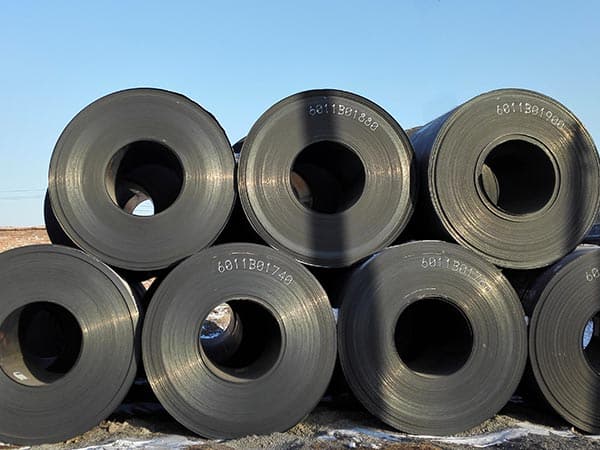
Understanding 1.0986: Material Grade vs. Pipe Schedule
When engineers ask about the 'schedule' for 1.0986 steel pipe, they often conflate two different standards. 1.0986 refers to the material designation under EN 10149-2, specifically S460MC. This is a thermomechanically rolled steel designed for cold forming. It boasts a high yield strength of 460 MPa. However, 'schedule' (like Sch 40 or Sch 80) is an ASME/ANSI B36.10 dimensional standard. In the European context where 1.0986 originates, we talk about wall thickness and outside diameter defined by EN 10219 or EN 10210.
The Technical Specs of 1.0986 (S460MC)
This steel isn't your run-of-the-mill carbon pipe. It is a high-strength, low-alloy (HSLA) steel. The 'MC' suffix indicates it is thermomechanically rolled (M) and suitable for cold forming (C). This process creates a fine-grained microstructure that allows for thinner walls without sacrificing load-bearing capacity. If you are swapping S355 for 1.0986, you are looking at a weight reduction of roughly 20-30% in structural applications.
- Yield Strength: Min 460 MPa (depending on thickness).
- Tensile Strength: 520 to 670 MPa.
- Elongation: Min 14% to 17%.
How Pipe Schedules Apply to 1.0986
While 1.0986 is a European grade, it is frequently used in projects following global standards. If you are forced to map it to a 'schedule,' you must match the outside diameter (OD) and wall thickness (WT) to the nearest ASME equivalent. For instance, a 114.3mm OD pipe with an 8.8mm wall thickness roughly tracks with Schedule 80 for a 4-inch pipe. However, structural fabricators usually order 1.0986 by exact millimeter dimensions to optimize the weight-to-strength ratio.
| Standard OD (mm) | Wall Thickness (mm) | Approximate ASME Schedule |
|---|---|---|
| 60.3 | 3.6 | Sch 40 |
| 88.9 | 5.49 | Sch 40 |
| 114.3 | 8.56 | Sch 80 |
| 168.3 | 7.11 | Sch 40 |
Welding 1.0986 Structural Pipe
Welding 1.0986 requires discipline. Because the strength comes from the thermomechanical rolling process, excessive heat input can soften the Heat Affected Zone (HAZ). If you dump too much heat into the joint, the yield strength drops, and the pipe no longer meets the S460 spec. Stick to these rules:
- Heat Input: Keep it low. Use multi-pass welds rather than one heavy, hot bead.
- Filler Metal: Use electrodes or wire that match the 460 MPa yield, such as ER80S-D2 or equivalent E80 series.
- Preheating: Generally not required for thicknesses under 15mm due to the low carbon equivalent (CEV), but check your ambient temp. If it's below 5°C, get the torch out and take the chill off.
- Cooling: Let it air cool. Never quench a 1.0986 weld with water; you'll trigger martensite formation and the joint will crack under stress.
Structural Applications and Loading
Why choose 1.0986 over standard S355? It comes down to the 'strength-to-weight' hustle. In mobile cranes, bridge components, and offshore topsides, every kilogram saved is a kilogram of extra payload. 1.0986 pipes handle high dynamic loads better than traditional hot-rolled grades because the fine grain structure resists fatigue crack propagation. When calculating the schedule, ensure the buckling resistance is checked; thinner walls mean higher local buckling risks, even if the material is stronger.
Procurement and Quality Control
When sourcing 1.0986 pipe, the Mill Test Certificate (MTC) is your bible. It must state compliance with EN 10149-2. Look at the Carbon Equivalent Value (CEV). A CEV around 0.38 to 0.42 is typical and ensures good weldability. If the MTC shows high sulfur or phosphorus, reject it. You want clean steel to avoid lamellar tearing in T-joints or corner welds. Most 1.0986 pipes are supplied as longitudinal high-frequency welded (HFW) or seamless, depending on the diameter and wall thickness requirements.
Summary of Dimensional Logic
Stop looking for a single '1.0986 schedule' chart. Instead, define your structural load, select the 1.0986 grade for its 460 MPa yield, and then pick a wall thickness from the EN 10219 table that satisfies your moment of inertia and radius of gyration. If your project is spec'd in ASME, use the B36.10 table to find the wall thickness that matches your calculated needs, then order the 1.0986 material to those dimensions. It is the marriage of high-strength chemistry with standardized geometry.
Leave a message