
What are the equivalent steel grades of 1.0972 alloy steel plate?
Comprehensive guide to 1.0972 (S315MC) alloy steel plate. Explore chemical composition, mechanical properties, and global equivalent grades like ASTM and GB.
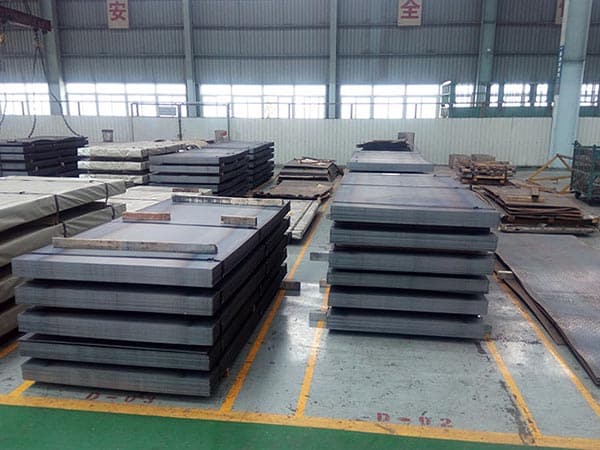
Decoding the Technical Identity of 1.0972 Alloy Steel
The material designated as 1.0972 represents a high-yield strength steel specifically engineered for cold forming applications. Under the European standard EN 10149-2, it is more commonly recognized by its alphanumeric designation, S315MC. This steel is produced through a thermomechanically rolled process, which distinguishes it from traditional hot-rolled or normalized steels. The 'S' denotes structural steel, '315' indicates a minimum yield strength of 315 MPa, and 'MC' signifies that the material is thermomechanically rolled (M) and intended for cold forming (C).
Understanding 1.0972 requires looking beyond simple numbers. It is a micro-alloyed steel where small additions of elements like niobium, vanadium, or titanium are used to refine the grain structure. This grain refinement is the secret behind its exceptional balance of high strength, excellent ductility, and superior weldability. Unlike higher carbon steels that achieve strength through hardening, 1.0972 relies on its fine-grained microstructure, making it a preferred choice for complex structural components that require weight reduction without compromising safety.
Global Equivalents: Navigating International Standards
When sourcing 1.0972 for international projects, identifying the correct equivalent grade is critical for ensuring structural integrity and compliance with local building codes. While standards vary, several grades share nearly identical chemical and mechanical profiles.
| Standard | Equivalent Grade | Key Characteristics |
|---|---|---|
| EN 10149-2 | 1.0972 / S315MC | Thermomechanically rolled, high yield, cold forming. |
| ASTM (USA) | A1011 HSLAS Grade 45/50 Class 1 | High-strength low-alloy steel with improved formability. |
| GB/T (China) | Q315MC | Specifically designed for cold stamping and structural use. |
| JIS (Japan) | SPFH 490 / SPFH 540 | High strength steel for automobile structural use. |
| ISO | ISO 6930-2 PW315 | High yield strength steel for cold forming. |
It is important to note that while these grades are considered equivalents, minor variations in the maximum allowable phosphorus or sulfur content may exist. For instance, the Chinese Q315MC is often a direct match for 1.0972 in automotive chassis applications, whereas the ASTM A1011 variants might require closer inspection of the elongation requirements depending on the specific thickness of the plate.
Chemical Composition and the Science of Micro-Alloying
The performance of 1.0972 is a direct result of its precisely controlled chemical makeup. By keeping the carbon content extremely low, the steel maintains excellent weldability and toughness. The inclusion of micro-alloying elements is what allows it to reach its 315 MPa yield threshold without the brittleness associated with high carbon levels.
- Carbon (C): Usually restricted to ≤ 0.12%. Low carbon ensures that the heat-affected zone (HAZ) during welding does not become overly hard or brittle.
- Manganese (Mn): Up to 1.30%. This element enhances strength and improves the steel's response to the thermomechanical rolling process.
- Silicon (Si): Capped at 0.50% to prevent issues during galvanizing while assisting in deoxidation.
- Micro-alloying (Nb, V, Ti): These elements, often totaling less than 0.22%, are the most critical. They form fine precipitates that pin grain boundaries, preventing grain growth during processing.
- Aluminum (Al): Minimum 0.015% to act as a grain refiner and deoxidizer.
The low sulfur (≤ 0.020%) and phosphorus (≤ 0.025%) levels are essential for the material's 'cleanliness,' which directly impacts its ability to be bent at tight radii without cracking.
Mechanical Properties and Structural Reliability
The mechanical profile of 1.0972 alloy steel plate is optimized for reliability under stress. Engineers favor this grade because it offers predictable behavior during both fabrication and service life. The thermomechanical rolling (TMCP) process ensures that these properties are uniform throughout the entire plate thickness.
| Property | Value (Thickness ≤ 16mm) |
|---|---|
| Yield Strength (ReH) | Min 315 MPa |
| Tensile Strength (Rm) | 390 - 510 MPa |
| Elongation (A80mm) | Min 20% (depending on thickness) |
| Elongation (A5.65) | Min 24% |
| Bending Radius (180°) | 0.5t to 1.0t (extremely tight) |
One of the standout features of 1.0972 is its cold formability. The material can be bent at very sharp angles relative to its thickness (t). For thicknesses under 3mm, a bending radius of 0.5t is often achievable, which is significantly better than standard structural steels like S235JR. This allows for the design of complex, space-saving components in machinery and vehicle frames.
Superior Processing Performance: Welding and Cutting
Fabricators choose 1.0972 not just for its final strength, but for how it behaves on the shop floor. Its low Carbon Equivalent Value (CEV) means it can be welded using all conventional methods, including MAG, TIG, and submerged arc welding, usually without the need for preheating. This drastically reduces production time and energy costs.
When it comes to thermal cutting, whether using laser, plasma, or oxy-fuel, 1.0972 exhibits minimal thermal distortion. The fine grain structure ensures that the cut edges remain stable and do not develop micro-cracks, which is vital for parts that will later undergo high-cycle fatigue loading. Furthermore, the surface quality of thermomechanically rolled plates is typically superior to hot-rolled plates, providing a better substrate for painting, powder coating, or galvanizing.
Strategic Industrial Applications
The unique properties of 1.0972 make it indispensable across several high-stakes industries. Its ability to reduce weight while maintaining structural integrity is a primary driver for its adoption.
- Automotive Industry: Used extensively for chassis parts, cross members, and longitudinal beams. By using S315MC instead of standard S235, manufacturers can reduce the thickness of components, leading to lighter vehicles and better fuel efficiency.
- Heavy Machinery: Crane booms, excavator arms, and agricultural equipment benefit from the high yield strength and impact resistance of 1.0972, especially in cold weather environments.
- Cold-Formed Sections: Manufacturers of C-channels, Z-purlins, and custom profiles utilize this grade because it does not crack during the high-speed roll-forming process.
- Renewable Energy: Solar mounting systems and wind turbine internal components often specify 1.0972 for its atmospheric corrosion resistance (when coated) and ease of assembly.
Environmental Adaptability and Fatigue Resistance
Beyond static strength, 1.0972 is recognized for its performance in dynamic environments. The fine-grained structure provides excellent resistance to fatigue, which is the primary failure mode for mobile machinery and transport equipment. Even under fluctuating loads, the material resists the initiation and propagation of cracks.
In terms of environmental adaptability, while 1.0972 is not a 'weathering steel' like Corten, its low impurity levels and uniform microstructure make it less susceptible to localized corrosion compared to lower-grade carbon steels. When combined with modern protective coatings, it offers a long service life even in moderately corrosive industrial or coastal atmospheres. Its impact toughness at low temperatures is also noteworthy, ensuring that structures do not suffer from brittle fracture in sub-zero operating conditions.
Optimizing Procurement for 1.0972 Steel
When purchasing 1.0972 or its equivalents, it is vital to request Mill Test Certificates (MTC) that verify compliance with EN 10149-2. Buyers should pay close attention to the rolling condition (indicated by the 'M' suffix) to ensure they are not receiving normalized steel, which may have different forming characteristics. Given its popularity in the automotive and heavy equipment sectors, 1.0972 is widely available in various widths and thicknesses, typically ranging from 1.5mm to 16mm. For projects requiring specific surface finishes, specifying 'pickled and oiled' (P&O) can further enhance the efficiency of subsequent laser cutting and welding operations.
Leave a message