
Which steel is better s500 steel datasheet or A36?
Explore the technical differences between S500 high-strength steel and ASTM A36. This guide covers mechanical properties, weldability, and cost-efficiency for engineering projects.
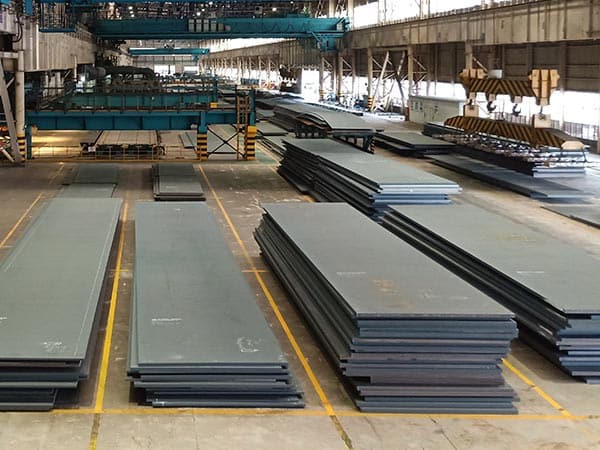
The Fundamental Divergence: High-Strength vs. General-Purpose Carbon Steel
In the complex landscape of structural engineering, selecting the appropriate material grade is a decision that dictates not only the safety of a structure but also its economic viability and lifecycle performance. When comparing S500 steel and ASTM A36, we are essentially looking at two different generations of metallurgical philosophy. ASTM A36 is the venerable workhorse of the North American construction industry, a low-carbon steel known for its predictability and ease of use. In contrast, S500 (often encountered as S500MC or S500Q) represents the evolution of high-strength low-alloy (HSLA) steels, designed to push the boundaries of load-bearing capacity while minimizing weight.
Determining which is "better" is not a matter of absolute superiority but rather a question of alignment with specific project requirements. A36 excels in applications where stiffness and cost-per-pound are the primary drivers, whereas S500 is the clear winner when weight reduction, high stress-resistance, and modern manufacturing efficiency are paramount. Understanding the nuances of their datasheets requires a deep dive into their mechanical, chemical, and processing characteristics.
Mechanical Performance: Decoding the Datasheet
The most striking difference between S500 and A36 lies in their yield strength. Yield strength is the point at which a material begins to deform plastically. For ASTM A36, the minimum yield strength is typically 250 MPa (36,000 psi). S500 steel, as its name suggests, boasts a minimum yield strength of 500 MPa. This means S500 is twice as strong as A36 in terms of its ability to resist permanent deformation.
| Property | ASTM A36 | S500 (Typical S500MC) |
|---|---|---|
| Minimum Yield Strength | 250 MPa (36 ksi) | 500 MPa (72.5 ksi) |
| Tensile Strength | 400 - 550 MPa | 550 - 720 MPa |
| Min. Elongation (L0=5.65√S0) | 20 - 23% | 12 - 14% |
| Density | 7.85 g/cm³ | 7.85 g/cm³ |
| Modulus of Elasticity | 200 GPa | 210 GPa |
While the yield strength of S500 is significantly higher, it is crucial to note that the Modulus of Elasticity (stiffness) for both steels is nearly identical. This is a critical engineering insight: if a design is limited by deflection (how much a beam bends) rather than strength, switching from A36 to S500 will not allow for a thinner section because the stiffness remains the same. However, if the design is stress-limited, S500 allows for a massive reduction in material thickness and overall weight.
Metallurgy and Chemical Synergy
The chemical composition of these two grades explains their divergent behaviors. ASTM A36 is a basic carbon steel with minimal alloying elements. Its strength is derived primarily from carbon and manganese. This simplicity makes it exceptionally easy to produce and weld but limits its strength-to-weight ratio.
S500 steel, particularly the S500MC variant (thermomechanically rolled), utilizes micro-alloying elements such as Niobium (Nb), Vanadium (V), and Titanium (Ti). These elements, combined with precise temperature control during the rolling process (TMCP), create a fine-grained microstructure. This fine grain size is the secret to S500's ability to maintain high strength without becoming brittle. The Carbon Equivalent (CEV) of S500 is often kept surprisingly low despite its high strength, which is vital for maintaining weldability.
- A36 Carbon Content: Typically 0.25% - 0.29%, which is relatively high for modern standards but ensures good structural rigidity.
- S500 Carbon Content: Often lower than A36 (around 0.12% for MC grades), relying on micro-alloys for strength rather than high carbon.
- Grain Refinement: S500 benefits from grain boundary strengthening, which also improves its low-temperature toughness compared to standard A36.
Fabrication Reality: Welding and Machining
From a fabrication standpoint, ASTM A36 is often considered the "gold standard" for ease of use. It can be welded using almost any standard process (SMAW, GMAW, FCAW) without complex preheating or post-weld heat treatment (PWHT) in most thicknesses. Its high ductility makes it forgiving for shop-floor errors.
S500 steel requires more sophisticated handling. Because S500MC gains its strength from the thermomechanical rolling process, excessive heat input during welding can cause "softening" in the Heat Affected Zone (HAZ). If the HAZ is overheated, the fine-grained structure is lost, and the local yield strength can drop significantly below 500 MPa. Welders must adhere to strict heat-input limits and cooling rate specifications. However, due to its lower carbon content, S500 is less prone to cold cracking than older high-carbon steels of similar strength.
When it comes to cold forming and bending, S500MC is specifically designed for excellent formability. Despite its high strength, it can be bent to tight radii, provided the bending is done perpendicular to the rolling direction. A36 is also highly formable, but it lacks the consistent springback characteristics that automated CNC bending machines can calibrate for when using high-strength grades like S500.
Weight Optimization and Structural Efficiency
The primary reason an engineer would choose S500 over A36 is weight optimization. In the transport industry, heavy machinery, and crane manufacturing, every kilogram of self-weight saved translates directly into increased payload or reduced fuel consumption. By using S500, a designer can potentially reduce the thickness of a structural component by 30% to 50% compared to A36 while maintaining the same safety factor against yielding.
Consider a heavy-duty trailer chassis. Using A36 results in a heavy, robust frame. Replacing those sections with S500 allows for a much lighter frame that can carry significantly more cargo. This "strength-to-weight" advantage is the driving force behind the global shift toward high-strength steels in mobile equipment. Furthermore, thinner sections of S500 require less welding filler material and shorter welding times, which can offset the higher initial material cost per ton.
Environmental Adaptability and Fatigue Resistance
Environmental factors play a significant role in material selection. ASTM A36 is generally suitable for indoor or mild outdoor environments, but it has no inherent atmospheric corrosion resistance. S500, depending on the specific sub-grade, often offers better low-temperature impact toughness. For instance, S500MC is tested for impact energy at -20°C or -40°C, ensuring it won't undergo brittle fracture in cold climates—a guarantee that standard A36 doesn't always provide unless specifically ordered with Charpy V-notch testing.
Fatigue resistance is another critical area. High-strength steels like S500 generally offer higher fatigue limits than A36 under high-cycle fatigue conditions, provided the surface finish and weld quality are maintained. However, high-strength steels are also more sensitive to notches and surface defects. In a dynamic environment where vibration and cyclic loading are constant, the superior grain structure of S500 provides a more resilient barrier against crack initiation compared to the coarser grain structure of A36.
Economic Considerations: The Total Cost of Ownership
On a per-pound basis, ASTM A36 is almost always cheaper than S500. It is a commodity steel produced in massive quantities globally. For simple construction projects like warehouses, small bridges, or base plates where weight is not a penalty, A36 is the most economical choice. The supply chain for A36 is also more robust; you can find A36 in almost any steel service center in the world.
S500 steel is a specialty product. Its price reflects the advanced processing and micro-alloying required. However, the "Total Cost of Ownership" (TCO) often favors S500 in sophisticated applications. Reduced material volume means lower shipping costs, less welding time, and smaller foundations or supporting structures. In the automotive and heavy equipment sectors, the long-term operational savings provided by a lighter, stronger S500 structure far outweigh the initial material price premium.
Strategic Selection: Which One Wins?
The choice between S500 and A36 ultimately depends on the engineering goals. If the project involves static structures where weight is secondary and budget is tight, ASTM A36 remains the logical selection. Its reliability and ease of fabrication make it a low-risk option for general construction.
Conversely, if the objective is to innovate, reduce carbon footprint through material efficiency, or enhance the performance of mobile machinery, S500 is the superior material. It represents a leap forward in metallurgical capability, offering a path to leaner, stronger, and more efficient designs. Engineers must weigh the higher strength and weight-saving potential of S500 against the fabrication discipline and higher unit cost it requires. In the modern era of sustainable and high-performance engineering, the datasheet of S500 is increasingly becoming the blueprint for the future of structural steel.
Leave a message