
What are the equivalent steel grades of en 10149-2 s355mc technical data?
Explore the comprehensive technical data of EN 10149-2 S355MC steel, including chemical composition, mechanical properties, and a detailed comparison of global equivalent grades such as ASTM, JIS, and GB standards.
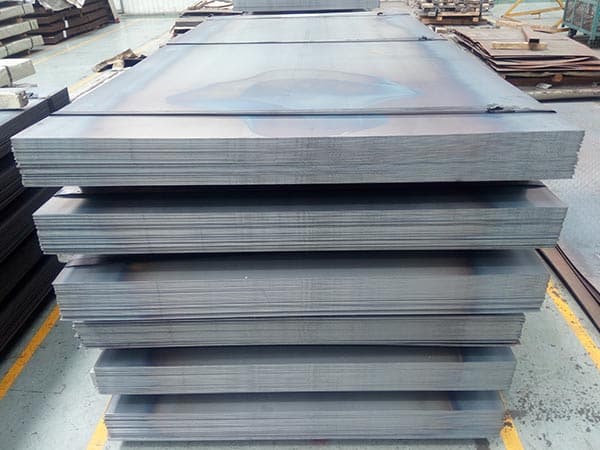
Introduction to EN 10149-2 S355MC High-Yield Strength Steel
EN 10149-2 S355MC is a thermomechanically rolled, high-yield strength steel designed specifically for cold forming. As part of the European standard for hot-rolled flat products, this grade is celebrated for its exceptional combination of strength, ductility, and weldability. The "S" signifies structural steel, "355" denotes a minimum yield strength of 355 MPa, and "MC" indicates that the material is thermomechanically rolled (M) and intended for cold forming (C). This steel is an industry favorite for weight reduction strategies in automotive and heavy machinery manufacturing.
Detailed Chemical Composition of S355MC
The performance of S355MC is rooted in its precise chemical balance. Unlike traditional structural steels, S355MC utilizes micro-alloying elements like Niobium (Nb), Vanadium (V), and Titanium (Ti) to achieve grain refinement. This process allows for high strength without the need for excessive carbon, which significantly improves weldability and toughness.
| Element | Maximum Content (%) |
|---|---|
| Carbon (C) | 0.12 |
| Manganese (Mn) | 1.50 |
| Silicon (Si) | 0.50 |
| Phosphorus (P) | 0.025 |
| Sulfur (S) | 0.020 |
| Aluminum (Al) | 0.015 (min) |
| Niobium (Nb) | 0.09 |
| Vanadium (V) | 0.20 |
| Titanium (Ti) | 0.15 |
The low carbon content (max 0.12%) ensures that the heat-affected zone (HAZ) during welding remains ductile, preventing brittle fractures in structural joints.
Mechanical Properties and Performance Indicators
S355MC is defined by its mechanical resilience. Its high yield-to-tensile ratio makes it ideal for components that must withstand significant stress without permanent deformation. The thermomechanical rolling process creates a fine-grained microstructure that enhances both strength and impact resistance at low temperatures.
| Property | Value (Thickness ≤ 16mm) |
|---|---|
| Yield Strength (ReH) | Min. 355 MPa |
| Tensile Strength (Rm) | 430 - 550 MPa |
| Elongation (A80mm) | Min. 19% (t < 3mm) |
| Elongation (A5) | Min. 23% (t ≥ 3mm) |
| Bending Radius (180°) | 0.5t to 1.5t (depending on thickness) |
The high elongation values indicate that the material can undergo severe deformation during cold pressing or bending without cracking, which is critical for complex automotive chassis components.
Global Equivalent Steel Grades
When sourcing S355MC internationally, engineers must identify equivalent grades that offer similar mechanical and chemical profiles. While standards vary by region, the following grades are generally considered functional equivalents:
- Chinese Standard (GB/T 1591 & GB/T 3273): The most direct equivalent is Q355MC. Both share similar thermomechanical processing requirements and yield strength benchmarks.
- American Standard (ASTM): ASTM A1011 Grade 50 Class 2 or ASTM A1018 Grade 50 are often used as substitutes, though ASTM standards may allow slightly higher carbon content.
- Japanese Standard (JIS G3134): SPFH 540 is the closest Japanese equivalent, frequently used in the production of automotive structural parts.
- ISO Standard (ISO 6930): ISO 6930-2 HSLAS 355 provides a direct international benchmark for this high-strength low-alloy steel.
It is vital to verify the specific impact energy requirements (e.g., Charpy V-notch tests) when switching between these equivalents, as some standards may differ in their low-temperature toughness specifications.
Superior Cold Forming and Processing Capabilities
The primary advantage of S355MC is its formability. Traditional s355jr steel is often too stiff for complex bending, but the "MC" variant is optimized for the press shop. The fine grain structure prevents "orange peel" effects on the surface during deep drawing.
Welding Performance: S355MC can be welded using all standard methods, including MIG/MAG, TIG, and submerged arc welding. Because of its low carbon equivalent (CEV), preheating is rarely required for standard thicknesses, which reduces production time and energy costs.
Laser Cutting: The clean chemical composition and consistent flatness of S355MC make it an excellent candidate for high-speed laser cutting. The minimal slag production ensures that edges are smooth and ready for subsequent assembly without extensive grinding.
Expanded Industrial Applications
S355MC is a versatile material found in sectors where weight reduction is a priority without compromising safety. Its high strength-to-weight ratio allows designers to use thinner sections, leading to lighter final products.
- Automotive Industry: Used for truck chassis frames, cross members, and suspension components where high fatigue strength is mandatory.
- Heavy Machinery: Essential for the booms of mobile cranes, excavator buckets, and agricultural machinery frames.
- Storage and Logistics: High-rack shelving systems and cold-formed sections for warehouses benefit from the material's consistency.
- Renewable Energy: Used in the structural supports for solar tracking systems and wind turbine internal components.
Environmental Adaptability and Longevity
While S355MC is not a specialized weathering steel (like Corten), its refined microstructure provides a more uniform surface for protective coatings. When galvanized or painted, the material exhibits excellent corrosion resistance in outdoor environments. Furthermore, its performance in low-temperature conditions (often tested at -20°C or -40°C upon request) makes it suitable for equipment operating in arctic or high-altitude climates.
The sustainability aspect of S355MC cannot be overlooked. By enabling the use of less steel to achieve the same structural integrity, it reduces the overall carbon footprint of the manufacturing cycle and improves the fuel efficiency of the vehicles it is built into.
Comparison: S355MC vs. S355JR
A common point of confusion is the difference between S355MC and the standard S355JR. While both share a 355 MPa yield strength, they are produced differently. S355JR is typically hot-rolled without specific grain-refining thermomechanical control, making it thicker and less suitable for precision cold forming. S355MC, conversely, is thinner, more ductile, and offers better surface quality, making it the superior choice for modern automated manufacturing lines.
| Feature | S355MC (EN 10149-2) | S355JR (EN 10025-2) |
|---|---|---|
| Processing | Thermomechanical (TM) | As Rolled / Normalized | Cold Forming | Excellent | Limited | Weldability | Very High (Low CEV) | Standard | Typical Thickness | 1.5mm - 20mm | 3mm - 200mm+ |
Selecting S355MC over S355JR is often a decision driven by the need for precision, weight savings, and high-speed production compatibility.
Leave a message