
What are the main components of s460mc composition
A comprehensive analysis of S460MC steel composition, exploring its chemical makeup, mechanical properties, processing performance, and industrial applications for high-performance engineering.
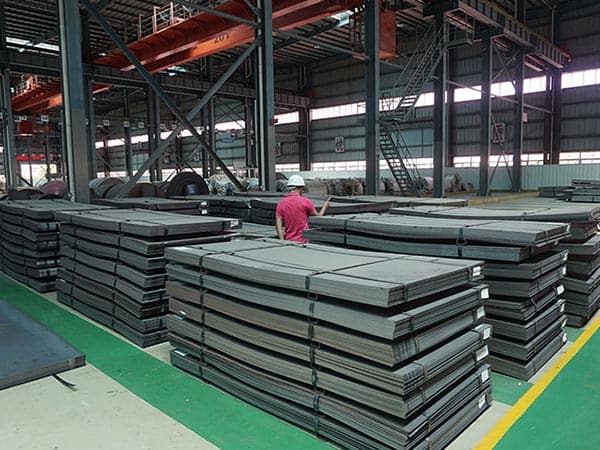
The Fundamental Chemistry of S460MC Steel
Understanding the performance of S460MC begins with a deep dive into its chemical architecture. As a high-yield-strength steel designed for cold forming, S460MC is governed by the EN 10149-2 standard. Its composition is not merely a list of elements but a precision-engineered balance designed to achieve high strength without sacrificing ductility or weldability.
The primary driver of S460MC's properties is its low carbon content. Unlike traditional structural steels that rely on high carbon for strength, S460MC maintains a carbon level typically below 0.12%. This low carbon footprint is essential for preventing the formation of brittle martensite during welding, ensuring that the heat-affected zone (HAZ) remains tough and crack-resistant. Manganese (Mn) acts as the secondary pillar, usually present in concentrations up to 1.60%. Manganese enhances hardenability and combines with sulfur to form manganese sulfides, which, when properly controlled, improve the steel's internal cleanliness.
Silicon (Si) is kept at a maximum of 0.50%, serving as a deoxidizer during the steelmaking process. However, the true 'magic' of S460MC lies in its micro-alloying elements: Niobium (Nb), Vanadium (V), and Titanium (Ti). These elements, even in trace amounts (totaling no more than 0.22%), are responsible for grain refinement. By forming fine precipitates during the thermomechanical rolling process, they pin grain boundaries, preventing grain growth and resulting in a fine-grained microstructure that is the hallmark of high-strength low-alloy (HSLA) steels.
Chemical Composition Breakdown
The following table illustrates the maximum weight percentages for the key chemical components of S460MC according to the EN 10149-2 standard. Precision in these values is what allows for consistent mechanical performance across different batches.
| Element | Maximum Content (%) | Role in Alloy Performance |
|---|---|---|
| Carbon (C) | 0.12 | Ensures excellent weldability and prevents brittleness. |
| Manganese (Mn) | 1.60 | Increases strength and improves grain structure. |
| Silicon (Si) | 0.50 | Acts as a deoxidizer and provides solid solution strengthening. |
| Phosphorus (P) | 0.025 | Kept low to maintain toughness and prevent cold shortness. |
| Sulfur (S) | 0.015 | Minimized to improve ductility and prevent lamellar tearing. |
| Aluminium (Al) | 0.015 (min) | Used for grain refinement and nitrogen binding. |
| Nb + V + Ti | 0.22 | Micro-alloying for grain refinement and precipitation hardening. |
The Role of Thermomechanical Rolling (TMCP)
The composition of S460MC cannot be discussed in isolation from its manufacturing process. The "M" in S460MC stands for thermomechanically rolled. This process involves controlled rolling at specific temperature ranges followed by accelerated cooling. This metallurgical strategy allows the steel to achieve a yield strength of 460 MPa through grain refinement rather than high alloy content.
During TMCP, the micro-alloying elements (Nb, V, Ti) suppress the recrystallization of austenite. When the steel is rolled, the grains are flattened and deformed, creating a high density of nucleation sites for ferrite during cooling. This results in an exceptionally fine ferrite-pearlite or even acicular ferrite microstructure. This fine grain size is the only mechanism that simultaneously increases both strength and toughness, making S460MC superior to normalized steels of similar strength levels.
Mechanical Performance and Structural Integrity
The strategic composition of S460MC translates directly into impressive mechanical metrics. The "460" denotes a minimum yield strength of 460 MPa, but the material's utility extends far beyond this single number. Its tensile strength typically ranges between 520 and 670 MPa, providing a robust safety margin for structural applications.
- High Yield-to-Tensile Ratio: S460MC offers a high ratio that allows engineers to design lighter structures by utilizing the material closer to its limit.
- Superior Elongation: With a minimum elongation of 14% to 17% (depending on thickness), it handles significant deformation before fracture.
- Impact Toughness: Although EN 10149-2 does not always mandate impact testing unless specified, the fine-grained nature of S460MC naturally provides excellent low-temperature toughness.
- Cold Formability: The "C" suffix indicates its suitability for cold forming. The low carbon and sulfur content ensure that the steel can be bent or folded without cracking on the outer radius.
Processing Advantages: Welding and Cutting
Fabricators favor S460MC because its lean composition simplifies the manufacturing workflow. In welding, the low Carbon Equivalent (CEV) means that preheating is rarely required for standard thicknesses. This significantly reduces labor costs and energy consumption. The steel is compatible with all standard welding processes, including MAG, TIG, and submerged arc welding.
When it comes to thermal cutting, the consistent chemical makeup of S460MC ensures clean edges with minimal dross. Whether using laser, plasma, or oxy-fuel cutting, the material maintains its dimensional stability. Laser cutting, in particular, benefits from the steel's controlled silicon and phosphorus levels, which prevent excessive melt and ensure a high-quality finish suitable for immediate assembly.
Diversified Industrial Applications
The unique balance of strength and weight-saving potential makes S460MC a staple in industries where efficiency is paramount. By replacing traditional s355jr steels with S460MC, manufacturers can often reduce the weight of a component by 20-30% without compromising structural safety.
In the automotive sector, S460MC is used for truck chassis frames, cross members, and reinforcement parts. The weight reduction directly contributes to higher fuel efficiency and increased payload capacity. In the heavy machinery sector, it is the material of choice for crane booms, excavator arms, and agricultural equipment. These components are subjected to dynamic loads and harsh environments, where the fatigue resistance provided by the fine-grained structure of S460MC is critical.
Furthermore, the construction industry utilizes S460MC for cold-pressed profiles and structural sections. Its ability to be formed into complex shapes while maintaining high load-bearing capacity allows for innovative architectural designs and efficient modular building systems.
Environmental Adaptability and Sustainability
The longevity of S460MC in various environments is another key attribute. While it is not a weathering steel like Corten, its dense, fine-grained surface provides a consistent substrate for protective coatings. Whether galvanized or painted, the lack of large inclusions and surface impurities ensures excellent coating adhesion and corrosion protection.
From a sustainability perspective, S460MC supports the global trend toward "green steel." Its high strength-to-weight ratio means less raw material is needed to achieve the same structural goals. Additionally, the TMCP process is more energy-efficient than traditional quenching and tempering cycles, and the low alloy content makes the steel highly recyclable at the end of its life cycle.
Comparative Analysis: S460MC vs. Conventional Grades
Comparing S460MC to S355MC or S700MC reveals its position as a versatile middle-ground solution. While S355MC is ubiquitous and cost-effective, it lacks the load-bearing capacity required for high-stress applications. Conversely, while S700MC offers even higher strength, it requires more specialized processing and has stricter bending radius limitations.
S460MC strikes the perfect equilibrium. It offers a substantial strength upgrade over S355 without the steep increase in processing complexity associated with ultra-high-strength grades. This makes it the logical choice for optimizing existing designs where a balance of performance, workability, and cost is required.
Final Insights into Material Selection
Selecting S460MC involves more than just checking a datasheet. It requires an appreciation for how the micro-alloying elements and the TMCP process work in harmony to produce a material that is both strong and pliable. For engineers and procurement specialists, the value of S460MC lies in its reliability. The strict adherence to the EN 10149-2 composition limits ensures that every plate and coil performs predictably under the press brake or the welding torch.
As engineering demands continue to push toward lighter, stronger, and more sustainable solutions, the role of S460MC will only grow. Its composition is a testament to modern metallurgy's ability to do more with less, providing a high-performance foundation for the next generation of industrial infrastructure.
Leave a message