
What are the characteristics and applications of BS700MC market stock
A comprehensive guide to BS700MC high-strength steel, covering its metallurgical properties, welding performance, and diverse industrial applications.
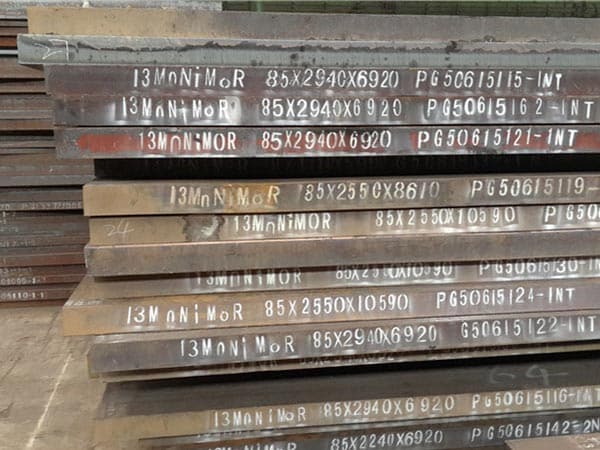
The Metallurgical Foundation of BS700MC High-Strength Steel
BS700MC is a high-strength, cold-formable structural steel produced through the Thermomechanically Rolled (TMCP) process. Unlike traditional hot-rolled steels that rely on heavy alloying elements or post-rolling heat treatments, BS700MC achieves its exceptional yield strength of 700 MPa through a combination of precise temperature control during rolling and micro-alloying techniques. This steel grade is designed to meet the increasing demand for lightweighting in modern engineering, allowing for thinner sections without compromising structural integrity. The 'MC' designation signifies its suitability for cold forming (C) and its thermomechanical processing (M), which results in a fine-grained microstructure that is inherently tough and weldable. Manufacturers across the globe prioritize BS700MC market stock because it bridges the gap between traditional structural steels and advanced high-strength alloys, offering a cost-effective solution for reducing vehicle weight and increasing payload capacity.
Chemical Composition and the Role of Micro-alloying
The performance of BS700MC is dictated by its low carbon content and the strategic addition of micro-alloying elements such as Niobium (Nb), Vanadium (V), and Titanium (Ti). By keeping the carbon content typically below 0.12%, the steel maintains excellent weldability and ductility. Manganese (Mn) is utilized to enhance strength and hardenability, while Silicon (Si) provides solid solution strengthening. The micro-alloys play a crucial role in grain refinement; during the TMCP process, these elements form fine precipitates that pin grain boundaries, preventing grain growth and ensuring a uniform, fine-grained ferritic-pearlitic or bainitic structure. This microscopic architecture is the primary reason BS700MC can withstand high stress while remaining resistant to brittle fracture. The low sulfur and phosphorus levels further enhance the internal cleanliness of the steel, improving its fatigue resistance and impact toughness at low temperatures.
| Element | Maximum Percentage (%) |
|---|---|
| Carbon (C) | 0.12 |
| Manganese (Mn) | 2.10 |
| Silicon (Si) | 0.60 |
| Phosphorus (P) | 0.025 |
| Sulfur (S) | 0.015 |
| Aluminium (Al) | 0.015 |
| Nb + V + Ti | 0.22 |
Mechanical Properties and Structural Efficiency
The primary draw of BS700MC is its mechanical profile. With a minimum yield strength of 700 MPa and a tensile strength ranging between 750 and 950 MPa, it offers nearly double the strength of standard S355 structural steel. This allows engineers to reduce the thickness of structural components by up to 40%, leading to significant weight savings. Elongation values, typically around 12% to 15% for thinner gauges, ensure that the material can undergo significant deformation before failure. This balance of strength and ductility is critical for energy absorption in crash-relevant components or for maintaining structural stability under dynamic loads. Furthermore, BS700MC exhibits excellent impact energy values even at temperatures as low as -20°C or -40°C, making it suitable for equipment operating in harsh, cold climates.
Advanced Processing: Cold Forming and Laser Cutting
Processing BS700MC requires an understanding of its high-strength nature. In cold forming, the material exhibits a higher springback compared to lower-strength steels, necessitating precise tool design and compensation. However, its fine-grained structure allows for tight bending radii—often as low as 1.5 to 2.0 times the material thickness—without the risk of cracking on the outer tension surface. This makes it ideal for complex profiles used in chassis and crane booms. When it comes to cutting, BS700MC is highly compatible with modern laser and plasma cutting technologies. The low alloy content and clean surface finish of market stock ensure minimal dross and high edge quality, which reduces the need for secondary grinding operations. The consistency of the material's thickness and flatness is paramount for automated fabrication lines, where tight tolerances are the norm.
Welding Characteristics and Heat-Affected Zone (HAZ) Integrity
One of the most significant advantages of BS700MC is its low carbon equivalent (Cev), which simplifies the welding process. It can be welded using standard methods such as MIG/MAG, TIG, and submerged arc welding. Because of the TMCP origin, the steel does not require preheating in most thickness ranges, which significantly reduces fabrication time and energy costs. However, care must be taken to control the heat input. Excessive heat can lead to grain coarsening in the heat-affected zone (HAZ), potentially resulting in a localized reduction in yield strength. Using high-quality filler metals that match or slightly exceed the base metal's strength is recommended. Proper welding parameters ensure that the joint maintains the high-strength characteristics of the parent metal, allowing for the construction of large-scale, load-bearing structures that are both light and durable.
Diversified Applications Across Modern Industries
The versatility of BS700MC has led to its adoption across a wide spectrum of heavy-duty industries. In the transportation sector, it is the material of choice for truck chassis, trailers, and side-impact beams. By reducing the dead weight of a trailer, operators can increase the legal payload, directly improving operational efficiency and reducing fuel consumption. In the construction and lifting industry, BS700MC is used for the telescopic booms of mobile cranes and the structural frames of aerial work platforms. The high strength-to-weight ratio allows for greater reach and lifting capacity without increasing the overall footprint of the machine. Agricultural machinery also benefits from BS700MC, where it is used in plow frames, seeders, and harvesters that must endure high stress while navigating uneven terrain. The renewable energy sector has also begun utilizing this grade for the structural supports of solar tracking systems and wind turbine components, where durability and weight are critical factors.
Environmental Adaptability and Fatigue Life
Beyond its static strength, BS700MC is engineered for longevity in demanding environments. Its fine-grained microstructure provides superior fatigue resistance, which is essential for components subjected to cyclic loading, such as vehicle suspensions or crane arms. The steel's ability to resist crack initiation and propagation under fluctuating stresses ensures a long service life even in high-cycle applications. Additionally, while BS700MC is not a dedicated weathering steel, its dense surface and uniform composition provide a good base for protective coatings. Whether galvanized or painted, the material maintains its structural integrity against atmospheric corrosion. For equipment operating in mining or offshore environments, the toughness of BS700MC ensures it can handle accidental impacts and extreme vibrations without catastrophic failure.
Strategic Value of BS700MC Market Stock
Maintaining a consistent supply of BS700MC market stock is vital for manufacturers aiming to stay competitive. The availability of various thicknesses and widths allows for just-in-time production, reducing inventory costs for end-users. As global standards push for lower carbon emissions and higher efficiency, the shift toward high-strength steels like BS700MC is accelerating. Companies that integrate this material into their designs benefit not only from the immediate physical advantages but also from the long-term economic gains of reduced material usage and improved product performance. The technical maturity of BS700MC, combined with its proven track record in the most demanding applications, confirms its status as a cornerstone of modern structural engineering. By leveraging the unique properties of this TMCP steel, designers can continue to push the boundaries of what is possible in machinery and vehicle construction.
Leave a message