
What is the main use of en 10149-2 equivalent
Explore the comprehensive guide on EN 10149-2 equivalent steels. Learn about mechanical properties, chemical composition, and industrial uses of S355MC to S700MC.
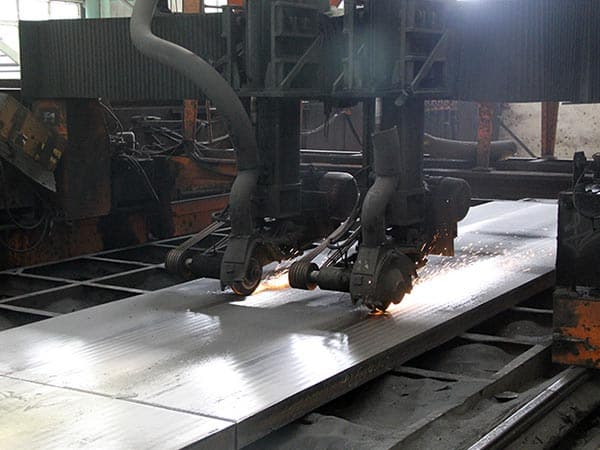
Understanding the Essence of EN 10149-2 and Its Global Equivalents
EN 10149-2 is a European standard that specifies the technical delivery conditions for flat products made of high yield strength steels for cold forming. These steels are produced using thermomechanical rolling (TMCP), a process that combines controlled rolling and accelerated cooling. The 'MC' suffix in grades like S355MC or S700MC signifies that the material is thermomechanically rolled (M) and specifically designed for cold forming (C). When engineers search for an EN 10149-2 equivalent, they are typically looking for materials that match these high-performance characteristics across different international standards such as ASTM, JIS, or GB/T.
Mapping the Global Equivalents of EN 10149-2
The search for equivalents is driven by global supply chains and the need for material substitution without compromising structural integrity. Below is a detailed comparison of common EN 10149-2 grades and their international counterparts:
| EN 10149-2 Grade | ASTM Equivalent (USA) | GB/T Equivalent (China) | JIS Equivalent (Japan) |
|---|---|---|---|
| S315MC | ASTM A1011 HSLAS Gr 45 | Q315NS / Q345B | SPFH 490 |
| S355MC | ASTM A1011 HSLAS Gr 50 | Q345D / Q355MC | SPFH 540 |
| S420MC | ASTM A1011 HSLAS Gr 60 | Q420MC | SPFH 590 |
| S500MC | ASTM A1011 HSLAS Gr 70 | Q500MC | --- |
| S700MC | ASTM A1011 HSLAS Gr 100 | Q700MC | --- |
While these equivalents share similar yield strengths, it is crucial to verify specific elongation and impact toughness requirements, as TMCP processes can vary slightly between mills and standards.
Micro-Alloying: The Secret Behind High Strength and Ductility
The primary reason for the widespread use of EN 10149-2 equivalent steels is their unique chemical composition. Unlike traditional carbon steels that rely on high carbon content for strength, these grades utilize micro-alloying elements such as Niobium (Nb), Titanium (Ti), and Vanadium (V). These elements, often present in amounts less than 0.1%, perform grain refinement and precipitation hardening during the rolling process.
- Niobium (Nb): Increases the recrystallization temperature, allowing for a finer grain structure during thermomechanical rolling.
- Titanium (Ti): Acts as a grain stabilizer and prevents grain growth in the heat-affected zone (HAZ) during welding.
- Vanadium (V): Provides additional strength through carbonitride precipitation.
By keeping the carbon content extremely low (often below 0.12%), these steels achieve exceptional weldability and cold formability that standard structural steels cannot match.
Mechanical Performance and Processing Advantages
The mechanical properties of EN 10149-2 equivalent steels are characterized by a high yield-to-tensile ratio and excellent elongation. For instance, S700MC offers a minimum yield strength of 700 MPa, which allows for significant weight reduction in structural designs. The cold forming capability is a standout feature; these steels can be bent to tight radii without cracking, provided the bending direction and minimum internal radius are respected.
Processing these materials requires an understanding of their stress-strain behavior. Due to their high strength, they exhibit more springback than conventional mild steel. However, their consistent thickness tolerances and uniform mechanical properties make them ideal for automated processes like laser cutting and robotic bending. The clean surface finish resulting from the pickling and oiling (P&O) process often applied to these grades ensures high-quality laser cuts with minimal dross.
Welding Characteristics and Heat Management
One of the most critical aspects of using EN 10149-2 equivalent steel is its behavior during welding. Because the strength is derived from the TMCP process and micro-alloying rather than high carbon or heat treatment (like quenching and tempering), the material is sensitive to excessive heat input. High heat can lead to grain coarsening in the heat-affected zone, which locally reduces the yield strength and toughness.
To maintain the integrity of the structure, it is recommended to use low-heat input welding techniques such as MAG (Metal Active Gas) welding with optimized parameters. The low carbon equivalent (CEV) of these steels typically eliminates the need for preheating, even in thicker sections, which reduces production time and costs. Using matching or slightly over-matching filler metals is standard practice to ensure the weld joint matches the base metal's performance.
Industrial Applications: From Automotive to Heavy Lifting
The versatility of EN 10149-2 equivalent steels spans numerous high-demand industries. Their primary value proposition is the ability to build lighter, stronger, and more fuel-efficient structures.
- Automotive Industry: Used extensively for truck chassis, cross members, and longitudinal beams. The high strength allows for thinner gauges, reducing the dead weight of the vehicle and increasing payload capacity.
- Lifting and Excavation: Telescopic crane booms, excavator arms, and heavy-duty trailers rely on grades like S700MC to handle extreme loads while remaining portable.
- Agricultural Machinery: Plow frames, seeders, and harvester components benefit from the impact resistance and fatigue strength of these steels in harsh outdoor environments.
- Logistics and Storage: High-rack shelving systems and container frames utilize the high yield strength to support massive vertical loads with minimal material volume.
Environmental Adaptation and Sustainability
In the modern engineering landscape, sustainability is a key driver for material selection. EN 10149-2 equivalent steels contribute to environmental goals through dematerialization. By using a higher strength grade, engineers can reduce the total amount of steel required for a project by 30% to 50% compared to traditional S235 or S355 grades. This leads to lower CO2 emissions during steel production, transportation, and throughout the operational life of the product (e.g., lower fuel consumption in transport vehicles).
Furthermore, these steels exhibit good low-temperature toughness. Many EN 10149-2 grades are tested for impact energy at -20°C or -40°C, making them suitable for equipment operating in arctic conditions or high-altitude environments. The fine-grained structure provides a natural barrier against brittle fracture, ensuring safety in critical structural applications.
Critical Considerations for Material Substitution
When substituting a local standard for EN 10149-2, it is not enough to simply match the yield strength. Professionals must evaluate the directional properties of the steel. Thermomechanically rolled steels often have different ductility levels in the longitudinal versus transverse directions. If a part requires complex multi-axis bending, selecting a grade with guaranteed transverse properties is essential. Additionally, the surface quality (hot rolled vs. pickled and oiled) can impact the fatigue life of components subjected to cyclic loading, such as trailer suspensions or crane components. Verification of the Mill Test Certificate (MTC) for chemical consistency and grain size is a best practice for high-stakes engineering projects.
Leave a message