
What is the rolling s700mc pickling steel sheet hardness plate
Comprehensive guide to S700MC pickling steel sheet, covering its hardness characteristics, mechanical properties, chemical composition, and industrial applications for lightweight structural design.
The Essence of S700MC: High-Strength Engineering Excellence
S700MC is a high-strength low-alloy (HSLA) structural steel produced through a meticulous thermomechanical rolling process. The "S" signifies structural steel, while "700" denotes the minimum yield strength of 700 MPa. The "MC" suffix indicates that the material is thermomechanically rolled (M) and possesses high cold-forming properties (C). When we discuss the S700MC pickling steel sheet, we are referring to a product that has undergone an acid pickling process to remove surface scale, resulting in a clean, smooth finish ideal for subsequent processing like laser cutting, painting, or galvanizing.
Hardness Profile of S700MC Pickling Steel
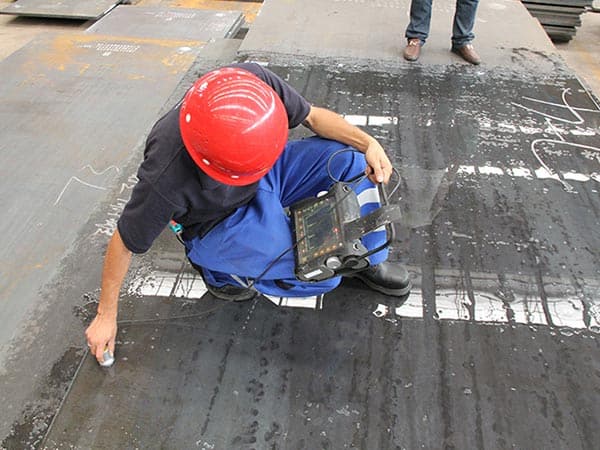
While S700MC is primarily defined by its yield and tensile strength, hardness is a critical secondary parameter for many engineers. Unlike tool steels or wear-resistant plates (like AR400 or AR500), S700MC is not specifically a "hardness plate." However, its high strength naturally correlates to a specific hardness range. Typically, S700MC exhibits a Brinell hardness (HBW) ranging from 230 to 280 HBW, or approximately 22 to 29 HRC on the Rockwell C scale.
This hardness level is a direct result of the fine-grained microstructure achieved through thermomechanical rolling. By precisely controlling the cooling rate and deformation during the rolling process, manufacturers create a dense, uniform structure that resists indentation while maintaining the ductility required for complex bending. The pickling process does not significantly alter the bulk hardness of the plate, but it does ensure that the surface hardness is consistent by removing the non-uniform oxide scale (mill scale) that can interfere with hardness testing and machining tools.
Chemical Composition and Micro-alloying Strategy
The remarkable properties of S700MC are rooted in its sophisticated chemical makeup. Unlike traditional carbon steels that rely on high carbon content for strength, S700MC utilizes a low-carbon design supplemented by micro-alloying elements such as Niobium (Nb), Vanadium (V), and Titanium (Ti).
| Element | Maximum Percentage (%) |
|---|---|
| Carbon (C) | 0.12 |
| Manganese (Mn) | 2.10 |
| Silicon (Si) | 0.60 |
| Phosphorus (P) | 0.025 |
| Sulfur (S) | 0.015 |
| Aluminium (Al) | 0.015 |
| Nb + V + Ti | 0.22 |
Low carbon content is vital for maintaining excellent weldability and toughness. The micro-alloying elements serve two primary purposes: grain refinement and precipitation hardening. During the rolling process, these elements prevent grain growth, resulting in a "fine-grain" structure that simultaneously increases strength and improves low-temperature impact resistance.
Mechanical Performance: Beyond Just Hardness
To understand the utility of S700MC, one must look at the full spectrum of its mechanical capabilities. It bridges the gap between standard structural steels and ultra-high-strength quenched and tempered steels.
- Yield Strength: Minimum 700 MPa. This allows for significantly thinner sections compared to S355 steel, leading to weight savings of up to 40%.
- Tensile Strength: Typically ranges between 750 and 950 MPa.
- Elongation: Minimum 10% to 12% (depending on thickness), ensuring the material can withstand deformation without brittle failure.
- Impact Strength: Often tested at -20°C or -40°C, S700MC retains high energy absorption, making it suitable for cold-weather environments.
The Pickling Advantage: Surface Quality and Processability
Hot-rolled steel naturally develops a layer of iron oxide (scale) during cooling. For S700MC, which is often used in precision engineering, this scale is problematic. The pickling process involves passing the steel through an acid bath (usually hydrochloric acid) to chemically remove the scale. The resulting "Pickled and Oiled" (P&O) surface offers several advantages:
1. Improved Laser Cutting: Scale can cause beam reflection and slag buildup. Pickled S700MC allows for faster, cleaner cuts with minimal dross, extending the life of laser nozzles.
2. Enhanced Coating Adhesion: Whether painting, powder coating, or galvanizing, a pickled surface provides a superior substrate for bonding, preventing premature corrosion and peeling.
3. Tool Protection: In cold-forming and stamping operations, mill scale acts as an abrasive, rapidly wearing down expensive dies. The clean surface of pickled sheet significantly extends tool life.
Cold Forming and Bending Characteristics
Despite its high hardness and strength, S700MC is engineered for exceptional cold formability. It can be bent to tight radii without cracking, provided the correct parameters are followed. For a 90-degree bend, the minimum recommended internal bending radius is typically 1.5 to 2 times the material thickness (depending on the orientation relative to the rolling direction).
Engineers must account for springback, which is more pronounced in S700MC than in lower-strength steels. Because the material is harder and stronger, it stores more elastic energy during bending. Over-bending or using advanced CNC press brakes with springback compensation is necessary to achieve precise final angles.
Welding S700MC: Maintaining Integrity
Welding S700MC requires an understanding of its thermomechanical history. Because its strength is derived from the rolling process and micro-alloying rather than heat treatment, excessive heat input can lead to a "softening" of the heat-affected zone (HAZ). To maintain the 700 MPa yield strength across the weldment:
- Low Heat Input: Use welding processes like MIG/MAG with controlled heat parameters to minimize the width of the HAZ.
- Filler Metals: Select filler materials that match the strength of the base metal (e.g., ER110S or equivalent).
- Preheating: Generally, S700MC does not require preheating due to its low carbon equivalent (CEV), which reduces the risk of cold cracking.
Strategic Industry Applications
The shift toward lightweighting and fuel efficiency has made S700MC a staple in modern manufacturing. Its high strength-to-weight ratio is utilized across various demanding sectors.
Commercial Vehicles and Transport: In the production of truck chassis, trailers, and side-tippers, S700MC allows manufacturers to reduce the dead weight of the vehicle. This increases payload capacity and reduces fuel consumption, providing a direct economic benefit to fleet operators.
Lifting and Handling Equipment: Crane booms, telescopic arms, and aerial work platforms benefit from the high yield strength of S700MC. Using thinner, lighter plates for long extensions reduces the center of gravity and increases the lifting capacity at height.
Agricultural Machinery: Modern farm equipment, such as large plows, harvesters, and spreaders, requires materials that can withstand high stress and fatigue while remaining light enough to prevent soil compaction. S700MC pickling sheet is the preferred choice for these complex welded structures.
Comparing S700MC with Conventional Steels
When comparing S700MC to traditional S355 (Q355) steel, the differences are stark. S355 has a yield strength of 355 MPa, meaning S700MC is nearly twice as strong. This doesn't just mean the structure is "stronger"; it means you can use thinner gauges to achieve the same structural integrity. For example, a 10mm S355 plate could potentially be replaced by a 6mm S700MC plate in certain tension-loaded applications. This reduction in thickness also simplifies welding (less filler metal, faster passes) and lowers overall material costs despite the higher price per ton of S700MC.
Environmental Adaptability and Longevity
S700MC performs exceptionally well in diverse environments. Its fine-grained structure provides inherent resistance to atmospheric corrosion compared to coarse-grained steels. Furthermore, the pickling process ensures that there are no hidden pockets of oxidation under the surface, which can lead to localized pitting. When combined with modern protective coatings, S700MC components can achieve a service life of several decades, even in harsh industrial or coastal settings.
The sustainability aspect is also noteworthy. By reducing the weight of transportation equipment, S700MC contributes to a significant reduction in CO2 emissions over the lifecycle of the vehicle. Additionally, because less steel is required to build the same structure, the total energy consumed in the smelting and fabrication process is reduced.
Final Technical Considerations for Procurement
When sourcing S700MC pickling steel sheet, it is vital to verify the certification (such as EN 10149-2). Buyers should specify the surface finish (pickled and oiled) and ensure the thickness tolerances meet the project requirements. Because S700MC is a premium product, ensuring that the material comes from a mill with advanced thermomechanical rolling capabilities is essential for consistency in hardness and mechanical properties across different batches.
Understanding that S700MC is a high-performance material—not just a "hard plate"—allows designers to push the boundaries of what is possible in structural engineering. Its unique combination of high yield strength, reliable hardness, and excellent surface quality makes it an indispensable tool in the quest for lighter, stronger, and more efficient machinery.
Leave a message