
What are the precautions for use of s500 steel equivalent
Expert guide on the precautions for using S500 steel and its equivalents. Covers mechanical properties, welding heat input, cold forming limits, and material selection for high-strength engineering.
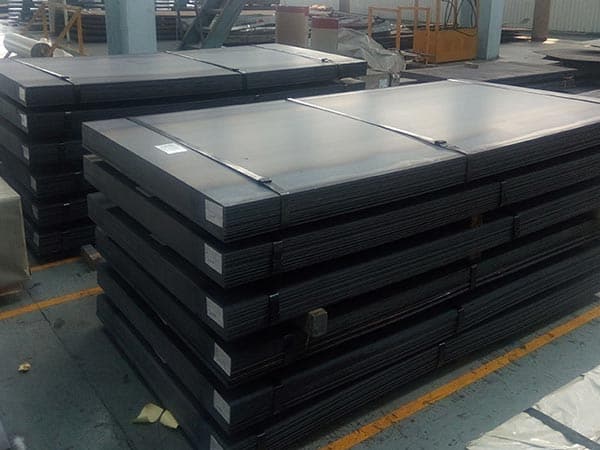
Understanding the S500 steel Grade and Its Global Equivalents
S500 steel is a high-strength structural steel characterized by a minimum yield strength of 500 MPa. Within the European standard EN 10025-6 and EN 10149-2, this material is categorized primarily into two types based on its delivery condition: S500MC (thermomechanically rolled) and S500Q/QL/QL1 (quenched and tempered). Identifying the correct equivalent is critical for global procurement and engineering integrity. Common equivalents include China's Q500 (GB/T 1591), Japan's SM570 (JIS G3106), and various grades under ASTM A514 or ASTM A572 depending on the specific application and thickness requirements.
While these equivalents share similar yield strengths, their chemical compositions, impact toughness at sub-zero temperatures, and welding behaviors vary significantly. Using an equivalent without adjusting fabrication parameters can lead to structural failure, particularly in heavy lifting equipment, bridge construction, and pressure vessel manufacturing. Engineers must look beyond the "500" number and scrutinize the carbon equivalent (CEV) and the specific alloying elements like Boron, Vanadium, or Niobium that provide the strength enhancement.
Comparison of S500 Steel and Common Equivalents
| Standard | Grade | Delivery Condition | Yield Strength (min MPa) | Tensile Strength (MPa) |
|---|---|---|---|---|
| EN 10025-6 | S500Q | Quenched & Tempered | 500 | 590-770 |
| EN 10149-2 | S500MC | TMCP | 500 | 550-700 |
| GB/T 1591 | Q500D | Quenched & Tempered | 500 | 610-770 |
| ASTM | A514 Grade B | Quenched & Tempered | 690 (Note: Higher) | 760-895 |
| JIS G3128 | SHY685 | Quenched & Tempered | 500+ | Variable |
Critical Precautions for Welding S500 and Its Equivalents
Welding is the most sensitive process when dealing with high-strength steels like S500. The primary risk is the formation of cold cracks in the heat-affected zone (HAZ) and the softening of the material due to excessive heat input. Unlike standard S355 steel, S500 requires a strictly controlled thermal cycle.
- Hydrogen Control: High-strength steels are highly susceptible to hydrogen-induced cracking (HIC). It is mandatory to use low-hydrogen welding processes. If using SMAW (Shielded Metal Arc Welding), electrodes must be baked at 350°C for at least two hours before use and stored in heated quivers.
- Preheating Requirements: The need for preheating depends on the thickness of the plate and the Carbon Equivalent (CEV). For S500 plates exceeding 20mm, a preheat temperature of 100°C to 150°C is typically recommended to slow down the cooling rate and prevent martensite embrittlement.
- Heat Input Management: Excessive heat input can destroy the fine-grained structure achieved through quenching and tempering or TMCP. This results in a significant drop in yield strength and impact toughness. The heat input should generally be maintained between 10 kJ/cm and 25 kJ/cm, depending on the specific grade.
- Interpass Temperature: The interpass temperature should not exceed 200°C. If the steel gets too hot between passes, the tempering effect is overdone, leading to a "soft spot" in the weldment that will fail under load.
Mechanical Performance and Material Selection Risks
When substituting S500 with an equivalent, the impact energy (Charpy V-notch) is often the deciding factor for safety. For instance, S500Q is tested at -20°C, while S500QL is tested at -40°C and S500QL1 at -60°C. Using a Q500D equivalent in an arctic environment where S500QL1 was specified can lead to catastrophic brittle fracture.
Furthermore, the yield-to-tensile ratio of S500 is higher than that of mild steel. This means the material has less plastic reserve before reaching its ultimate tensile strength. Designers must account for this reduced ductility by avoiding sharp notches, abrupt changes in cross-sections, and ensuring high-quality surface finishes in high-stress areas.
Cold Forming and Processing Precautions
S500 steel, particularly the S500MC variant, is designed for cold forming, but it behaves differently than standard structural steel. Its high yield strength results in significant springback after bending. Fabricators must over-bend the material to achieve the desired angle, and the exact springback factor must be determined through trial, as it varies between different heats of steel.
The minimum bending radius is another critical constraint. For S500MC, the internal bending radius should be at least 1.0 to 1.5 times the plate thickness for transverse bending. For S500Q, this radius must be much larger (often 3t or more) to prevent cracking on the outer tension surface. Any surface defects or scratches on the plate should be ground smooth before bending, as they act as stress concentrators that can initiate cracks during the forming process.
Thermal Cutting and Edge Preparation
Flame cutting (oxy-fuel), plasma cutting, and laser cutting are all applicable to S500 steel. However, the hardened edge resulting from thermal cutting can be problematic. The Heat Affected Zone (HAZ) on the cut edge can reach high hardness levels, making it brittle and difficult to machine.
- Preheating for Cutting: For thick plates (over 30mm), preheating the cutting line to 100°C can prevent edge cracking.
- Edge Grinding: It is a professional best practice to grind away approximately 1-2mm of the thermally cut edge, especially if the edge will be subjected to high fatigue loads or if it will be part of a subsequent welding joint. This removes the brittle martensitic layer.
- Laser Cutting Advantages: Laser cutting provides the smallest HAZ and is preferred for complex geometries where maintaining material properties near the edge is vital.
Environmental Adaptability and Fatigue Life
High-strength steels like S500 are often used in dynamic environments, such as crane booms or chassis for heavy vehicles. These components are subjected to cyclic loading, making fatigue strength a primary concern. While S500 has a higher static strength than S355, its fatigue strength does not increase proportionally. Fatigue life is heavily influenced by weld geometry and surface integrity rather than the base metal's yield strength.
In corrosive environments, S500 requires robust protection. Because the material is often used in thinner sections to save weight (high-strength-to-weight ratio), even minor surface corrosion can represent a significant percentage of the load-bearing cross-section. Proper blasting to Sa 2.5 and the application of high-quality epoxy or zinc-rich primers are standard requirements for ensuring the longevity of S500 structures.
Technical Verification for Equivalents
Before proceeding with an equivalent material, a Mill Test Certificate (MTC) must be verified against the project specifications. Ensure the MTC includes the CEV value, the actual yield and tensile results (not just the minimums), and the impact test temperature. If the equivalent is being used in a regulated industry (like offshore or pressure vessels), a Procedure Qualification Record (PQR) must be established using the specific equivalent to prove that the welding parameters are effective for that particular chemistry.
The transition to S500 and its equivalents offers immense benefits in weight reduction and structural efficiency. However, the precision required in its handling—from the moisture content of the electrodes to the radius of the press brake—distinguishes successful engineering from costly failure. Strict adherence to these technical precautions ensures that the high-performance characteristics of S500 are fully realized in the final product.
Leave a message