
Can you heat treat S355MC?
Comprehensive guide on S355MC steel heat treatment, mechanical properties, and industrial applications. Learn why TMCP processing limits traditional heat treating.
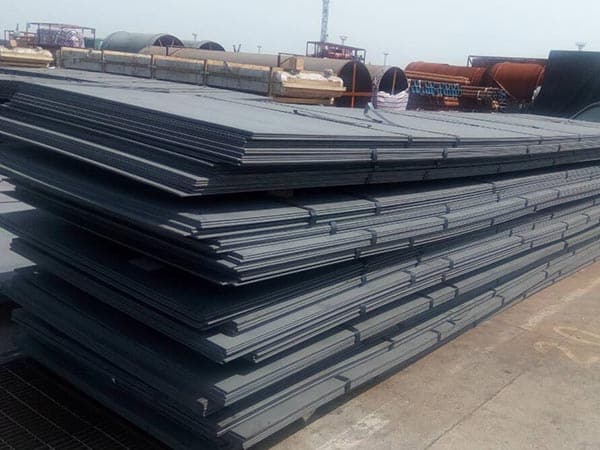
The Core Characteristics of S355MC Steel
S355MC is a high-yield-strength steel designed specifically for cold forming, governed by the EN 10149-2 standard. The "MC" suffix denotes that the material is thermomechanically rolled (M) and is suitable for cold forming (C). Unlike traditional structural steels like s355jr or S355J2, which might be normalized or as-rolled, S355MC owes its superior mechanical properties to a sophisticated production process known as Thermomechanically Controlled Processing (TMCP).
This process involves precise control over the temperature and the deformation during rolling, followed by accelerated cooling. The result is a fine-grained microstructure that achieves high yield strength (minimum 355 MPa) without the need for high levels of alloying elements like carbon or manganese. This low carbon equivalent is the secret behind its exceptional weldability and formability, but it also creates a unique set of constraints when users ask: Can you heat treat S355MC?
The Dilemma of Heat Treating S355MC
To answer the primary question: while you technically *can* heat S355MC, traditional heat treatments like normalizing, annealing, or quenching and tempering are generally discouraged. The reason lies in the material's DNA. The strength of S355MC is derived from the grain refinement and precipitation hardening achieved during the TMCP process. When you heat the material above its critical transformation temperature (typically around 900°C for normalizing), you effectively "erase" the memory of the thermomechanical rolling.
Subjecting S355MC to high temperatures causes grain growth. The fine, tight-knit grain structure that provides the 355 MPa yield strength expands, leading to a significant drop in mechanical properties. In many cases, a normalized S355MC plate will revert to the properties of a standard S235 or a low-grade S355, losing the specific advantages for which it was purchased. If your project requires post-weld heat treatment (PWHT) or stress relieving, it must be performed with extreme precision.
Guidelines for Stress Relieving S355MC
If stress relieving is absolutely necessary to stabilize dimensions after heavy machining or complex welding, it must stay within a strict temperature window. Experts recommend keeping the temperature below 580°C. Exceeding this threshold for an extended period risks the softening of the material through the coarsening of micro-alloying precipitates (such as Niobium or Vanadium).
- Temperature Range: 530°C to 580°C.
- Holding Time: 2 minutes per millimeter of thickness, minimum 30 minutes.
- Cooling: Slow cooling in the furnace down to 300°C to avoid new thermal stresses.
Even within these parameters, a slight reduction in yield strength may occur. It is always advisable to perform a test on a sample piece before committing a critical structural component to the furnace.
Mechanical Properties and Chemical Composition
Understanding the chemistry of S355MC helps clarify why it reacts differently to heat than carbon steels. The low carbon content (max 0.12%) ensures that it does not harden significantly during rapid cooling, which is why it cannot be effectively quenched and tempered like 4140 or even S355J2+N.
| Property | Value (Thickness ≤ 16mm) |
|---|---|
| Minimum Yield Strength (Reh) | 355 MPa |
| Tensile Strength (Rm) | 430 - 550 MPa |
| Minimum Elongation (A80mm) | 19% (typical) |
| Carbon (C) Max | 0.12% |
| Manganese (Mn) Max | 1.50% |
| Silicon (Si) Max | 0.03% (or 0.50% depending on order) |
The micro-alloying elements (Nb, V, Ti) are present in tiny fractions (usually <0.15% combined) but play a massive role in pinning grain boundaries during the rolling process. This is what allows the steel to remain tough and strong despite its thin profile.
Superior Processing Performance
While heat treatment is a limitation, S355MC excels in almost every other fabrication aspect. Its clean chemistry and fine grain structure make it a favorite for modern manufacturing facilities using automated processes.
1. Cold Forming and Bending: As the "C" in its name suggests, S355MC is a dream for press brake operators. It can be bent to very tight radii without cracking. For thicknesses under 3mm, a 0t bending radius is often possible, though 0.5t to 1.0t is standard practice to ensure safety margins. This is significantly better than standard S355J2, which requires much larger internal radii.
2. Laser and Plasma Cutting: The low silicon and consistent flatness of S355MC make it ideal for high-speed laser cutting. It produces a clean, burr-free edge with a very small heat-affected zone (HAZ). Because the material is so low in carbon, the cut edges do not harden excessively, allowing for easy subsequent machining or tapping.
3. Welding Excellence: S355MC has a very low Carbon Equivalent (CEV). This means it is highly resistant to cold cracking in the weld zone. Preheating is rarely required unless welding very thick sections in extremely cold environments. Standard MIG/MAG, TIG, and submerged arc welding processes work perfectly with S355MC, provided the filler metal matches the strength of the base material.
Environmental Adaptability and Toughness
S355MC is frequently used in environments where vibration and dynamic loading are prevalent. Its fine-grained structure provides excellent fatigue resistance compared to coarser-grained steels. Furthermore, while EN 10149-2 does not always mandate low-temperature impact testing (unlike the J2 or K2 designations in EN 10025), many S355MC products exhibit good toughness down to -20°C or even -40°C due to the TMCP process.
This adaptability makes it a staple for mobile equipment that must operate in varying climates, from the heat of a construction site in summer to the freezing temperatures of a northern winter. The material maintains its ductility, preventing catastrophic brittle fractures under sudden loads.
Strategic Industry Applications
The shift toward lightweighting and fuel efficiency has pushed S355MC into the spotlight across several heavy industries. By using a higher-strength steel that is thinner than traditional structural steel, engineers can reduce the overall weight of a structure without sacrificing safety.
- Automotive and Trucking: Used for chassis frames, cross members, and suspension components. The weight savings directly translate to higher payloads and lower emissions.
- Lifting and Handling: Crane booms, forklift masts, and telehandler arms benefit from the high strength-to-weight ratio.
- Cold Produced Profiles: S355MC is the primary choice for rolling complex C and Z sections used in solar mounting systems and light-gauge steel construction.
- Agricultural Machinery: Plow frames, trailer bodies, and harvester components where impact resistance and formability are critical.
Comparison: S355MC vs. S355J2
A common mistake in procurement is treating S355MC and S355J2 as interchangeable. While they share a similar yield strength, their behavior during fabrication is distinct. S355J2 is a structural steel (EN 10025) often supplied in a normalized or as-rolled condition. It is thicker, heavier, and has a higher carbon content. S355MC is thinner (usually up to 20mm), has better formability, and much better welding characteristics for high-volume production.
If your design relies on thick plates (over 25mm), you must move toward S355J2 or S355N, as the TMCP process is difficult to execute on very thick sections while maintaining uniform properties. However, for anything involving complex bending or weight reduction in sheets and plates under 16mm, S355MC is the superior technical choice.
Final Technical Considerations
When working with S355MC, the focus should remain on its "as-delivered" state. Any process that involves high heat—be it hot forming, flame straightening, or improper welding techniques—will degrade the very properties that make this steel valuable. If a component requires extensive hot working, S355MC is likely the wrong material choice, and a normalized grade should be specified instead.
By respecting the limits of the thermomechanical process and leveraging its incredible cold-forming and welding potential, manufacturers can produce lighter, stronger, and more cost-effective products. S355MC represents the pinnacle of modern steel metallurgy, blending high performance with ease of processing, provided the heat stays under control.
Leave a message