
At what humidity does S420MC rust?
A comprehensive guide to S420MC steel corrosion behavior, exploring critical humidity levels, chemical composition impacts, and industrial protection strategies.
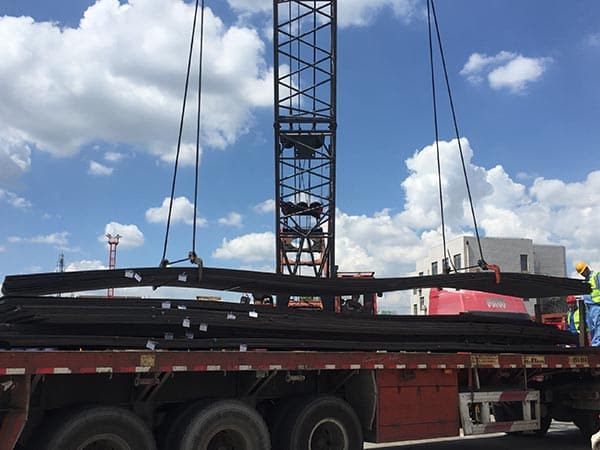
Understanding the Corrosion Dynamics of S420MC Steel
S420MC is a high-strength low-alloy (HSLA) steel grade defined under the EN 10149-2 standard, primarily utilized for cold-forming applications. While its mechanical prowess is well-documented, its interaction with environmental moisture is a critical factor for manufacturers and engineers. The question of at what humidity S420MC begins to rust is not merely about a single percentage point but involves a complex interplay of surface chemistry, atmospheric conditions, and the physics of adsorption.
The Concept of Critical Relative Humidity (CRH)
For most carbon and low-alloy steels like S420MC, the onset of visible atmospheric corrosion occurs at a threshold known as the Critical Relative Humidity (CRH). Research and empirical data suggest that for S420MC, the corrosion rate remains negligible when the relative humidity (RH) is below 40% to 50%. However, once the environment crosses the 60% RH mark, the rate of oxidation increases significantly. This is due to the formation of a microscopic layer of adsorbed water on the steel surface, which acts as an electrolyte for the electrochemical process of rusting.
When humidity reaches 75% to 80%, the moisture film becomes thick enough to facilitate rapid ion transport. At this stage, oxygen from the air dissolves into the water film, reacting with the iron (Fe) in the S420MC to form iron oxides, commonly known as rust. This process is accelerated if the temperature fluctuates, leading to the dew point being reached, where water vapor condenses directly into liquid droplets on the steel surface.
Chemical Composition and Its Influence on Oxidation
The chemical makeup of S420MC plays a pivotal role in how it handles environmental stress. Unlike stainless steels that contain high levels of Chromium to form a passive layer, S420MC relies on a fine-grained structure achieved through thermomechanical rolling. Below is the typical chemical composition breakdown for S420MC:
| Element | Maximum Content (%) |
|---|---|
| Carbon (C) | 0.12 |
| Manganese (Mn) | 1.60 |
| Silicon (Si) | 0.50 |
| Phosphorus (P) | 0.025 |
| Sulfur (S) | 0.015 |
| Aluminum (Al) | 0.015 |
| Niobium (Nb) | 0.09 |
| Vanadium (V) | 0.20 |
| Titanium (Ti) | 0.15 |
The low carbon content improves weldability and ductility but does not inherently prevent rust. The presence of Manganese and Silicon provides some solid solution strengthening, yet they do not offer significant corrosion resistance. The micro-alloying elements like Niobium (Nb), Vanadium (V), and Titanium (Ti) are essential for grain refinement. While these elements enhance yield strength and toughness, they can also influence the uniformity of the initial oxide layer. A more uniform grain structure can sometimes lead to a more even distribution of initial surface oxidation, preventing localized deep pitting compared to coarser-grained steels.
Mechanical Properties and Surface Integrity
The mechanical integrity of S420MC is its primary selling point. However, surface rust can compromise these properties over time, especially in thin-gauge components. The following table outlines the standard mechanical requirements:
| Property | Value (Minimum) |
|---|---|
| Yield Strength (ReH) | 420 MPa |
| Tensile Strength (Rm) | 480 - 620 MPa |
| Elongation (A5) | 16% - 19% (depending on thickness) |
Rusting is an expansive process; the iron oxide occupies more volume than the original metal. This can lead to surface scaling and, in structural applications, a reduction in the effective cross-sectional area. For S420MC, which is often used in automotive frames and heavy machinery, maintaining surface integrity is vital for fatigue resistance. Surface pits caused by corrosion act as stress concentrators, which can lead to premature failure under cyclic loading.
Environmental Variables Beyond Humidity
While humidity is the primary driver, other factors determine the severity of rust on S420MC. Temperature is a major catalyst; for every 10°C increase in temperature, the rate of chemical reactions, including oxidation, can nearly double, provided moisture is present. Atmospheric Pollutants such as Sulfur Dioxide (SO2) in industrial zones or Chlorides in coastal regions drastically lower the Critical Relative Humidity threshold. In the presence of salts, S420MC can begin to rust at humidity levels as low as 40% because salts are hygroscopic, meaning they pull moisture out of the air even when it is relatively dry.
Airflow and Ventilation also matter. Stagnant air in a humid warehouse allows moisture to settle and remain on the steel surface. Conversely, moving air can help evaporate thin films of moisture, though it may also bring in fresh oxygen and pollutants. This is why the storage environment is often more critical than the geographical location itself.
Processing Performance and Corrosion Risks
S420MC is renowned for its excellent cold-forming and welding properties. However, these processes can alter the material's local corrosion resistance. Cold Working introduces internal stresses and increases the dislocation density in the crystal lattice. These high-energy areas are more chemically reactive and can become preferential sites for rust initiation. Welding alters the microstructure in the Heat Affected Zone (HAZ). If the welding parameters are not controlled, the depletion of certain elements or the formation of coarse grains in the HAZ can create galvanic cells between the weld metal and the base S420MC, leading to localized corrosion in humid environments.
Strategies for Preventing Rust in S420MC
Given that S420MC will inevitably rust if exposed to high humidity, proactive protection is mandatory. The most common industrial methods include:
- Pickling and Oiling: Most S420MC is supplied in a pickled and oiled (P&O) condition. The acid pickling removes mill scale, and a thin layer of mineral oil provides a temporary barrier against moisture.
- Galvanization: For long-term outdoor use, hot-dip galvanizing or zinc-rich coatings are highly effective. The zinc acts as a sacrificial anode, corroding in place of the S420MC.
- VCI Packaging: Volatile Corrosion Inhibitors (VCI) are used during transport and storage. VCI molecules sublimate from papers or films and form a molecular protective layer on the steel surface that prevents moisture from reacting with the metal.
- Climate-Controlled Warehousing: Maintaining a warehouse humidity level below 50% and avoiding rapid temperature swings (to prevent condensation) is the gold standard for preserving S420MC inventory.
Industrial Applications and Material Selection
S420MC is a staple in the automotive industry, particularly for chassis parts, suspension systems, and reinforcement beams. Its high strength-to-weight ratio allows for thinner sections, reducing vehicle weight and improving fuel efficiency. In the construction sector, it is used for cold-pressed profiles and structural components where high yield strength is required. In all these applications, the environmental context is analyzed during the design phase. If the component will be exposed to humidity levels exceeding 60% for extended periods, engineers typically specify secondary coatings like E-coating or powder coating to ensure the longevity of the S420MC substrate.
The choice of S420MC over lower grades like S355MC often comes down to the need for higher load-bearing capacity without increasing mass. However, users must be aware that the higher strength does not equate to higher corrosion resistance. In fact, the higher internal stresses associated with higher-strength steels can sometimes make them more sensitive to environmental cracking if corrosion is allowed to progress unchecked. Therefore, managing humidity during the entire lifecycle—from the steel mill to the final assembly—is a fundamental aspect of working with this versatile HSLA grade.
Leave a message