
What is the s355mc material group surface treatment
Comprehensive analysis of S355MC material group surface treatments, including pickling, galvanizing, and coating processes for high-strength low-alloy steel.
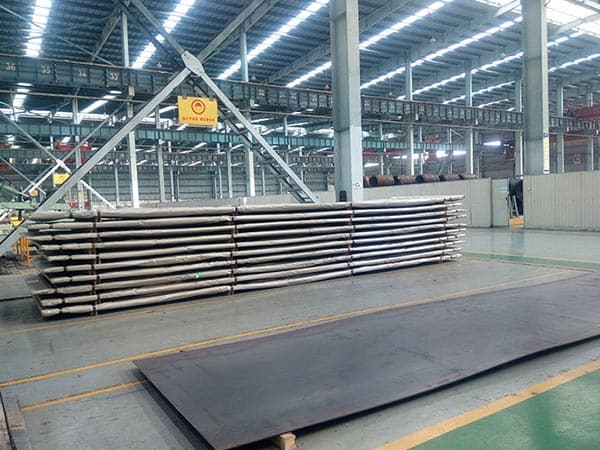
Defining the S355MC Material Group and Its Structural Significance
S355MC is a high-strength low-alloy (HSLA) steel grade specifically designed for cold forming. According to the EN 10149-2 standard, the 'S' denotes structural steel, '355' indicates a minimum yield strength of 355 MPa, 'M' signifies its thermomechanically rolled delivery condition, and 'C' highlights its suitability for cold forming operations. Within the international welding and materials classification system, such as ISO/TR 15608, S355MC typically falls under Group 1.2, which covers steels with a specified minimum yield strength between 275 MPa and 360 MPa.
The material group classification is vital because it dictates how the surface interacts with various treatments. Unlike traditional hot-rolled carbon steels, S355MC features a fine-grained microstructure achieved through precise temperature control during the rolling process. This microstructure not only provides superior mechanical properties but also influences the adhesion of coatings and the efficiency of chemical cleaning processes. Engineers prioritize S355MC for lightweighting initiatives in the automotive and heavy machinery sectors, where surface integrity directly correlates with the longevity of the final component.
The Necessity of Surface Treatment for S355MC
During the thermomechanical rolling process, a thin layer of iron oxide, commonly known as mill scale, forms on the surface of S355MC. This scale is brittle and non-uniform, making it an unsuitable substrate for direct painting or high-precision welding. Surface treatment serves three primary purposes: corrosion protection, aesthetic improvement, and preparation for downstream processing. Because S355MC is often used in structural parts exposed to atmospheric moisture or industrial chemicals, selecting the correct surface finish is a critical design decision.
The chemical composition of S355MC is tightly controlled to ensure weldability and formability. Below is a typical breakdown of the chemical requirements that influence surface treatment outcomes:
| Element | Maximum Content (%) | Impact on Surface Treatment |
|---|---|---|
| Carbon (C) | 0.12 | Ensures low hardness, facilitating better chemical etching. |
| Manganese (Mn) | 1.50 | Enhances strength without compromising coating adhesion. |
| Silicon (Si) | 0.03 | Critical for controlling the thickness of galvanized layers. |
| Phosphorus (P) | 0.025 | Low levels prevent embrittlement during hot-dip processes. |
| Sulfur (S) | 0.02 | Reduces inclusions that could cause surface pitting. |
The low silicon content in S355MC is particularly noteworthy. In hot-dip galvanizing, silicon levels significantly affect the Sandelin Effect, which can lead to excessively thick, brittle, and dull gray coatings. S355MC's low silicon profile generally places it in the 'Category A' or 'Category B' of the Sebisty range, making it highly compatible with standard galvanizing procedures.
Primary Surface Treatment Options for S355MC
Depending on the application, S355MC can undergo several surface modifications. Each method offers distinct advantages in terms of cost, durability, and environmental resistance.
- Pickling and Oiling (P&O): This is the most common primary treatment. The steel is passed through an acid bath (usually hydrochloric or sulfuric acid) to remove mill scale, followed by a light application of oil to prevent flash rusting. P&O S355MC is preferred for laser cutting and precision stamping because it provides a clean, consistent surface that doesn't damage tooling.
- Hot-Dip Galvanizing: For maximum corrosion resistance, S355MC components are submerged in molten zinc. This creates a metallurgical bond between the zinc and the steel. The resulting coating is exceptionally durable and provides cathodic protection, meaning the zinc will corrode preferentially to the steel if the surface is scratched.
- Shot Blasting: This mechanical treatment involves propelling abrasive media at the steel surface. It is often used to achieve a specific surface roughness (e.g., Sa 2.5) required for high-performance paint systems or thermal spray coatings. Shot blasting also induces compressive residual stresses, which can slightly improve the fatigue life of S355MC parts.
- Electro-galvanizing: Unlike hot-dip, this process uses an electric current to deposit a thin, uniform layer of zinc. It is ideal for parts requiring tight dimensional tolerances where the thickness of a hot-dip coating would be problematic.
Advanced Coating Systems and Environmental Adaptability
Beyond basic metallic coatings, S355MC is frequently treated with organic coatings like powder coating or KTL (E-coating). E-coating is particularly prevalent in the automotive industry for S355MC chassis components. The process involves immersing the part in a bath of water-based paint and applying an electric charge, ensuring that even complex geometries and internal cavities are fully protected.
The environmental adaptability of S355MC is largely determined by these treatments. In C3 or C4 corrosive environments (industrial or coastal areas), a duplex system—combining hot-dip galvanizing with a top coat of powder—is often utilized. This synergy provides a barrier that can last over 50 years without significant maintenance. The fine-grained structure of S355MC ensures that the interface between the steel and the primer is stable, reducing the risk of delamination under thermal cycling.
Impact of Surface Quality on Fabrication and Welding
The surface condition of S355MC directly impacts its weldability. Contaminants such as heavy oils, thick scale, or moisture can introduce hydrogen into the weld pool, leading to porosity or cold cracking. Therefore, S355MC is typically delivered in a pickled condition or cleaned immediately before welding. Because S355MC is a thermomechanically rolled steel, its heat-affected zone (HAZ) is sensitive to excessive heat input. A clean surface allows for more efficient heat transfer and faster welding speeds, which helps preserve the mechanical properties of the base metal.
Furthermore, when S355MC is used in cold forming, the surface must be free of defects. Micro-cracks or deep scratches on the surface can act as stress concentrators during bending or deep drawing, leading to premature failure. The use of P&O material ensures that the lubrication during forming is uniform, protecting both the workpiece and the dies.
Industry Applications and Performance Requirements
The versatility of S355MC makes it a staple in several high-stakes industries. In the transportation sector, it is used for truck frames and trailer chassis. Here, the surface treatment must withstand stone chipping and road salts. A combination of zinc-rich primers and durable topcoats is standard.
In the renewable energy sector, specifically for solar mounting systems, S355MC is often hot-dip galvanized to meet 25-year service life requirements in outdoor environments. The material's high strength-to-weight ratio allows for thinner profiles, while the galvanizing ensures these profiles do not lose structural integrity due to rust.
Heavy machinery and yellow goods (excavators, cranes) utilize S355MC for boom sections and structural frames. These components require a surface that can support high-build epoxy coatings to resist the abrasive nature of construction sites. The mechanical bonding provided by a shot-blasted S355MC surface is essential for the adhesion of these heavy-duty paints.
Technical Comparison of Surface Finishes for S355MC
| Treatment Method | Corrosion Resistance | Cost Efficiency | Best For |
|---|---|---|---|
| Pickled & Oiled | Low (Temporary) | High | Indoor use, further processing, laser cutting. |
| Hot-Dip Galvanized | Very High | Medium | Outdoor structures, agricultural equipment. |
| Powder Coated | High | Medium | Consumer goods, aesthetic components. |
| Zinc-Nickel Plating | Excellent | Low (Expensive) | Automotive fasteners, high-salt environments. |
Choosing the right treatment involves balancing the initial cost against the total lifecycle cost of the component. For S355MC, the 'M' delivery condition provides a clean slate that is more predictable than traditional s355jr hot-rolled steel, allowing for more consistent results across large production batches. By understanding the chemical and structural nuances of the S355MC material group, manufacturers can optimize their surface treatment protocols to ensure maximum performance and durability.
Leave a message