
Who is the professioal 1.0972 alloy steel plate supplier
Discover the technical specifications and industry applications of 1.0972 (S355MC) alloy steel. Learn how to identify a professional supplier through material properties, processing capabilities, and quality standards.
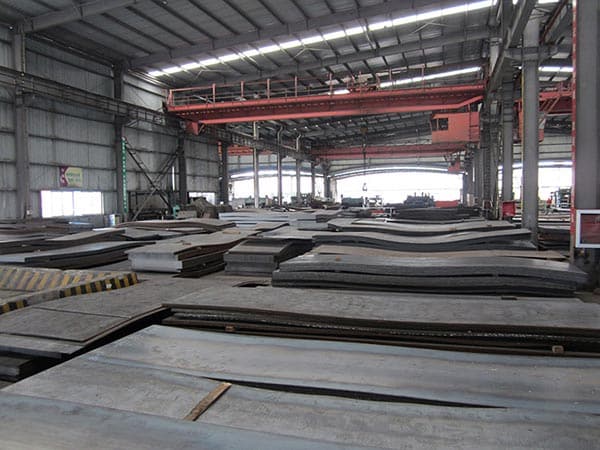
Understanding the 1.0972 Material Specification
The steel grade 1.0972, widely recognized under the EN 10149-2 designation as S355MC, represents a pinnacle of metallurgical engineering for hot-rolled high-yield strength steels intended for cold forming. Identifying a professional 1.0972 alloy steel plate supplier requires a deep dive into the material's unique characteristics. This grade is not merely a structural steel; it is a thermomechanically rolled product designed to balance high strength with exceptional formability and weldability. The "S" signifies structural use, "355" denotes the minimum yield strength in Megapascals (MPa), and "MC" indicates it is thermomechanically rolled (M) and suitable for cold forming (C).
Professional suppliers distinguish themselves by their ability to explain the nuances between 1.0972 and standard structural steels like s355jr. While both share a similar yield strength, the 1.0972 grade undergoes a strictly controlled Thermomechanical Control Process (TMCP). This process refines the grain structure to a degree that conventional normalizing cannot achieve, resulting in a steel that is both tougher and more ductile. For engineers and procurement specialists, sourcing this material involves verifying that the supplier understands these processing differences and can provide the necessary documentation to prove the material's pedigree.
Chemical Composition and Its Impact on Performance
The performance of 1.0972 alloy steel is a direct result of its sophisticated chemical balancing. Unlike lower-grade steels that rely heavily on carbon for strength, 1.0972 utilizes micro-alloying elements. This strategy ensures that the steel remains highly weldable while achieving its high-yield targets. A professional supplier should provide Mill Test Certificates (MTC) that reflect the following chemical limits:
| Element | Maximum Percentage (%) |
|---|---|
| Carbon (C) | 0.12 |
| Manganese (Mn) | 1.50 |
| Silicon (Si) | 0.50 |
| Phosphorus (P) | 0.025 |
| Sulphur (S) | 0.020 |
| Aluminium (Al) total | 0.015 (min) |
| Niobium (Nb) | 0.09 |
| Vanadium (V) | 0.20 |
| Titanium (Ti) | 0.15 |
The low carbon content (max 0.12%) is critical for maintaining excellent weldability and preventing the formation of brittle martensite in the heat-affected zone (HAZ). Micro-alloying elements like Niobium (Nb), Vanadium (V), and Titanium (Ti) act as grain refiners and precipitate hardeners. These elements allow the steel to maintain high strength even in thinner gauges, which is a primary driver for weight reduction in modern machinery and vehicle design.
Mechanical Properties and Cold Forming Capabilities
The primary reason industries seek out 1.0972 is its mechanical reliability. When evaluating a supplier, it is essential to confirm that their stock meets or exceeds the EN 10149-2 standards. The mechanical properties are characterized by a high yield-to-tensile ratio and significant elongation, which facilitates complex bending and folding operations without cracking.
- Yield Strength: Minimum 355 MPa for thicknesses ≤ 16mm.
- Tensile Strength: 430 to 550 MPa.
- Elongation: Ranges from 19% to 23% depending on the thickness and the direction of the test piece (transverse or longitudinal).
- Bending Radius: For a 90-degree bend, the recommended minimum mandrel radius is typically 0.5 to 1.5 times the material thickness, showcasing its superior cold-forming traits.
A professional 1.0972 supplier will offer material that exhibits isotropic properties, meaning the difference in strength and ductility between the rolling direction and the transverse direction is minimized. This is vital for manufacturers who need to nest parts in various orientations to maximize material yield during laser or plasma cutting.
Processing Advantages and Weldability
Working with 1.0972 steel plate offers significant operational efficiencies. Because the material is produced via TMCP, it possesses a very low Carbon Equivalent Value (CEV). This translates to excellent weldability using all standard methods, including MIG, TIG, and submerged arc welding. Unlike thicker alloy steels, 1.0972 generally does not require preheating, which reduces energy costs and speeds up production cycles.
Furthermore, the surface quality of 1.0972 is typically superior to standard hot-rolled plates. Professional suppliers often provide these plates in a pickled and oiled (P&O) condition. This removes the mill scale, providing a clean surface that is ready for painting or galvanizing, and protects the precision of CNC cutting tools. The absence of scale also ensures better electrical contact during spot welding, a common requirement in automotive assembly lines.
Critical Industry Applications
The versatility of 1.0972 steel makes it a staple in sectors where weight saving and structural integrity are paramount. By utilizing the high yield strength of 1.0972, engineers can specify thinner plates compared to S235 or S275 steels without sacrificing safety. This "lightweighting" is a key trend across several heavy industries:
- Automotive and Transport: Truck chassis, cross members, and structural frames for trailers benefit from the vibration resistance and high fatigue strength of 1.0972.
- Agricultural Machinery: Plows, harvester frames, and soil preparation equipment require the toughness that micro-alloyed steel provides to withstand impact loads in harsh environments.
- Lifting and Handling: Crane arms, telescopic booms, and forklift components utilize the high strength-to-weight ratio to increase lifting capacity while maintaining a compact design.
- Cold Pressed Parts: Complex structural brackets and supports that require deep drawing or tight radius bending.
How to Identify a Professional 1.0972 Supplier
Selecting the right partner for 1.0972 alloy steel plate procurement involves more than comparing price per ton. A professional supplier functions as a technical consultant and a reliable link in the supply chain. Look for the following indicators of professionalism:
1. Comprehensive Documentation: A top-tier supplier provides full traceability. This includes EN 10204 3.1 or 3.2 certificates for every heat number, ensuring the chemical and mechanical properties are verified by the mill.
2. Precision Processing Capabilities: Beyond simple distribution, a professional supplier should offer value-added services such as high-precision laser cutting, decoiling to custom lengths, and precision leveling. The flatness of 1.0972 is critical for automated welding and robotic assembly; therefore, a supplier with advanced leveling equipment is a significant asset.
3. Inventory Depth and Diversity: 1.0972 is often used in conjunction with other high-yield grades like S420MC, S500MC, or S700MC. A supplier who stocks a full range of thermomechanically rolled steels demonstrates a commitment to the high-performance steel market and can offer alternatives if design requirements change.
4. Technical Support and Expertise: Can the supplier advise on the minimum bending radius for a specific thickness? Do they understand the impact of welding heat input on the TMCP structure? A professional supplier has staff who understand the metallurgy, not just the logistics.
5. Quality Management Systems: Verification of ISO 9001 or IATF 16949 certifications is non-negotiable. These standards ensure that the supplier has rigorous processes for handling, storage, and shipping to prevent material degradation or mix-ups.
Environmental Adaptability and Sustainability
In the modern industrial landscape, the environmental footprint of materials is under constant scrutiny. 1.0972 steel contributes to sustainability goals through its efficiency. By allowing for thinner structural components, it reduces the total mass of vehicles and machinery, leading to lower fuel consumption and reduced CO2 emissions during the equipment's operational life. Additionally, like all steel products, 1.0972 is 100% recyclable. Professional suppliers are increasingly providing data on the recycled content of their steel and the carbon intensity of the mills they represent, helping manufacturers meet their ESG (Environmental, Social, and Governance) targets.
The choice of a 1.0972 alloy steel plate supplier ultimately dictates the success of the manufacturing process. By focusing on technical proficiency, material quality, and value-added services, businesses can ensure they are using this high-performance steel to its full potential. Whether for a complex automotive bracket or a heavy-duty crane boom, the reliability of 1.0972, backed by a professional supplier, provides the foundation for engineering excellence.
Leave a message