
What are the top 10 S420MC steel for car safety parts hot rolled plates mills in Iran
Explore the leading S420MC hot rolled plate mills for Iran's automotive safety parts. This guide covers technical specifications, mechanical properties, and the top suppliers driving the Iranian car industry's lightweighting and safety standards.
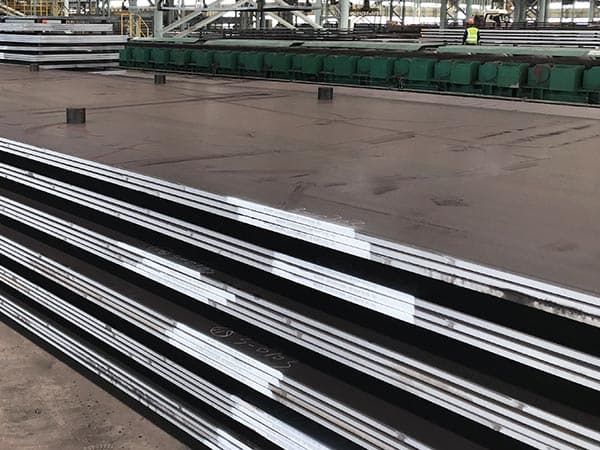
The Strategic Role of S420MC in Iran's Automotive Safety Architecture
As the Iranian automotive industry continues to modernize, the demand for high-strength low-alloy (HSLA) steels has surged. S420MC, a thermomechanically rolled steel grade governed by the EN 10149-2 standard, stands at the forefront of this evolution. Specifically designed for cold forming, this material provides a critical balance between weight reduction and structural integrity. For car safety parts such as chassis members, cross-beams, and reinforcement brackets, S420MC offers the necessary yield strength to withstand high-impact stresses while remaining light enough to improve fuel efficiency.
In Iran, the localization of automotive components for brands like IKCO and SAIPA has necessitated a robust supply chain of S420MC hot rolled plates. This article analyzes the top mills and supply channels that provide this high-performance material to the Iranian market, focusing on technical excellence and industrial reliability.
Technical Profile: Why S420MC is Non-Negotiable for Safety
The 'S' in S420MC denotes structural steel, '420' represents the minimum yield strength of 420 MPa, and 'MC' indicates it is thermomechanically rolled for cold forming. Unlike traditional carbon steels, S420MC utilizes micro-alloying elements such as Niobium (Nb), Vanadium (V), and Titanium (Ti) to refine grain structure.
Chemical Composition and Mechanical IntegrityThe performance of S420MC is dictated by its precise chemistry. Low carbon content ensures excellent weldability, which is vital for automated robotic welding lines in Iranian car assembly plants.
| Element/Property | S420MC Specification (EN 10149-2) |
|---|---|
| Carbon (C) % max | 0.12 |
| Manganese (Mn) % max | 1.60 |
| Silicon (Si) % max | 0.50 |
| Yield Strength (MPa) min | 420 |
| Tensile Strength (MPa) | 480 - 620 |
| Elongation (%) min | 16 - 19 (depending on thickness) |
Analysis of Top 10 S420MC Mills and Supply Channels for Iran
Identifying the top sources for S420MC in Iran involves looking at domestic production giants and established international trade partners that navigate the unique logistical landscape of the region.
1. Mobarakeh Steel Company (MSC)
As the largest steel producer in the Middle East and North Africa (MENA) region, Mobarakeh Steel Company is the primary domestic source for S420MC. Their hot strip mill is capable of producing HSLA grades that meet international standards. MSC’s S420MC is widely used by Iranian Tier-1 automotive suppliers for manufacturing longitudinal beams and chassis components due to its consistent thickness tolerances and surface quality.
2. Oxin Steel Khuzestan
Specializing in wide heavy plates, Oxin Steel provides the Iranian market with thicker sections of high-strength steel. While S420MC is typically a thin-to-medium gauge product, Oxin’s capability in thermomechanical controlled processing (TMCP) allows them to supply heavy-duty structural components for commercial vehicle safety frames that require S420MC-level performance in larger dimensions.
3. Ahvaz Rolling and Pipe Mills Company (ARPCO)
ARPCO plays a significant role in processing hot rolled coils into precise strips. They are a key link in the Iranian supply chain, taking master coils of S420MC and providing the precision slitting required for specialized car safety parts like seat belt anchors and door impact beams.
4. MMK (Magnitogorsk Iron and Steel Works)
Historically, Russia’s MMK has been a massive exporter of hot rolled HSLA coils to Iran. Their S420MC is favored for its exceptional purity and low sulfur content, which translates to superior fatigue resistance in safety-critical automotive parts. The logistical proximity via the Caspian Sea makes MMK a top-tier choice for Iranian manufacturers.
5. Severstal
Another Russian giant, Severstal, supplies high-strength automotive steels to the Iranian market. Their S420MC plates are known for their excellent cold-forming properties, allowing for complex geometries in safety parts without the risk of micro-cracking during the stamping process.
6. Baosteel (China)
Baosteel is a global benchmark for automotive steel. In the Iranian market, Baosteel’s S420MC is often the reference material for high-end safety components. Their advanced cooling technologies during the rolling process ensure a very fine grain structure, which is essential for energy absorption during vehicle collisions.
7. HBIS Group (China)
HBIS provides a cost-effective yet high-quality alternative for S420MC. Their products are frequently found in the supply chains of Iranian domestic car models, offering a reliable balance of high yield strength and ductility required for deep-drawing operations.
8. Posco (South Korea)
While trade fluctuates based on international dynamics, Posco’s S420MC (and equivalent grades) remains highly regarded in Iran for premium safety parts. Their "GigaSteel" technology influences their HSLA production, resulting in plates with superior surface finishes that reduce wear on stamping dies.
9. ArcelorMittal (via Global Distribution)
Through various international trading hubs, ArcelorMittal’s S420MC reaches Iranian specialized manufacturers. As a pioneer in automotive lightweighting, their material is often specified in the original designs of European-derived platforms produced in Iran.
10. Tata Steel Europe
Known for their Yurease range, Tata Steel provides high-strength steels that align with S420MC specifications. Their technical support and material consistency make them a preferred indirect supplier for Iranian firms looking to meet global safety rating standards.
Processing Performance: From Plate to Safety Component
The utility of S420MC in Iran’s car industry is not just about its strength but how it behaves during fabrication. Safety parts often involve complex shapes that must be formed without losing structural integrity.
- Cold Formability: S420MC allows for tight bending radii. This is crucial for chassis parts where space is limited and structural rigidity is paramount.
- Weldability: With a low Carbon Equivalent (CEV), S420MC can be welded using MAG, MIG, and laser welding without preheating, ensuring the heat-affected zone (HAZ) does not become brittle.
- Fatigue Resistance: Safety parts are subject to constant vibration. The fine-grained structure of S420MC provides excellent resistance to cyclic loading.
Environmental Adaptability and Longevity
Iran’s diverse climate—from the humid northern regions to the arid central plateaus—demands materials that can withstand environmental degradation. While S420MC is not a corrosion-resistant steel like stainless, its chemistry allows for excellent adhesion of protective coatings (e.g., E-coating or galvanizing). This ensures that car safety parts maintain their thickness and strength over the vehicle's 15-20 year lifespan, even in corrosive environments.
Industry Applications Beyond the Chassis
While chassis frames are the most common application, the use of S420MC in the Iranian automotive sector extends to:
- Suspension Systems: Control arms and shock absorber brackets where high strength-to-weight ratios are required.
- Bumper Supports: Energy-absorbing structures that protect the engine bay during low-speed impacts.
- Truck and Trailer Frames: Iran’s heavy transport industry utilizes S420MC for trailer cross-members to increase payload capacity by reducing dead weight.
Future Trends: Moving Toward S500MC and Beyond
The trajectory for Iranian mills like Mobarakeh Steel is to move further up the strength ladder. While S420MC is currently the workhorse of the safety part sector, there is a gradual shift toward S500MC and S700MC. This transition is driven by the need for even lighter vehicles to meet stricter emissions standards. However, S420MC remains the "sweet spot" for many manufacturers due to its ease of processing and cost-efficiency.
Selecting the right mill for S420MC in Iran requires a deep understanding of both the metallurgical properties of the steel and the logistical reliability of the supplier. Whether sourcing domestically from MSC or importing from global leaders like MMK or Baosteel, the focus remains on ensuring that every gram of steel contributes to the ultimate goal: passenger safety.
Leave a message