
What is the S355MC plate zero cut tensile strength
A comprehensive technical guide to S355MC steel plate tensile strength, mechanical properties, and the advantages of zero-cut precision. Learn about EN 10149-2 standards, welding, and industrial applications.
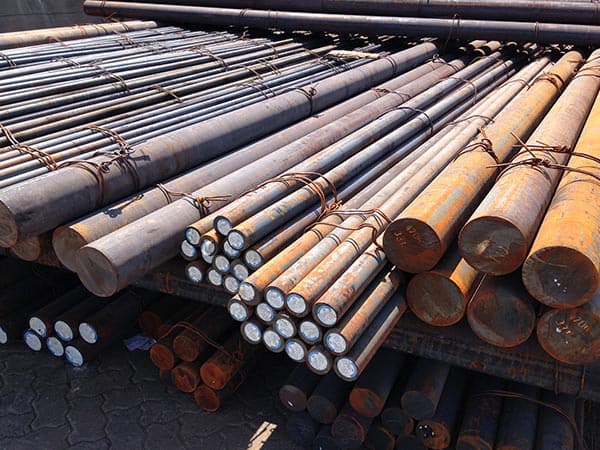
Defining S355MC: The Standard for High-Yield Cold Forming
S355MC is a high-strength, hot-rolled steel grade specifically designed for cold forming applications. Governed by the EN 10149-2 standard, this material is characterized by its thermomechanically rolled (M) state and its suitability for cold forming (C). The "355" designation refers to its minimum yield strength of 355 MPa, but the material's true utility lies in its balance of high strength, excellent ductility, and superior weldability. Unlike traditional structural steels like s355jr, S355MC undergoes a specialized rolling process that refines its grain structure, making it ideal for complex geometries and weight-sensitive engineering projects.
What is the S355MC Plate Zero Cut Tensile Strength?
The tensile strength of S355MC typically ranges between 430 and 550 MPa. This range is critical for engineers who must calculate the ultimate load-bearing capacity of a component before it reaches the point of fracture. While the yield strength (355 MPa) tells us when the material will begin to deform plastically, the tensile strength defines the maximum stress the steel can withstand while being stretched or pulled. In the context of "zero cut" plates—which refer to precision-cut-to-size segments—maintaining these mechanical properties across the entire surface is paramount. The zero-cut process ensures that the edges of the plate are free from thermal damage or mechanical stress that could otherwise compromise the material's integrity.
| Property | Value (Thickness ≤ 16mm) |
|---|---|
| Yield Strength (ReH) | ≥ 355 MPa |
| Tensile Strength (Rm) | 430 - 550 MPa |
| Minimum Elongation (A80mm) | ≥ 19% (t < 3mm) |
| Minimum Elongation (A5) | ≥ 23% (t ≥ 3mm) |
The Role of Thermomechanical Rolling (TMCP)
The exceptional tensile strength and ductility of S355MC are direct results of Thermomechanical Control Process (TMCP). During this rolling method, the temperature and deformation of the steel are strictly controlled. This prevents the growth of austenite grains, resulting in an extremely fine-grained ferrite-pearlite microstructure. This grain refinement is a unique strengthening mechanism; it is the only metallurgical process that increases both the yield strength and the toughness of the steel simultaneously. Traditional heat treatments often trade off one for the other, but TMCP allows S355MC to remain highly formable even at high strength levels.
Precision Zero-Cut Services: Customization and Efficiency
In modern manufacturing, "zero cut" refers to the delivery of steel plates exactly to the dimensions required by the customer, often using advanced CNC laser, plasma, or waterjet cutting technologies. This service eliminates the need for secondary processing at the client's facility. When S355MC is processed via zero-cut methods, the focus is on maintaining the heat-affected zone (HAZ). Because S355MC relies on its fine grain structure for strength, excessive heat during cutting can locally soften the material. Precision laser cutting minimizes this risk, ensuring that the tensile strength at the very edge of the plate remains consistent with the core material.
- Waste Reduction: Zero-cut plates allow manufacturers to pay only for the material they use, reducing scrap and logistics costs.
- Edge Quality: High-precision cutting ensures a smooth surface finish, often removing the need for additional grinding before welding.
- Dimensional Accuracy: Tight tolerances (often within +/- 0.5mm) are essential for automated welding cells and robotic assembly.
Chemical Composition and Metallurgical Stability
The chemical blueprint of S355MC is engineered for weldability and formability. By keeping the carbon content significantly lower than standard structural steels (max 0.12%), the material avoids the formation of brittle martensite during rapid cooling, such as during welding or thermal cutting. The addition of micro-alloying elements like Niobium (Nb), Titanium (Ti), and Vanadium (V) facilitates grain refinement and precipitation hardening, which are the primary drivers of its 430-550 MPa tensile strength.
| Element | Maximum Content (%) |
|---|---|
| Carbon (C) | 0.12 |
| Manganese (Mn) | 1.50 |
| Silicon (Si) | 0.50 |
| Phosphorus (P) | 0.025 |
| Sulfur (S) | 0.020 |
| Aluminium (Al) | 0.015 |
Cold Forming and Bending: The "MC" Advantage
The "C" in S355MC signifies its superior cold-forming capabilities. For engineers, this means the material can be bent into tight radii without cracking. For a plate with a thickness (t), the recommended minimum bending radius is typically 0.5t to 1.5t, depending on the orientation of the bend relative to the rolling direction. This high degree of formability, combined with a tensile strength that ensures structural rigidity, makes S355MC the preferred choice for complex cold-pressed parts. The material's high elongation (up to 23%) provides a significant safety margin during the forming process, preventing necking or premature failure.
Superior Weldability and Joining Techniques
Welding S355MC is remarkably straightforward due to its low Carbon Equivalent (CEV). Unlike higher-carbon steels that require preheating to prevent cold cracking, S355MC can typically be welded at ambient temperatures. This is a massive advantage for large-scale structural assemblies and automotive chassis production. Standard welding processes such as MIG/MAG, TIG, and submerged arc welding (SAW) are all highly effective. Because the material is thermomechanically rolled, it is important to manage the heat input to avoid excessive grain growth in the heat-affected zone, which could slightly lower the local tensile strength.
Applications Across Modern Engineering Sectors
The combination of high tensile strength and low weight makes S355MC a staple in industries where efficiency is key. In the automotive industry, it is used for truck chassis, longitudinal beams, and cross-members. By using S355MC instead of traditional S235 or S355JR, designers can use thinner plates to achieve the same structural strength, significantly reducing the vehicle's dead weight and improving fuel efficiency. In the heavy machinery sector, S355MC is utilized for crane booms, excavator arms, and agricultural equipment. These components require high fatigue resistance and the ability to withstand dynamic loads, both of which are supported by the consistent tensile properties of S355MC.
Environmental Resistance and Surface Integrity
While S355MC is not a dedicated weathering steel, its fine-grained structure and clean chemical composition provide a reliable base for various surface treatments. It responds exceptionally well to hot-dip galvanizing and industrial painting. The low silicon content (max 0.50%) is often controlled even further to ensure a high-quality galvanized finish, avoiding the thick, brittle coatings associated with the Sandelin effect. In environments where atmospheric corrosion is a concern, the uniform surface of zero-cut S355MC plates ensures that protective coatings adhere properly, extending the service life of the component.
Technical Comparison: S355MC vs. Conventional Structural Steels
When comparing S355MC to S355JR (EN 10025-2), the differences are stark. S355JR is a general-purpose structural steel with higher carbon content and less precise rolling controls. While both have a minimum yield strength of 355 MPa, S355MC offers much better cold formability and a more consistent grain structure. S355JR is often limited in bending applications and may require larger radii to avoid cracking. Furthermore, the weight-saving potential of S355MC is superior because its higher ductility allows for more complex, integrated designs that reduce the number of joints and fasteners required in an assembly.
Design Considerations for High-Strength Components
When designing with S355MC, engineers must account for the material's yield-to-tensile ratio. With a yield of 355 MPa and a tensile peak of 550 MPa, the material provides a robust buffer against catastrophic failure. However, designers should also consider the directionality of the steel. Like all rolled products, properties can vary slightly between the longitudinal and transverse directions. Using zero-cut plates that are oriented correctly for the primary stress direction can optimize the performance of the final part. Additionally, the high strength of S355MC allows for the use of thinner sections, but this requires careful attention to buckling and local stability in compression-loaded members.
Leave a message