
What grade is equal to the S900MC construction machinery steel
Discover the global equivalents for S900MC high-strength steel. This comprehensive guide analyzes chemical composition, mechanical properties, and processing benchmarks for S900MC, Strenx 900, and Q960D to optimize your machinery designs.
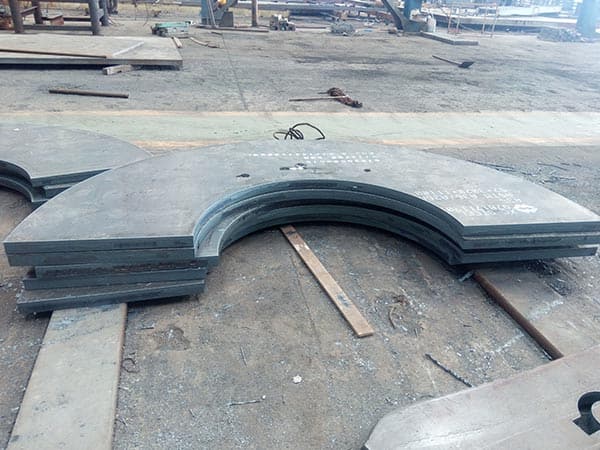
The Metallurgical Identity of S900MC Steel
S900MC represents the pinnacle of thermomechanically rolled (TMCP) high-strength low-alloy (HSLA) steels. Defined under the European standard EN 10149-2, this grade is specifically engineered for cold forming applications where weight reduction and high load-bearing capacity are paramount. The "S" denotes structural steel, "900" indicates a minimum yield strength of 900 MPa, and "MC" signifies its thermomechanically rolled condition for cold forming.
Unlike traditional quenched and tempered (Q+T) steels, S900MC achieves its exceptional strength through a precise combination of micro-alloying and controlled rolling temperatures. This process results in an ultra-fine grain structure that provides not only high strength but also remarkable toughness and weldability. For engineers and procurement specialists, identifying the correct equivalent grade is not merely about matching yield strength; it requires a deep dive into the processing characteristics and chemical signatures of global alternatives.
Direct Global Equivalents and Brand Substitutes
When searching for an equivalent to S900MC, it is essential to distinguish between national standards (like GB/T or ASTM) and proprietary brand names that often exceed the baseline requirements of EN 10149-2.
- Strenx 900 (SSAB): Perhaps the most recognized brand-name equivalent, Strenx 900 MC offers tighter tolerances and more consistent bending properties than standard S900MC.
- Q960D / Q890D (Chinese GB/T 1591/16270): While Q960D is often cited as an equivalent, it is frequently delivered in a Quenched and Tempered state. For a closer match to the TMCP nature of S900MC, specialized high-strength cold-forming grades from Chinese mills like Baosteel or Tisco are preferred.
- ASTM A514 / A656: The North American market lacks a direct 1:1 TMCP equivalent in the S900 range. ASTM A514 Grade Q is a Q+T structural plate with similar strength, but its cold-forming capabilities differ significantly. ASTM A656 Grade 100 is closer in philosophy but usually tops out at lower strength levels.
- DI-MC 900 (Dillinger): A high-end European alternative that mirrors the TMCP processing of S900MC, often used in heavy lifting and crane construction.
Comparative Analysis of Mechanical Properties
The following table highlights the critical mechanical benchmarks that any equivalent grade must meet or exceed to replace S900MC effectively.
| Property | S900MC (EN 10149-2) | Strenx 900 MC | Q960D (GB/T 16270) |
|---|---|---|---|
| Min. Yield Strength (MPa) | 900 | 900 | 960 |
| Tensile Strength (MPa) | 930 - 1200 | 930 - 1200 | 980 - 1150 |
| Min. Elongation (A50, %) | 8 - 10 | 8 | 10 |
| Impact Energy (-40°C) | Optional (Typ. 27J) | Guaranteed 27J+ | 27J - 47J |
Note: The elongation and bending radius are critical for S900MC. Because this steel is designed for cold forming, any substitute must demonstrate a minimum bending radius (usually 3.0t to 4.0t depending on thickness) to prevent cracking during fabrication.
Chemical Composition and Weldability
The weldability of S900MC is superior to many other steels of similar strength because of its low Carbon Equivalent (CEV). By utilizing micro-alloying elements such as Niobium (Nb), Vanadium (V), and Titanium (Ti), the carbon content is kept extremely low, typically below 0.12%.
When evaluating an equivalent like Q960D or a proprietary grade, the CEV must be monitored closely. A higher CEV increases the risk of cold cracking in the heat-affected zone (HAZ). S900MC typically maintains a CEV around 0.45-0.55, allowing for welding with minimal or no preheating for thinner sections. This efficiency is a primary driver for its use in mobile crane booms and chassis frames where long, continuous welds are required.
Advanced Processing: Bending and Cutting
One of the defining characteristics of S900MC is its "forming-friendly" nature. Despite its massive strength, it can be bent to tight radii. Equivalent grades must match this grain refinement. If a substitute steel has inclusions or a coarse grain structure, it will fail during the press-braking process, leading to catastrophic structural failure in the final machinery.
Laser and Plasma Cutting: S900MC is optimized for thermal cutting. The low internal stress of TMCP steel ensures that parts remain flat after cutting. If a Quenched and Tempered grade is used as a substitute, the internal stress distribution might cause the plate to "bow" or "spring" during the cutting process, complicating automated assembly lines.
Strategic Application in Heavy Equipment
The transition to S900MC or its equivalents is driven by the need for lightweighting. In the transport industry, every kilogram saved in the chassis translates directly into increased payload capacity.
- Telescopic Cranes: The high yield strength allows for thinner boom sections, extending the reach and lifting capacity without increasing the overall weight of the vehicle.
- Heavy-Duty Trailers: Using S900MC equivalents in main longitudinal beams reduces the dead weight of the trailer by up to 30% compared to S355 structural steel.
- Agriculture and Forestry: Equipment subjected to high stress and abrasive environments benefits from the toughness and fatigue resistance of S900MC.
Environmental and Economic Considerations
Adopting S900MC or its global equivalents contributes to environmental sustainability through material efficiency. Using less steel to achieve the same structural integrity reduces the carbon footprint associated with steel production and transport. Furthermore, the reduced weight of the finished machinery leads to lower fuel consumption throughout the equipment's lifecycle.
From a cost perspective, while S900MC carries a higher price per ton than standard structural grades, the total project cost is often lower. This is due to reduced welding consumables, lower shipping costs for lighter components, and the ability to use thinner plates, which are easier to handle and process in the factory.
Critical Factors for Material Substitution
Replacing S900MC with an equivalent requires more than a data sheet comparison. Engineers must verify the toughness at low temperatures, especially for machinery operating in arctic or offshore environments. While EN 10149-2 does not always mandate impact testing for S900MC, most high-tier equivalents like Strenx 900 provide guaranteed Charpy V-notch values at -40°C.
Additionally, the surface quality of the steel is vital. S900MC is usually supplied with a pickled and oiled surface or a finely controlled scale, which is ideal for high-precision laser cutting and painting. Any substitute must meet these surface standards to ensure the longevity of the protective coatings applied to construction machinery.
Ultimately, the choice of an equivalent grade should be dictated by the specific fabrication workflow. If the design relies heavily on complex cold-formed bends, a TMCP grade like Strenx 900 MC is the only viable alternative. If the design is primarily welded plate construction with minimal forming, a Q+T grade like Q960D may suffice, provided the welding parameters are adjusted for the different thermal response of the material.
Leave a message