
What is the plate S700MC pickled steel coil beveling
Comprehensive guide to S700MC pickled steel coil beveling. Discover the mechanical properties, processing techniques, and industrial applications of this high-yield strength steel, focusing on why precision beveling is critical for structural integrity.
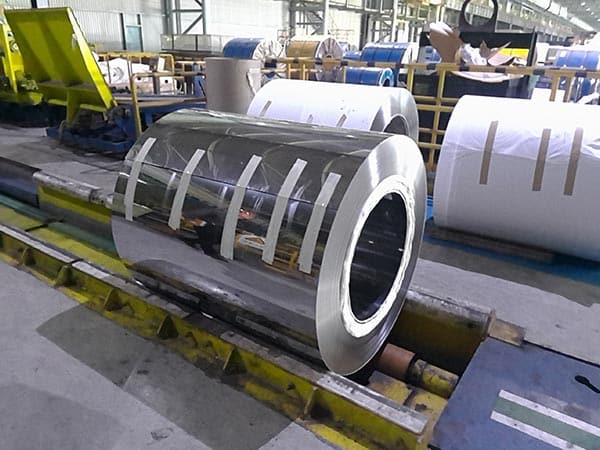
Defining S700MC Pickled Steel and the Role of Beveling
S700MC is a high-strength, thermomechanically rolled steel specifically designed for cold forming. As part of the EN 10149-2 standard, it represents the pinnacle of low-alloy steel engineering, offering a minimum yield strength of 700 MPa. The "pickled" designation refers to a chemical cleaning process where the steel coil is passed through an acid bath (typically hydrochloric acid) to remove surface oxides, scale, and impurities. This results in a clean, smooth surface that is ideal for subsequent processing. Beveling, in the context of S700MC plates or coils, is the process of creating an angled edge on the steel. This preparation is not merely cosmetic; it is a fundamental requirement for high-quality welding, ensuring that the filler metal can penetrate the full thickness of the high-strength joint.
The Technical Necessity of Beveling for High-Yield Steel
When working with S700MC, the structural integrity of the final assembly depends heavily on the weld quality. Because S700MC is significantly stronger than standard structural steels like S355, the stresses concentrated at the joints are much higher. Beveling creates a 'groove' (such as V-shaped, U-shaped, or X-shaped) that allows the welding arc to reach the root of the joint. Without proper beveling, the weld might only sit on the surface, leading to a lack of fusion and eventual structural failure under load. For pickled S700MC, the clean surface provided by the pickling process ensures that no scale is trapped within the beveled groove, further reducing the risk of porosity and slag inclusions during the welding cycle.
Mechanical Properties and Material Composition
The performance of S700MC is derived from its precise chemical composition and the thermomechanical rolling process (TMCP). Unlike traditional heat treatment, TMCP refines the grain structure at a microscopic level, providing a unique combination of high strength and excellent toughness. The inclusion of micro-alloying elements like Niobium (Nb), Vanadium (V), and Titanium (Ti) allows the steel to maintain its properties even after the intense heat of welding, provided the heat input is controlled.
| Property | Value (Typical) |
|---|---|
| Yield Strength (ReH) | Min. 700 MPa |
| Tensile Strength (Rm) | 750 - 950 MPa |
| Elongation (A5) | Min. 12% |
| Bending Radius (90°) | 1.0t - 1.5t (depending on thickness) |
| Carbon Content (C) | Max. 0.12% |
| Manganese (Mn) | Max. 2.10% |
Processing Performance: Cold Forming and Weldability
Despite its extreme strength, S700MC exhibits remarkable cold-forming characteristics. The pickling process plays a significant role here; by removing the abrasive scale, it reduces wear on forming tools and dies, extending the life of industrial equipment. When beveling S700MC, technicians must choose between mechanical shearing, milling, or thermal cutting (plasma/laser). Mechanical milling is often preferred for S700MC because it creates a precise, clean bevel without introducing a Heat Affected Zone (HAZ) before the actual welding takes place. If thermal cutting is used for beveling, the edge must be cleaned to remove any hardened layers that could interfere with the weld's ductility.
Weldability is a standout feature of S700MC. Due to its low carbon equivalent (CEV), it is less susceptible to cold cracking compared to other high-strength steels. However, the beveling angle must be calculated precisely to minimize the volume of weld metal required, which in turn minimizes the total heat input into the joint. Excess heat can lead to grain growth in the HAZ, potentially reducing the yield strength of the beveled area to levels below the 700 MPa specification.
Environmental Adaptability and Surface Protection
The pickling and oiling (P&O) process provides S700MC with a temporary layer of protection against atmospheric corrosion. In many industrial environments, raw hot-rolled steel would begin to rust almost immediately. The pickled surface acts as an excellent substrate for advanced coating systems. When a beveled S700MC plate is eventually painted or galvanized, the uniformity of the pickled surface ensures superior adhesion. Furthermore, the high fatigue resistance of S700MC makes it exceptionally adaptable to environments involving cyclic loading, such as mobile crane booms or heavy-duty trailer chassis, where vibration and stress fluctuations are constant.
Applications Across Heavy Industry
The demand for S700MC pickled steel with precision beveling is driven by the need for weight reduction without sacrificing safety. By using S700MC, engineers can use thinner plates to achieve the same structural strength as thicker, heavier standard steels. This "lightweighting" is critical in several sectors:
- Transportation: Truck chassis, cross members, and side guards utilize S700MC to increase payload capacity by reducing the vehicle's tare weight.
- Lifting Equipment: Telescopic crane booms require the high strength-to-weight ratio that S700MC provides, with beveled edges ensuring the deep-penetration welds necessary for lifting tons of material.
- Agriculture: Modern farm machinery, such as large-scale spreaders and plows, uses S700MC to withstand the rigors of soil impact and mechanical stress.
- Construction: High-rise building components and specialized shoring systems rely on the predictable yield behavior of this steel grade.
Optimizing the Beveling Process for S700MC
To achieve the best results with S700MC pickled steel coil beveling, several factors must be considered. First, the bevel angle (typically 30° to 45°) should be consistent across the entire length of the coil or plate. Variations in the bevel can lead to uneven weld beads and internal stresses. Second, the "root face"—the small flat portion at the bottom of the bevel—must be accurately sized to prevent burn-through during the root pass of the weld. Advanced CNC milling machines are now frequently used to automate the beveling of S700MC, ensuring that every millimeter of the edge meets the stringent tolerances required for robotic welding systems. This level of precision is what allows S700MC to perform reliably in the most demanding engineering tasks on the planet.
Leave a message