
What are the operation principles to be followed in the S960MC steel for construction machinery cutting process
Explore the critical operation principles for cutting S960MC high-strength steel. This comprehensive guide covers thermal input control, edge quality management, and process optimization for heavy machinery manufacturing.
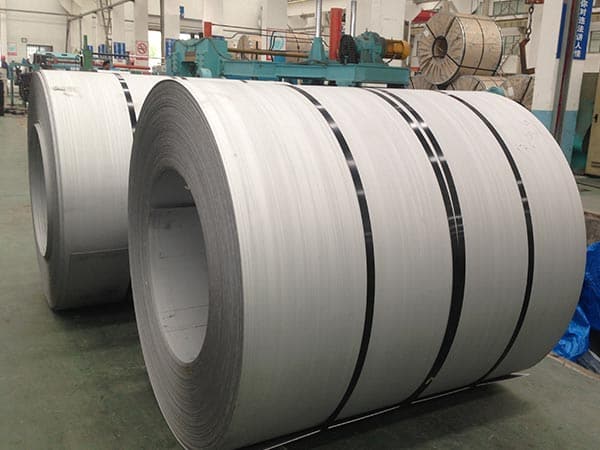
Metallurgical Foundation and Its Influence on Cutting S960MC
S960MC is a high-strength structural steel produced through a thermo-mechanically controlled process (TMCP). Unlike traditional quenched and tempered steels, its strength—reaching a minimum yield of 960 MPa—is derived from a fine-grained microstructure achieved through precise micro-alloying with elements like niobium, vanadium, and titanium, combined with controlled rolling temperatures. Understanding this metallurgical background is the first principle of any cutting operation. The fine-grain structure is sensitive to thermal cycles; excessive heat can lead to grain coarsening in the heat-affected zone (HAZ), which significantly reduces local toughness and yield strength. Processing this material requires a delicate balance between cutting efficiency and preserving the integrity of the steel's engineered microstructure.
When planning the cutting process for construction machinery components, such as crane booms, chassis frames, or excavator arms, engineers must prioritize methods that minimize the thermal footprint. The inherent internal stresses of S960MC, though managed during the leveling process at the mill, can be released during cutting, leading to plate distortion. Consequently, the first operational principle is Stress Distribution Management. This involves strategic nesting and sequence planning to ensure that the heat is distributed evenly across the plate, preventing localized warping that could compromise the dimensional accuracy of large-scale parts.
Mechanical Performance Profile of S960MC
Before diving into specific cutting techniques, it is essential to analyze the mechanical properties that dictate the material's behavior under stress. S960MC offers a unique combination of high tensile strength and relatively high elongation for its class.
| Property | Value (Typical) | Impact on Cutting Process |
|---|---|---|
| Yield Strength (ReH) | Min. 960 MPa | Requires high-rigidity machinery to prevent vibration during mechanical cutting. |
| Tensile Strength (Rm) | 980 - 1150 MPa | Higher resistance to shearing; increases tool wear in mechanical methods. |
| Elongation (A5) | Min. 7% | Indicates moderate ductility; affects the formation of the burr and edge deformation. |
| Impact Strength (-40°C) | Min. 27 J | The HAZ must be kept small to prevent the loss of low-temperature toughness. |
Laser Cutting Principles: Precision and Thermal Control
Laser cutting is the preferred method for S960MC due to its high power density and narrow kerf width. The primary operation principle here is Power Density Optimization. Because S960MC is often used in thinner gauges (3mm to 12mm) to reduce weight in machinery, fiber lasers are exceptionally effective. The high speed of fiber laser cutting ensures that the residence time of the heat source at any single point is minimal, resulting in a very narrow HAZ, typically less than 0.2mm.
- Gas Selection: Using high-pressure nitrogen (10-20 bar) is critical for S960MC to achieve an oxide-free edge. This is particularly important if the parts are to be welded later, as an oxide layer can lead to porosity in the weld bead.
- Focus Position: Maintaining a stable focus position is vital. For S960MC, the focus is often set slightly below the surface to ensure a clean melt ejection and minimize the formation of dross at the bottom edge.
- Pulse Frequency: When cutting complex geometries or sharp corners, the laser should switch to a pulsed mode to prevent heat accumulation, which could cause "burn-off" of the sharp points.
Plasma Cutting Principles: Speed vs. Edge Integrity
For thicker sections of S960MC (above 15mm), plasma cutting becomes more cost-effective. However, the operation principle shifts toward Gas Chemistry Management. High-definition plasma systems are required to maintain the squareness of the cut. The use of oxygen as a plasma gas can increase cutting speed but may result in a slightly harder edge due to nitriding if nitrogen is used as a shield gas.
To maintain the structural integrity of S960MC, the "arc-on" time should be minimized. Modern CNC controllers with adaptive feed rate control are essential; they slow down only when necessary and maintain maximum speed on straight runs to limit the total heat input (Q = k * V * I / v). If the cutting speed is too slow, the energy per unit length increases, potentially softening the material near the edge by up to 15-20% of its original hardness.
Flame Cutting Limitations and Strict Protocols
Oxy-fuel or flame cutting is generally discouraged for S960MC unless strictly necessary for very thick sections, as the heat input is significantly higher than laser or plasma. If flame cutting must be used, the Preheating and Cooling Protocol becomes the dominant principle. Unlike lower-grade steels, S960MC does not usually require preheating to prevent cracking, as its carbon equivalent (CET) is kept low. In fact, preheating can be detrimental as it raises the base temperature and expands the HAZ.
Operational guidelines for flame cutting S960MC include: 1. Using the smallest possible nozzle to concentrate the flame. 2. Maintaining a high cutting speed. 3. Avoiding water quenching immediately after cutting, as this can induce micro-cracks in the hardened edge zone. Air cooling is the standard requirement to allow for a more uniform stress relaxation.
Mechanical Shearing and Cold Working Principles
While thermal cutting is dominant, mechanical shearing is sometimes used for simple strips. The principle of Blade Gap Calibration is paramount here. Due to the 960 MPa yield strength, the force required to shear S960MC is roughly three times that of standard S355 steel. The blade gap must be precisely set (usually 12-15% of the plate thickness) to ensure a clean fracture without excessive plastic deformation or "rolling" of the edge.
Failure to maintain sharp blades or correct gaps can result in work-hardening of the edge, which may lead to cracking during subsequent cold forming (bending) operations. In the context of construction machinery, where components are often subjected to cyclic loading, these micro-cracks can serve as fatigue initiation points.
Edge Quality and Post-Cutting Treatment
The quality of the cut edge is a decisive factor in the fatigue life of construction machinery. A principle that is often overlooked is Edge Conditioning. Even the best laser cut leaves a characteristic striation pattern. For components subject to high dynamic stress, such as the tension flange of a crane boom, these striations must be removed by grinding. The goal is to achieve a smooth surface finish (Ra < 6.3 μm) and to remove the thin layer of re-melted material.
Furthermore, any "start-stop" points of the thermal cut (the lead-ins and lead-outs) should be positioned in low-stress areas of the component design. If a lead-in must be in a high-stress zone, it should be ground flush with the rest of the profile to eliminate the stress concentrator.
Environmental Adaptability and Storage
S960MC's performance is also influenced by its environment before and after cutting. The principle of Surface Cleanliness cannot be ignored. Plates should be free of heavy rust or scale before thermal cutting, as these contaminants can disrupt the laser beam or plasma arc, leading to irregular cuts and increased heat input. Storage should be in a dry, temperature-controlled environment to prevent hydrogen pickup, which, although less of a risk for S960MC than for quenched and tempered steels, can still contribute to delayed cracking in the HAZ if the cutting process is not perfectly controlled.
Industry-Specific Application Considerations
In the production of mobile cranes, the weight-to-strength ratio is the primary driver for using S960MC. Cutting principles must focus on Dimensional Stability. Because crane sections are often long and narrow, the "banana effect" (longitudinal bowing) is a common risk. Implementing a symmetric cutting sequence—where the laser cuts from the center of the plate toward the ends or alternates sides—is a practical necessity.
For mining equipment, where abrasion resistance is coupled with structural strength, the cutting edge must be inspected for hardness. If the cutting process significantly softens the edge, the wear life of the component in that specific area will be compromised. In such cases, waterjet cutting, despite its higher cost and lower speed, may be considered as a "cold" cutting alternative to completely eliminate thermal influence.
Safety and Quality Inspection Protocols
Operating with S960MC requires specialized safety and quality checks. Non-Destructive Testing (NDT) of the cut edges is a critical final principle. Dye penetrant testing or magnetic particle inspection should be performed on a sampling basis to ensure no micro-cracks have formed, especially in thicker sections or complex geometries. Operators should be trained to recognize the visual cues of a sub-optimal cut, such as excessive dross, erratic striations, or heavy discoloration, all of which indicate excessive heat input and potential degradation of the material properties.
By strictly adhering to these operational principles—prioritizing thermal management, mechanical precision, and post-process conditioning—manufacturers can fully leverage the high-performance characteristics of S960MC steel, ensuring the safety and longevity of heavy-duty construction machinery.
Leave a message