
What is the S315MC factory direct sales surface test
A detailed exploration of S315MC steel surface testing, mechanical properties, and industrial applications. Understand the rigorous factory direct sales quality control processes for high-strength cold-forming steel.
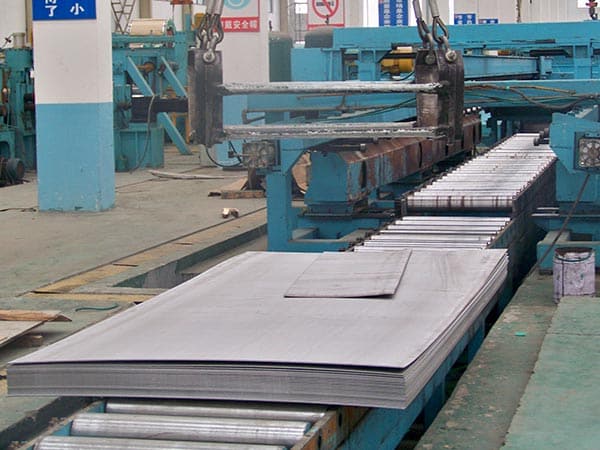
Understanding S315MC: The High-Strength Cold-Forming Standard
S315MC is a thermomechanically rolled steel grade designed for cold forming, governed by the EN 10149-2 European standard. The designation "S" signifies structural steel, "315" represents the minimum yield strength of 315 MPa, and "MC" indicates that the material is thermomechanically rolled (M) and suitable for cold forming (C). In the context of factory direct sales, the surface test is a critical quality assurance step that ensures the material meets the stringent requirements of modern manufacturing, particularly in the automotive and heavy machinery sectors.
The manufacturing process of S315MC involves a specialized rolling technique where the temperature and deformation are strictly controlled. This results in a fine-grained microstructure that offers a superior balance of strength and ductility. Unlike traditional hot-rolled steels, S315MC provides higher weight-saving potential without compromising structural integrity. This makes it a preferred choice for components that require both high load-bearing capacity and complex shaping.
The Criticality of Surface Testing in Factory Direct Sales
When purchasing S315MC directly from a factory, the surface test is the primary gatekeeper of quality. This testing phase is not merely a visual check but a comprehensive evaluation of the steel's surface integrity, which directly impacts subsequent processes like welding, painting, and bending. Surface defects in high-strength steel can lead to stress concentration points, which may cause premature failure during cold forming or under cyclic loading in the final application.
Surface Test Categories:
- Visual Inspection: Detects macro-defects such as slivers, scabs, pits, and scratches that exceed the tolerances specified in EN 10163-2.
- Dimensional Accuracy: Measurement of thickness, width, and flatness across the entire coil or plate to ensure uniformity.
- Roughness Testing (Ra/Rz): Measuring the surface profile to ensure it is suitable for specific coating or lubrication requirements during stamping.
- Non-Destructive Testing (NDT): Techniques like ultrasonic testing or magnetic particle inspection may be used for critical batches to detect internal or sub-surface cracks.
- Scale Adhesion: For pickled and oiled (P&O) versions, the efficiency of scale removal is tested to prevent tool wear in the customer's factory.
Chemical Composition and Its Impact on Surface Quality
The chemical makeup of S315MC is meticulously balanced to ensure excellent weldability and formability. The low carbon content is the secret behind its superior welding performance, while micro-alloying elements like Niobium (Nb), Vanadium (V), and Titanium (Ti) provide the necessary strength through grain refinement.
| Element | Maximum Content (%) | Role in Material Performance |
|---|---|---|
| Carbon (C) | 0.12 | Ensures excellent weldability and reduces brittleness. |
| Manganese (Mn) | 1.30 | Increases strength and hardness without sacrificing ductility. |
| Silicon (Si) | 0.50 | Acts as a deoxidizer and contributes to solid solution strengthening. |
| Phosphorus (P) | 0.025 | Kept low to prevent cold shortness and surface cracking. |
| Sulfur (S) | 0.020 | Minimizing sulfur improves transverse ductility and surface finish. |
| Nb + V + Ti | 0.22 | Micro-alloying for grain refinement and precipitation hardening. |
By controlling these elements, the factory ensures that the S315MC surface remains stable during the cooling process, preventing the formation of harmful oxides or surface decarburization that could weaken the material's skin.
Mechanical Properties: The Core of S315MC Performance
The mechanical properties of S315MC are tested at the factory to verify that the thermomechanical rolling process has achieved the desired specifications. These properties are measured both longitudinal and transverse to the rolling direction, though the standard typically focuses on the longitudinal direction.
| Property | Value (Metric) | Significance |
|---|---|---|
| Yield Strength (ReH) | Min 315 MPa | The point at which permanent deformation begins. |
| Tensile Strength (Rm) | 390 - 510 MPa | The maximum stress the material can withstand before breaking. |
| Elongation (A80mm) | Min 20% (Thickness < 3mm) | Indicates the material's ability to stretch before fracturing. |
| Bending Radius (180°) | 0.5t to 1.0t | Shows the capability for tight cold forming without cracking. |
High elongation values are particularly important for S315MC because it is often used in deep drawing and complex bending operations. A successful surface test ensures that no micro-cracks are present which could propagate during these high-stress forming processes.
Advanced Processing Performance: Bending and Welding
S315MC is celebrated for its cold-forming capabilities. Unlike standard hot-rolled structural steels, S315MC can be bent to very tight radii without surface tearing. This is a direct result of the fine grain structure achieved through TMCP. When a factory performs a surface test, they are essentially verifying that the "skin" of the steel is robust enough to handle the tension and compression of bending.
Regarding welding, S315MC's low carbon equivalent (CEV) makes it compatible with all standard welding methods, including MAG, TIG, and laser welding. The clean surface provided by factory-direct sales (especially in the pickled and oiled condition) ensures minimal weld spatter and high-quality fusion zones. Proper surface testing guarantees that there are no contaminants like heavy oil or thick scale that could lead to hydrogen-induced cracking or porosity in the weld bead.
Environmental Adaptability and Fatigue Resistance
In many applications, S315MC is exposed to harsh environments. While it is not a stainless steel, its refined grain structure provides slightly better atmospheric corrosion resistance than traditional coarse-grained steels. However, for long-term durability, S315MC is often coated or galvanized. The surface test ensures that the substrate is perfectly prepared for these coatings, ensuring maximum adhesion.
Fatigue resistance is another area where S315MC shines. In the automotive industry, components are subjected to millions of vibration cycles. A smooth, defect-free surface (verified by the factory test) is vital because fatigue cracks almost always initiate at surface imperfections. By eliminating these "stress raisers" at the factory level, the lifespan of the final component is significantly extended.
Diverse Industrial Applications of S315MC
The versatility of S315MC makes it a staple in various sectors where weight reduction and high strength are required. Factory direct sales often cater to specific industry requirements, providing customized surface finishes or dimensional tolerances.
- Automotive Industry: Used for chassis components, seat frames, brackets, and longitudinal beams where weight saving directly translates to fuel efficiency.
- Heavy Machinery: Essential for crane arms, excavator components, and agricultural equipment that demand high yield strength to handle heavy loads.
- Structural Engineering: Employed in cold-pressed profiles, racking systems, and light-gauge steel framing.
- Transportation: Used in the construction of truck trailers and railway wagons to maximize payload capacity.
Why Choose Factory Direct Sales for S315MC?
Purchasing S315MC directly from the factory offers several advantages beyond just cost. Traceability is the most significant factor; every coil or plate comes with a Mill Test Certificate (MTC) that links the surface test results and chemical analysis directly to the heat number. This ensures that the material used in a critical automotive component can be traced back to its exact production conditions.
Furthermore, factory direct sales allow for customized surface treatments. Whether a client requires a specific oiling weight for corrosion protection during sea transit or a particular roughness profile for a specialized painting process, the factory can adjust the final stages of production to meet these needs. This level of precision is rarely available through secondary distributors.
Technical Comparison: S315MC vs. Standard Structural Steel
To appreciate the value of S315MC, it is helpful to compare it with traditional S235JR or s355jr steels. While S355JR has higher strength, it lacks the exceptional cold-formability of S315MC. The "MC" series steels are specifically engineered to be "softer" during the forming process while maintaining high yield strength once in service. This unique characteristic is what makes the surface test so vital—any surface imperfection would be magnified during the aggressive forming cycles that S315MC is designed to endure.
In conclusion, the S315MC factory direct sales surface test is a multi-faceted quality control process. It encompasses visual, chemical, and mechanical evaluations to ensure that the steel is fit for purpose. By focusing on surface integrity, manufacturers can guarantee that their cold-forming operations will be efficient, their welds will be strong, and their final products will withstand the rigors of their intended environment.
Leave a message