
What is the S960MC auto steel flat price export to British
Comprehensive analysis of S960MC high-strength steel export prices to the UK, covering technical specifications, processing performance, and market factors.
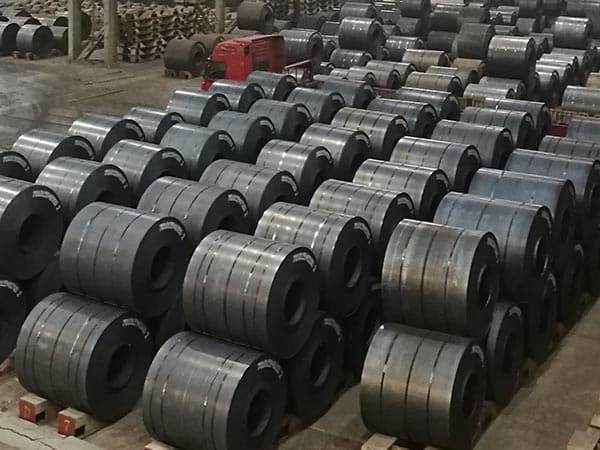
Understanding S960MC: The Pinnacle of High-Strength Thermomechanically Rolled Steel
S960MC is a high-strength low-alloy (HSLA) structural steel that represents the cutting edge of metallurgical engineering, specifically designed for cold forming. For British manufacturers in the automotive, crane, and heavy transport sectors, S960MC offers an unparalleled strength-to-weight ratio. The 'S' denotes structural steel, '960' indicates a minimum yield strength of 960 MPa, and 'MC' signifies that the steel is thermomechanically rolled (M) and intended for cold forming (C). Understanding the price of S960MC for export to the UK requires a deep dive into its technical superiority and the logistical variables of the British market.
Technical Specifications and Chemical Composition
The performance of S960MC is rooted in its precise chemical makeup. Unlike traditional carbon steels, S960MC utilizes micro-alloying elements such as niobium (Nb), vanadium (V), and titanium (Ti) to achieve grain refinement. This process ensures that the steel maintains high toughness even at extremely high strength levels. For UK buyers, compliance with BS EN 10149-2 is the standard benchmark for quality assurance.
| Element | Max Content (%) |
|---|---|
| Carbon (C) | 0.20 |
| Manganese (Mn) | 2.20 |
| Silicon (Si) | 0.60 |
| Phosphorus (P) | 0.025 |
| Sulfur (S) | 0.010 |
| Aluminium (Al) | 0.015 |
This chemical balance is critical for weldability. A low carbon equivalent (CEV) value ensures that British fabricators can weld these plates without the extensive pre-heating often required for traditional high-strength steels, directly reducing labor costs and energy consumption in UK workshops.
Mechanical Properties: Why S960MC Commands a Premium
The mechanical properties of S960MC are what define its market value. With a minimum yield strength of 960 MPa, it is nearly four times stronger than standard S235 structural steel. This allows for significant weight reduction—often up to 70%—in structural components. For the British transport industry, where fuel efficiency and payload capacity are governed by strict environmental regulations, this weight saving translates into long-term operational profit.
| Property | Value |
|---|---|
| Yield Strength (ReH) | Min 960 MPa |
| Tensile Strength (Rm) | 980 - 1250 MPa |
| Elongation (A5) | Min 7% |
| Impact Energy (KV) at -20°C | Min 40 J (optional) |
British engineers often specify S960MC for telescopic booms, chassis frames, and heavy-duty trailers. The ability to maintain structural integrity under extreme loads while reducing the dead weight of the vehicle is the primary driver for its adoption in the UK.
Processing Performance: Bending, Welding, and Cutting
Exporting S960MC to the British market involves more than just shipping raw plates; it requires providing a material that integrates seamlessly into advanced manufacturing lines. S960MC exhibits excellent cold-forming characteristics despite its hardness. However, fabricators must account for the significant springback effect. Using a larger bending radius (typically 3 to 4 times the plate thickness) is essential to prevent micro-cracking at the outer tension zone.
- Laser Cutting: S960MC is highly suitable for precision laser cutting. The clean chemical composition results in minimal dross and a narrow heat-affected zone (HAZ), which is vital for maintaining the steel's tempered properties.
- Welding Guidelines: To maintain the 960 MPa strength in the weld seam, low heat input is mandatory. British welding standards (BS EN ISO 15614-1) recommend specific cooling times (t8/5) to avoid softening the HAZ.
- Surface Preparation: Most S960MC exported to the UK comes with a finely controlled scale or is pickled and oiled to ensure compatibility with modern British painting and coating systems.
Factors Influencing the Export Price to the UK
The "flat price" for S960MC export to the UK is influenced by a complex matrix of global and local factors. It is rarely a static figure and is quoted based on the current market dynamics of the London Metal Exchange (LME) and energy surcharges. Several key variables determine the final CIF (Cost, Insurance, and Freight) price at British ports like Felixstowe, Southampton, or Liverpool.
1. Raw Material and Energy Costs: The production of S960MC requires sophisticated thermomechanical rolling mills and precise alloying. Fluctuations in the price of iron ore, coking coal, and particularly electricity in the manufacturing region directly impact the base price.
2. UK Steel Safeguards and Quotas: Post-Brexit, the UK has implemented its own steel safeguard measures. Importers must be aware of the remaining quotas for specific product categories. If the quota is exceeded, a 25% tariff may apply, significantly altering the "flat price" for the British end-user.
3. Logistics and Freight: Shipping costs from major steel hubs (such as China or Europe) to the UK fluctuate based on container availability and bunker fuel prices. For large projects, break-bulk shipping might offer a more competitive rate than containerized freight.
4. Certification and Compliance: The transition from the CE mark to the UKCA (UK Conformity Assessed) marking is a critical factor for structural steels used in the UK. Ensuring that S960MC meets the specific British testing standards adds a layer of quality control that is reflected in the price.
Environmental Adaptability and Sustainability
The UK's climate, characterized by high humidity and coastal salt exposure, necessitates robust material choices. While S960MC is not a weathering steel, its fine-grained structure provides a consistent base for advanced anti-corrosion coatings. Furthermore, the push for "Green Steel" in the British automotive industry means that S960MC produced via EAF (Electric Arc Furnace) or with carbon-offsetting certificates is increasingly in demand, often fetching a green premium.
Strategic Procurement for British Buyers
To secure the best S960MC price for the UK market, buyers should focus on volume-based negotiations and long-term supply contracts. Given the volatility of the global steel market, locking in a price that includes a clear breakdown of the base rate, alloy surcharges, and logistics costs is the most effective way to manage budget risk. Working with suppliers who provide full 3.1 or 3.2 mill test certificates (MTC) ensures that the material will pass the rigorous inspections common in British heavy engineering projects.
S960MC is not merely a commodity; it is a high-performance solution for the future of British manufacturing. Its price reflects the advanced technology required for its production and the immense value it adds through lightweighting and structural efficiency. By understanding the technical nuances and the regulatory landscape of the UK, importers and manufacturers can optimize their supply chains for this exceptional high-strength steel.
Leave a message