
What are the operation principles to be followed in the BS700MC weldable structural steel cutting process
Comprehensive guide on cutting BS700MC high-strength steel, covering thermal and mechanical methods, metallurgical impacts, and operational best practices for structural integrity.
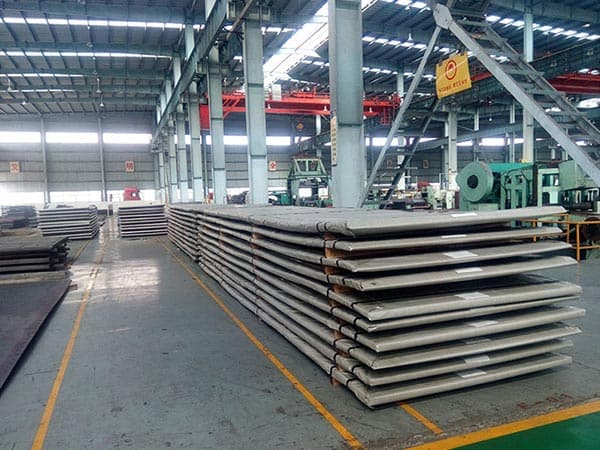
Understanding the Metallurgical Foundation of BS700MC Steel
BS700MC is a high-strength, cold-forming steel produced through Thermomechanical Controlled Processing (TMCP). This metallurgical approach combines controlled rolling and accelerated cooling to achieve a fine-grained microstructure, primarily ferritic-bainitic, which grants the material its exceptional yield strength of at least 700 MPa. Unlike traditional quenched and tempered steels, BS700MC relies on micro-alloying elements such as Niobium (Nb), Titanium (Ti), and Vanadium (V) to achieve precipitation hardening and grain refinement.
When approaching the cutting process, one must recognize that this fine-grained structure is sensitive to extreme thermal cycles. The low carbon content (typically ≤0.12%) ensures excellent weldability, but it also means the material's hardness is derived from its grain structure rather than high carbon martensite. Consequently, the cutting process must be managed to preserve these mechanical properties, particularly at the edges where subsequent welding or forming will occur.
| Chemical Element | C (max) | Si (max) | Mn (max) | P (max) | S (max) | Al (min) | Nb+Ti+V (max) |
|---|---|---|---|---|---|---|---|
| Content (%) | 0.12 | 0.50 | 2.10 | 0.025 | 0.015 | 0.015 | 0.22 |
Thermal Cutting Principles: Laser, Plasma, and Flame
Thermal cutting is the most common method for BS700MC due to its efficiency in processing high-strength materials. However, each method introduces a Heat Affected Zone (HAZ) that can alter the local hardness and ductility of the steel.
Laser Cutting: This is the preferred method for BS700MC when precision and minimal thermal distortion are required. The high energy density of the laser beam allows for rapid cutting speeds, which minimizes the time the heat has to conduct into the surrounding material. For BS700MC, using fiber laser technology with nitrogen as the assist gas is ideal for preventing oxidation on the cut edge, which is critical if the part is to be painted or welded without further edge preparation. The principle here is to maximize speed while maintaining a stable kerf to keep the HAZ as narrow as possible (often less than 0.1mm).
Plasma Cutting: For thicker plates of BS700MC, high-definition plasma cutting offers a balance between speed and edge quality. The operational principle involves using a constricted arc to melt the material. When cutting BS700MC, it is vital to use an appropriate gas mixture (such as Argon-Hydrogen or Oxygen) to ensure a clean cut. Because plasma cutting has a higher heat input than laser, the HAZ will be slightly larger. Operators must monitor the arc voltage and travel speed meticulously; if the speed is too slow, the excessive heat can lead to grain growth at the edge, reducing the local yield strength.
Flame (Oxy-fuel) Cutting: While capable of cutting thick sections, flame cutting involves the highest heat input. For BS700MC, this method should be used with caution. The principle of preheating is inherent to flame cutting, but excessive preheating can cause the micro-alloyed precipitates to coarsen, leading to a "softening" effect at the cut edge. If flame cutting is necessary, the cooling rate should be controlled, and the cut edges may require mechanical grinding to remove the softened layer before structural welding.
Mechanical Cutting and Cold Processing Principles
Mechanical cutting, such as shearing or waterjet cutting, avoids the thermal issues associated with laser or plasma. For BS700MC, cold processing is highly effective for maintaining the original TMCP properties throughout the entire cross-section of the part.
- Waterjet Cutting: This method uses a high-pressure stream of water mixed with abrasive particles. It is the gold standard for preserving metallurgical integrity because it generates zero heat. For BS700MC components used in safety-critical structural applications, waterjet cutting eliminates the risk of micro-cracking or softening.
- Shearing: Due to its high yield strength, BS700MC requires significantly higher shearing forces compared to standard S355 steel. The principle here is to ensure the shear blades are sharp and the clearance is set correctly (typically 10-15% of the plate thickness). Incorrect clearance can lead to excessive edge deformation or work hardening, which may cause cracking during subsequent cold forming operations.
Operational Parameters and Precision Control
Successful cutting of BS700MC hinges on the optimization of machine parameters. Because this steel is often used in lightweighting applications (like crane booms or truck chassis), dimensional tolerances are usually tight.
| Property | Yield Strength (MPa) | Tensile Strength (MPa) | Elongation A5 (%) | Min. Bending Radius (90°) |
|---|---|---|---|---|
| BS700MC Value | ≥ 700 | 750 - 950 | ≥ 12 | 1.5t (for t ≤ 3mm) |
Cutting Speed: For high-strength steels, the window for optimal cutting speed is narrower. Too fast, and the cut may not penetrate or leave heavy dross; too slow, and the heat input becomes excessive. Operators should perform test cuts to identify the "sweet spot" where the striations on the cut surface are vertical and fine.
Nozzle Selection and Height: In laser and plasma cutting, the nozzle distance from the plate must remain constant. Any fluctuation can change the focus of the energy beam, leading to an inconsistent kerf width. For BS700MC, maintaining a low nozzle height (0.5mm to 1.0mm for laser) helps in concentrating the assist gas to blow away the molten metal efficiently.
Managing Residual Stress and Edge Integrity
Cutting inherently introduces residual stresses into the material. In BS700MC, which is already under internal stress from the TMCP process, thermal cutting can cause the plate to "spring" or bow.
To mitigate this, the cutting path should be programmed to distribute heat evenly across the workpiece. For example, instead of cutting all features in a linear sequence, a staggered approach can prevent localized heat buildup. Furthermore, for long structural members, it is advisable to leave "tabs" or micro-joints to hold the part in place until the material has cooled, ensuring dimensional stability.
Edge Hardening: While BS700MC is low in carbon, the rapid cooling after thermal cutting can still lead to a slight increase in hardness at the immediate edge. For components that will undergo severe fatigue loading, such as lifting equipment, it is a best practice to radius the cut edges by grinding. This removes any micro-notches or hardened layers that could serve as crack initiation points.
Industry-Specific Application Considerations
BS700MC is widely utilized in the transport, construction, and energy sectors. The cutting principles must align with the specific demands of these industries.
- Automotive and Trucking: Focus is on weight reduction. Cutting must be precise to allow for automated robotic welding. Laser cutting is dominant here due to its speed and clean edges.
- Lifting and Mobile Cranes: The integrity of the telescopic booms depends on the strength of BS700MC. Here, minimizing the HAZ is paramount to ensure the structural calculations remain valid. Any softening of the edge could compromise the buckling resistance of the boom.
- Agricultural Machinery: Parts are often thick and subject to high wear. Plasma cutting is frequently used, followed by shot blasting to prepare the surface for high-durability coatings.
Environmental Adaptation and Material Handling
BS700MC plates are often supplied with a thin layer of scale or a light oil coating to prevent corrosion. Before cutting, especially with lasers, the surface should be clean. Scale can cause reflections or interfere with the laser beam's absorption, leading to inconsistent cuts.
Storage of BS700MC should be in a dry, temperature-controlled environment. If the steel is cold when brought into the cutting shop, moisture can condense on the surface. Cutting through moisture can lead to hydrogen pickup in the HAZ, which, although less of a risk for BS700MC than for higher carbon steels, is still a factor to be managed in high-integrity structural fabrication.
Technical Execution and Final Quality Inspection
Following the cutting process, a rigorous inspection protocol is necessary. This includes dimensional checks against CAD models, but more importantly, a visual inspection of the cut surface.
Dross and Slag: For BS700MC, dross should be minimal. If dross is persistent, it usually indicates an issue with the cutting speed or gas pressure. Hardened dross can be difficult to remove and may damage the base metal if chipped off aggressively.
Micro-Cracking: In heavy sections cut with plasma or flame, dye penetrant testing (DPI) can be used to ensure no thermal cracks have formed along the edge. Since BS700MC is designed for high-stress environments, even small surface imperfections can significantly reduce the fatigue life of the finished assembly.
By adhering to these operational principles—balancing heat input, optimizing mechanical parameters, and respecting the metallurgical heritage of the TMCP process—fabricators can fully leverage the high-strength potential of BS700MC without compromising its structural reliability.
Leave a message