
How to repair corrosion pits on S900MC mechanical properties
Expert guide on repairing corrosion pits in S900MC high-strength steel. Learn technical procedures for grinding, welding, and maintaining mechanical properties.
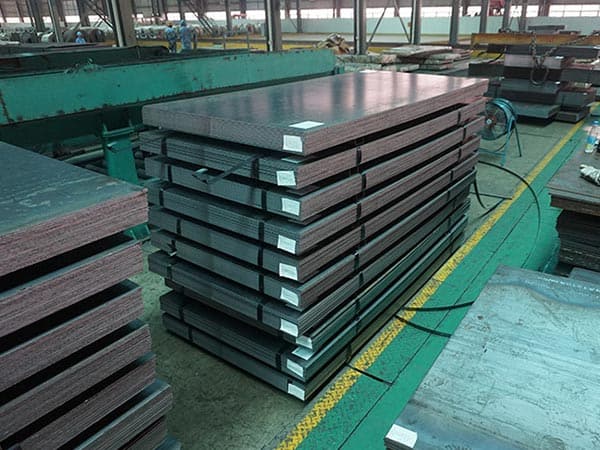
The Critical Nature of S900MC High-Strength Steel and Pitting Risks
S900MC is a high-strength, thermomechanically rolled (TMCP) steel governed by the EN 10149-2 standard. Its exceptional yield strength of approximately 900 MPa is achieved through a precise combination of micro-alloying elements like Niobium (Nb), Vanadium (V), and Titanium (Ti), coupled with a controlled cooling process that creates a fine-grained ferrite-bainite microstructure. However, when S900MC components operate in aggressive environments, they are susceptible to localized corrosion, specifically pitting. These pits are not merely aesthetic flaws; they act as severe stress concentrators that can compromise the fatigue life and static load-bearing capacity of the entire structure.
Repairing corrosion pits on S900MC requires a deep understanding of metallurgy. Unlike standard structural steels, the strength of S900MC is derived from its grain size and dislocation density rather than high carbon content. Improper repair techniques, particularly those involving excessive heat, can lead to a localized "softening" of the material, where the yield strength drops significantly below the required 900 MPa threshold. This article explores the professional protocols for restoring the mechanical integrity of S900MC surfaces.
Evaluating the Impact of Corrosion Pitting on Structural Integrity
Before initiating any repair, a comprehensive assessment of the pit depth, density, and location is mandatory. For high-performance steels like S900MC, the following parameters must be analyzed:
- Pit Depth vs. Wall Thickness: If the pit depth is less than 10% of the nominal plate thickness, mechanical blending (grinding) is often sufficient.
- Stress Distribution: Pits located in high-tension zones or near existing welds are more critical and may require full weld restoration.
- Corrosion Product Analysis: Identifying whether the pitting is caused by chlorides, sulfates, or microbial activity helps in selecting the appropriate post-repair coating.
| Property | S900MC Specification | Impact of Unrepaired Pitting |
|---|---|---|
| Yield Strength (MPa) | Min. 900 | Localized reduction in effective cross-section |
| Tensile Strength (MPa) | 930 - 1200 | Premature fracture at pit sites under peak loads |
| Elongation (%) | Min. 8 (t < 3mm) | Reduced ductility due to triaxial stress states |
| Impact Energy (J) | Typical 40J at -20°C | Risk of brittle crack initiation from pit base |
Technical Procedures for Grinding and Mechanical Blending
For shallow corrosion pits, mechanical removal is the preferred method as it avoids the thermal risks associated with welding. The goal is to transform a sharp, localized pit into a smooth, aerodynamic contour to minimize the Stress Concentration Factor (SCF). This process, often called "butterfly grinding," involves creating a transition zone where the length of the ground area is at least 3 to 4 times the depth of the pit.
Using fine-grit abrasive wheels is essential. Coarse grinding can introduce micro-scratches that act as new initiation sites for stress corrosion cracking (SCC). After grinding, the area must undergo Non-Destructive Testing (NDT), such as Dye Penetrant Inspection (DPI) or Magnetic Particle Inspection (MPI), to ensure that the base of the pit has been entirely cleared and no secondary cracks are radiating from the site.
Advanced Welding Repair Strategies for S900MC
When pits exceed the allowable depth for grinding, weld surfacing (buttering) becomes necessary. This is the most sensitive stage of S900MC maintenance. Because S900MC is a TMCP steel, the Heat Affected Zone (HAZ) is prone to grain coarsening and softening if the heat input is not strictly controlled.
1. Filler Metal Selection: It is vital to use a filler metal that matches the strength of the base material. Consumables such as ER110S-G or ER120S-G (according to AWS A5.28) are typically used. These wires provide high yield strength and excellent low-temperature toughness.
2. Heat Input Control: The heat input should be kept between 0.5 kJ/mm and 1.2 kJ/mm. Excessive heat input will destroy the fine-grained structure, leading to a "soft zone" in the HAZ where the hardness drops. Conversely, too little heat can lead to the formation of brittle martensite if the cooling rate is too fast.
3. Interpass Temperature: The interpass temperature must be monitored using infrared thermometers or Tempilstiks. For S900MC, it is recommended to keep the interpass temperature below 150°C to prevent cumulative heat buildup that degrades mechanical properties.
Microstructural Preservation and Hardness Testing
A successful repair is one where the mechanical properties of the repaired zone are indistinguishable from the parent metal. One of the most effective ways to verify this is through Vickers Hardness Testing (HV10). In S900MC, the base metal hardness is typically around 300-350 HV. A significant drop in hardness (e.g., below 250 HV) in the HAZ indicates over-tempering and a loss of yield strength.
Utilizing the "Temper Bead" welding technique can be highly beneficial. This involves depositing a final layer of weld beads that do not touch the base metal but serve to thermally temper the underlying weld passes, improving the grain structure and reducing residual stresses without further affecting the parent S900MC plate.
Environmental Adaptation and Long-Term Prevention
Once the mechanical repair is complete, protecting the S900MC from future pitting is paramount. High-strength steels are particularly sensitive to hydrogen embrittlement, which can be triggered by the corrosion process itself. Professional-grade epoxy coatings with high zinc content or thermal spray aluminum (TSA) coatings provide excellent cathodic protection.
In industries such as mobile crane manufacturing or offshore equipment, where S900MC is frequently used, regular ultrasonic thickness gauging and automated corrosion mapping should be implemented. These proactive measures allow for the detection of pitting in its infancy, where simple mechanical blending can suffice, thereby avoiding the complexities and risks of structural welding repairs.
The integrity of S900MC depends on its microscopic architecture. By treating corrosion pits not as simple holes but as metallurgical disruptions, engineers can ensure that the repaired components continue to provide the high-load performance for which this steel was designed. Strict adherence to low-heat welding protocols and precise mechanical finishing remains the gold standard for maintaining the 900 MPa yield threshold.
Leave a message