
What are the top ten en 10149-2 equivalent indian standard hot rolled plates mills in Vietnam
Discover the leading mills in Vietnam for EN 10149-2 equivalent Indian standard hot rolled plates. Detailed technical analysis of high-yield steel properties and sourcing insights.
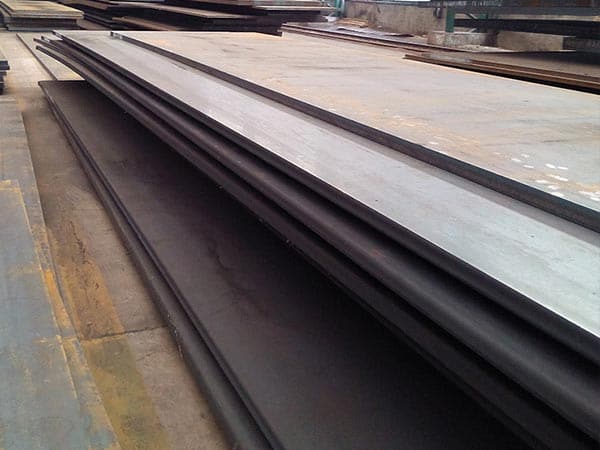
The Strategic Shift: Vietnam as a Hub for High-Yield Strength Steel
The global steel landscape has undergone a tectonic shift, with Vietnam emerging as a pivotal manufacturing hub in Southeast Asia. For industrial buyers and engineers, finding EN 10149-2 equivalent Indian standard hot rolled plates in Vietnam is no longer a matter of chance but a strategic procurement decision. EN 10149-2 specifies hot-rolled flat products made of high yield strength steels for cold forming, characterized by their thermomechanically rolled (MC) condition. As Indian infrastructure and automotive sectors expand, the demand for equivalents like IS 2062 or IS 11513 produced in Vietnam has surged, driven by competitive logistics and high-tech production facilities.
Understanding the Metallurgy of EN 10149-2 and Indian Equivalents
EN 10149-2 grades, such as S315MC, S355MC, S420MC, and S700MC, are defined by their minimum yield strength and their suitability for complex cold-forming processes. The 'M' indicates thermomechanical rolling, a process that refines the grain structure through controlled cooling and deformation. Indian standards, primarily IS 2062 (Structural Steel) and IS 11513 (Hot Rolled Carbon Steel Strip), offer close equivalents. For instance, IS 2062 E350 BR/C is often compared to S355MC, while higher grades like E450 or E600 align with the S460MC and S600MC spectrum.
| EN 10149-2 Grade | Yield Strength (min MPa) | Indian Standard (IS) Equivalent | Key Characteristics |
|---|---|---|---|
| S315MC | 315 | IS 2062 E250 / IS 11513 Gr 1 | Excellent weldability, light structural use |
| S355MC | 355 | IS 2062 E350 (Quality BR/C) | High strength, superior cold bending |
| S420MC | 420 | IS 2062 E410 | Weight reduction in automotive frames |
| S700MC | 700 | IS 2062 E650 / Special High Strength | Extreme load-bearing, crane booms |
Top Sources for EN 10149-2 Equivalents in Vietnam
While Vietnam's steel industry is growing, the production of high-end thermomechanically rolled plates is concentrated among a few elite mills and specialized processing centers. These entities provide products that meet both European and Indian benchmarks.
- 1. Formosa Ha Tinh Steel Corporation (FHS): As the largest integrated steel mill in Vietnam, FHS possesses the advanced hot strip mills required to produce S355MC to S700MC grades. Their capability to control the cooling process ensures the fine-grained structure necessary for EN 10149-2 compliance.
- 2. Hoa Phat Dung Quat Steel: Hoa Phat has rapidly scaled its HRC (Hot Rolled Coil) production. Their modern Italian and German technology allows for the production of high-yield structural steels that meet IS 2062 E350 and E450 standards, making them a primary source for regional and export markets.
- 3. POSCO-Vietnam: Leveraging South Korean metallurgical expertise, POSCO's facilities in Vietnam focus on high-quality flat products. They are a go-to for S420MC and S500MC equivalents used in the automotive and heavy machinery sectors.
- 4. China Steel Sumikin Vietnam (CSVC): A joint venture that excels in high-grade flat steel. Their products often exceed the basic requirements of IS 11513, providing the ductility needed for intricate cold-forming.
- 5. Southern Steel Corporation (VNSTEEL): While traditionally known for long products, their partnerships and processing capabilities allow them to supply certified hot-rolled plates for structural applications.
- 6. SMC Corporation: Not just a mill, but a massive processing and distribution hub that stocks and custom-cuts Indian-origin and locally produced EN 10149-2 plates, ensuring BIS (Bureau of Indian Standards) certification for the Indian market.
- 7. Dai Thien Loc Corporation: Specializes in high-strength steel processing, offering specialized slitting and leveling for plates that require precise mechanical properties for cold forming.
- 8. Pomina Steel: Known for their energy-efficient production, they have moved into the high-strength structural plate market to support Vietnam's infrastructure boom.
- 9. Vina Kyoei Steel: Though heavily focused on construction, their technical standards for high-yield plates are among the most stringent in the region.
- 10. Nam Kim Steel: Primarily focused on coated products, their sourcing of HRC for substrate often involves high-yield grades equivalent to EN 10149-2, making them a key player in the supply chain.
Mechanical Properties and Process Performance
The hallmark of EN 10149-2 equivalent plates is their balance between strength and formability. Unlike standard structural steels (like s355jr), the 'MC' grades have a lower carbon content, typically below 0.12%, and utilize micro-alloying elements such as Niobium (Nb), Vanadium (V), and Titanium (Ti). This chemical profile results in a low Carbon Equivalent (CEV), which significantly enhances weldability.
In terms of cold forming, these plates are designed to be bent with very small radii. For a plate of thickness 't', an S355MC grade can often be bent 90 degrees with a radius of 0.5t to 1.5t, depending on the thickness and rolling direction. This is critical for the manufacturing of truck chassis, crane arms, and agricultural equipment where weight reduction is achieved through thinner, high-strength sections.
Environmental Adaptability and Durability
Vietnam's tropical climate, characterized by high humidity and salinity in coastal industrial zones like Ha Tinh and Da Nang, necessitates steels with excellent surface integrity. EN 10149-2 plates produced in Vietnam often undergo advanced pickling and oiling (P&O) processes. The fine grain structure provided by thermomechanical rolling not only improves mechanical strength but also offers a more uniform substrate for protective coatings, enhancing the environmental adaptability of the final components in corrosive atmospheres.
Application Industries for High-Strength Plates
The versatility of S355MC through S700MC equivalents makes them indispensable across several high-growth industries. In the automotive sector, these plates are used for longitudinal beams and cross-members where energy absorption and weight saving are paramount. The yellow goods industry (construction machinery) utilizes S700MC for telescopic booms and chassis, where the high yield strength allows for higher lifting capacities without increasing the machine's self-weight.
Furthermore, the renewable energy sector in Vietnam and India is increasingly using these grades for wind turbine tower components and solar mounting structures that require high structural integrity and resistance to fatigue. The ability of Vietnam mills to produce these to Indian standards like IS 2062 E450 ensures seamless integration into Indian-funded projects and supply chains.
Technical Comparison: Chemical Composition
A deep dive into the chemical composition reveals why these plates are superior for processing. The micro-alloying strategy is the secret behind the performance of EN 10149-2 equivalents.
| Element (Max %) | S355MC (EN) | E350 (IS 2062) | S700MC (EN) |
|---|---|---|---|
| Carbon (C) | 0.12 | 0.20 | 0.12 | Manganese (Mn) | 1.50 | 1.50 | 2.10 | Silicon (Si) | 0.50 | 0.45 | 0.60 | Niobium (Nb) | 0.09 | 0.07 | 0.09 | Titanium (Ti) | 0.15 | - | 0.22 |
The lower carbon content in the EN/MC grades compared to standard Indian structural grades (IS 2062) allows for much better impact toughness at low temperatures and prevents hardening in the Heat Affected Zone (HAZ) during welding. This makes the Vietnam-produced EN 10149-2 equivalents highly desirable for safety-critical applications.
Quality Assurance and BIS Certification
For Indian buyers, the most critical factor when sourcing from Vietnam is BIS certification. Many of the top mills, including Formosa Ha Tinh and Hoa Phat, have sought or obtained BIS licenses to ensure their hot-rolled plates can be legally imported and used in Indian government and infrastructure projects. This certification guarantees that the steel meets the stringent mechanical and chemical requirements of the Indian Standard, even if it is produced to an EN 10149-2 equivalent specification.
When evaluating a mill in Vietnam, it is essential to verify their laboratory capabilities. Top-tier mills utilize SPECTRO analyzers for chemical verification and advanced universal testing machines (UTM) to confirm yield and tensile properties. For grades like S700MC, Charpy V-notch impact testing at -20°C or -40°C is often performed to ensure the steel's reliability in extreme conditions.
The Economic Advantage of Vietnam Sourcing
Sourcing EN 10149-2 equivalent plates from Vietnam offers significant logistical advantages. With deep-water ports like Son Duong and Dung Quat, large-scale shipments to Indian ports such as Mumbai, Chennai, or Mundra are cost-effective. The Free Trade Agreements (FTAs) within the ASEAN region and bilateral trade considerations often provide duty advantages that make Vietnam-origin steel more competitive than European or North American alternatives, without sacrificing the high-tech metallurgical properties required by the EN 10149-2 standard.
The integration of advanced rolling technology, strict adherence to international standards, and a strategic geographic location makes Vietnam's top steel mills the premier choice for high-yield strength hot rolled plates. Whether for automotive, infrastructure, or heavy machinery, the synergy between EN 10149-2 and Indian standards is perfectly realized in the modern output of Vietnam's steel industry.
Leave a message