
en 10149-2 s700mc automotive steel material equivalent ASTM steel grade
A comprehensive analysis of EN 10149-2 S700MC steel, covering its ASTM equivalents like A656 Grade 100, mechanical properties, and industrial applications.
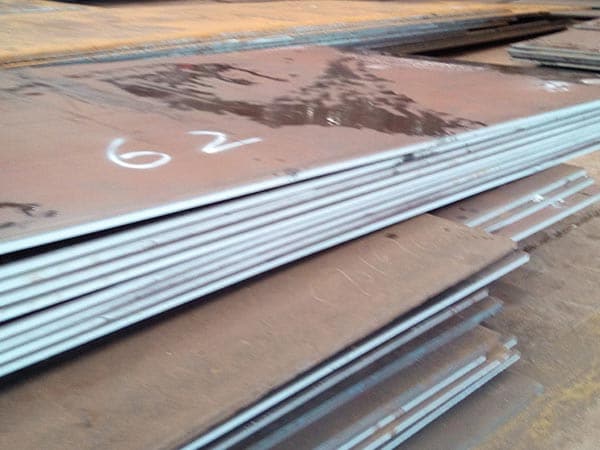
The Technical Profile of EN 10149-2 S700MC
EN 10149-2 S700MC is a high-yield-strength steel produced via thermomechanical rolling, specifically designed for cold forming processes. The designation S700MC provides immediate insight into its capabilities: 'S' stands for structural steel, '700' indicates a minimum yield strength of 700 MPa, 'M' refers to the thermomechanically rolled condition, and 'C' signifies its suitability for cold forming. This material is a cornerstone in modern automotive engineering and heavy machinery manufacturing, where the balance between weight reduction and structural integrity is paramount.
ASTM Equivalents for S700MC Steel
When transitioning projects from European standards to American standards, identifying the correct equivalent is critical. The most direct ASTM equivalent for S700MC is ASTM A656 Grade 100. Both materials share a focus on high yield strength and improved formability through micro-alloying. Another relevant standard is ASTM A1011/A1018 HSLAS-F Grade 100, which covers high-strength low-alloy steel with improved formability, typically available in thinner gauges (sheet and strip).
| Standard | Grade | Yield Strength (min) | Tensile Strength |
|---|---|---|---|
| EN 10149-2 | S700MC | 700 MPa | 750 - 950 MPa |
| ASTM A656 | Grade 100 | 690 MPa (100 ksi) | 800 MPa (115 ksi) |
| ASTM A1011 | HSLAS-F Grade 100 | 690 MPa (100 ksi) | 800 MPa (115 ksi) |
| SAE J2340 | 700F | 700 MPa | 750 - 950 MPa |
Chemical Composition and Micro-Alloying Strategy
The superior properties of S700MC are achieved through a precise chemical balance. Unlike traditional carbon steels that rely on high carbon content for strength, S700MC maintains a very low carbon level (typically ≤ 0.12%) to ensure excellent weldability and toughness. The strength is derived from micro-alloying elements such as Niobium (Nb), Vanadium (V), and Titanium (Ti). These elements facilitate grain refinement during the thermomechanical rolling process (TMCP), creating a fine-grained microstructure that resists deformation while remaining ductile.
- Carbon (C): Max 0.12% - Ensures weldability and prevents brittleness.
- Manganese (Mn): Max 2.10% - Enhances strength and hardenability.
- Silicon (Si): Max 0.60% - Acts as a deoxidizer.
- Micro-alloys (Nb+V+Ti): Max 0.22% - Responsible for grain refinement and precipitation hardening.
Mechanical Performance and Cold Forming Capabilities
S700MC is engineered for high-stress environments. Its yield strength of 700 MPa allows engineers to use thinner plates compared to conventional S355 steel, leading to significant weight savings—often up to 30-40% in structural components. Despite its high strength, the 'C' designation ensures that the material can be bent and folded without cracking. For a plate thickness (t) of less than 3mm, the minimum recommended internal bending radius is 1.0t, while for thicknesses between 3mm and 6mm, it is typically 1.5t.
Advanced Processing: Welding and Cutting
Fabricating with S700MC requires an understanding of its thermomechanical origin. Because the strength is derived from the rolling process rather than heat treatment, excessive heat input during welding can lead to a 'softening' of the Heat Affected Zone (HAZ). Low heat input welding techniques, such as MAG (Metal Active Gas) or laser welding, are preferred. Preheating is generally not required due to the low carbon equivalent (CEV), which significantly reduces the risk of cold cracking. When it comes to cutting, S700MC responds exceptionally well to laser and plasma cutting, providing clean edges that require minimal post-processing.
Environmental Adaptability and Durability
In outdoor and industrial environments, S700MC demonstrates robust performance. While it is not a 'weathering steel' like Corten, its fine-grained structure provides better resistance to atmospheric corrosion than standard hot-rolled steels. Furthermore, S700MC maintains excellent impact toughness at low temperatures (often tested at -20°C or -40°C), making it suitable for vehicles and machinery operating in arctic or high-altitude conditions. This reliability ensures that safety-critical components do not suffer from sudden brittle fractures.
Industrial Applications and Lightweighting Trends
The primary driver for S700MC adoption is the global push for lightweighting in the transportation sector. By utilizing S700MC, manufacturers can produce lighter truck chassis, trailers, and crane arms, which directly translates to higher payloads and lower fuel consumption. Specific applications include:
- Automotive: Longitudinal beams, cross members, and chassis frames for heavy trucks.
- Lifting Equipment: Telescopic booms for mobile cranes and aerial work platforms.
- Agriculture: High-load components for harvesters and trailers.
- Construction: Structural sections for cold-formed profiles and heavy-duty racking systems.
Strategic Sourcing and Selection Criteria
When sourcing S700MC or its ASTM equivalents, it is vital to verify the mill test certificates (MTC) for both chemical composition and mechanical values. Since S700MC is often used in safety-critical structural roles, ensuring the material meets the EN 10149-2 impact requirements is non-negotiable. Designers should also consider the grain direction during layout, as the longitudinal and transverse properties can vary slightly, impacting the minimum bending radius and overall fatigue life of the finished part.
Leave a message