
What are the top ten s355 steel grade supplier in Singapore
Discover the top ten S355 steel suppliers in Singapore and gain deep technical insights into S355JR, J0, and J2 grades. This guide covers mechanical properties, environmental adaptability, and procurement strategies for marine and construction sectors.
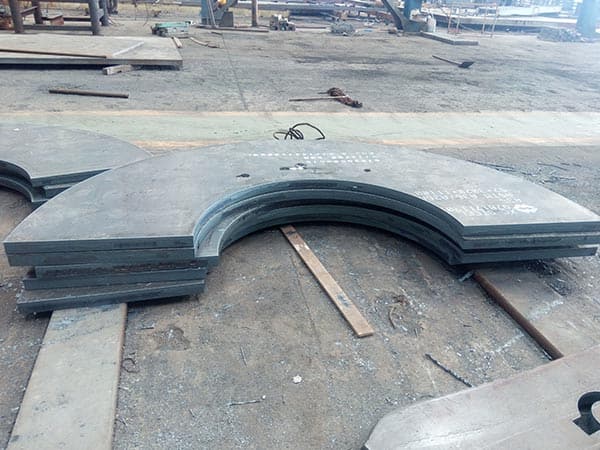
The Strategic Importance of S355 Steel in Singapore's Industrial Landscape
S355 steel is a high-strength, low-alloy (HSLA) structural steel that complies with the European standard EN 10025-2. In the context of Singapore's rapid urban development and its status as a global maritime hub, S355 has become the indispensable material for critical infrastructure. Its name, S355, denotes a minimum yield strength of 355 MPa, offering a superior strength-to-weight ratio compared to the traditional S235 or S275 grades. This attribute allows engineers to design lighter yet stronger structures, reducing overall material consumption and logistics costs.
Singapore's unique geographical position necessitates materials that can withstand high humidity, saline environments, and intense tropical heat. S355 steel, particularly the J2 and K2 sub-grades, provides the necessary impact toughness and durability required for offshore platforms, deep-water port facilities, and iconic skyscrapers. Selecting the right supplier is not merely about price; it is about ensuring the integrity of the supply chain, verification of mill test certificates (MTC), and the ability to meet stringent local building codes such as those set by the Building and Construction Authority (BCA).
Mechanical and Chemical Properties of S355 Steel Grades
Understanding the nuances between different S355 sub-grades is essential for engineering precision. The 'S' stands for structural steel, '355' indicates the yield strength, and the subsequent characters (JR, J0, J2) refer to the impact test temperature and energy levels. s355jr is tested at 20°C, S355J0 at 0°C, and S355J2 at -20°C, all requiring a minimum impact energy of 27 Joules.
| Grade | Yield Strength (min MPa) | Tensile Strength (MPa) | Elongation (min %) | Impact Test Temp (°C) |
|---|---|---|---|---|
| S355JR | 355 | 470-630 | 20-22 | +20 |
| S355J0 | 355 | 470-630 | 20-22 | 0 |
| S355J2 | 355 | 470-630 | 20-22 | -20 |
| S355K2 | 355 | 470-630 | 20-22 | -20 (40J) |
The chemical composition of S355 is meticulously balanced to ensure weldability and formability. The Carbon Equivalent Value (CEV) is a critical metric for Singaporean fabricators, as it determines the steel's susceptibility to cold cracking during welding. Most S355 grades supplied in Singapore maintain a low carbon content (typically below 0.22%) and utilize manganese (up to 1.60%) to enhance strength without compromising ductility.
Top Ten S355 Steel Grade Suppliers in Singapore
The Singaporean steel market is mature, characterized by high-volume stockholders and specialized service centers. Here are the leading suppliers known for their S355 inventory and value-added services:
- HG Metal Manufacturing Limited: One of the largest steel distributors in Southeast Asia, offering a vast range of S355 plates, beams, and hollow sections with extensive processing capabilities.
- Continental Steel Pte Ltd: Renowned for its comprehensive inventory of structural sections and commitment to quality assurance, often supplying major civil engineering projects.
- Leong Jin Corporation: Specializes in high-grade steel plates and provides customized cutting and machining services for the offshore and marine sectors.
- BRC Asia Limited: While famous for reinforcement solutions, they hold significant weight in the structural steel supply chain, particularly for integrated construction projects.
- Regency Steel Asia: A major player with a global sourcing network, providing S355 grades that meet diverse international standards beyond EN 10025.
- Ann Aik Limited: Provides a niche focus on steel distribution and environmental engineering, maintaining reliable stocks of structural steel for industrial applications.
- Hoe Leong Corporation: Historically strong in the marine and offshore equipment space, supplying heavy-duty S355 components.
- Soon Li Heng: A reputable stockist known for quick turnaround times and a wide variety of structural profiles suitable for local SME fabricators.
- Hup Hin Service: Focuses on heavy lifting and structural steel supply, offering integrated solutions for complex infrastructure builds.
- Choon Huat Engineering: Provides a broad spectrum of hardware and steel products, serving as a one-stop shop for construction-grade S355 materials.
Processing Performance and Fabricator Considerations
When working with S355 steel, Singaporean fabricators prioritize weldability and machinability. Due to its low alloy content, S355 can be welded using standard methods such as SMAW, GMAW (MIG), and SAW. However, for thicker sections (typically above 40mm), preheating may be necessary to manage the cooling rate and prevent hydrogen-induced cracking. The use of low-hydrogen electrodes is standard practice in Singaporean shipyards and construction sites to ensure the integrity of the weld zone.
Regarding cold forming, S355 exhibits excellent performance. It can be bent and folded to precise angles, which is vital for the production of C-channels and customized brackets. However, it is important to respect the minimum bend radius to avoid surface tearing. For hot-dip galvanizing—a common requirement in Singapore to prevent corrosion—S355's silicon and phosphorus content must be monitored to avoid the Sandelin effect, which can lead to brittle and excessively thick zinc coatings.
Environmental Adaptability in Tropical and Marine Climates
Singapore's environment is classified as C5-M (Marine) or C5-I (Industrial) under ISO 12944, representing the highest corrosivity categories. S355 steel, while robust, requires sophisticated surface protection to ensure a long service life. Suppliers in Singapore often provide pre-primed steel or offer blast cleaning to SA 2.5 standards followed by inorganic zinc silicate primers.
For offshore structures, S355J2+N (Normalized) is the preferred choice. The normalization process refines the grain structure, significantly enhancing the steel's resistance to brittle fracture in the unpredictable conditions of the South China Sea. Furthermore, the ability of S355 to maintain its mechanical properties under cyclic loading makes it ideal for bridges and moving port machinery, where fatigue resistance is paramount.
Sector-Specific Applications of S355 in Singapore
The versatility of S355 steel allows it to permeate multiple sectors across the island:
- Marine and Offshore: Used in the construction of jack-up rigs, FPSO (Floating Production Storage and Offloading) modules, and support vessels. Its high strength reduces the weight of topside structures, increasing vessel stability.
- Civil Construction: From the structural frames of the Marina Bay Sands to the expansion of Changi Airport, S355 provides the load-bearing capacity required for long-span structures and high-rise foundations.
- Energy and Power: Used in the fabrication of support structures for solar farms and traditional power plant infrastructure, where thermal stability and structural rigidity are required.
- Transportation: Employed in the construction of MRT (Mass Rapid Transit) viaducts and heavy-duty trailers used in the logistics sector.
Procurement Strategies and Quality Control
Procuring S355 steel in Singapore requires a rigorous approach to quality control. Mill Test Certificates (MTC) according to EN 10204 3.1 or 3.2 are mandatory for most projects. These documents verify the chemical heat analysis and the results of mechanical tests performed on the specific batch of steel. Buyers should also verify if the supplier's stock is compliant with the BC1:2012 standard, which is the Singapore code of practice for the use of structural steel in buildings.
Logistical efficiency is another critical factor. Given Singapore's limited land space, many suppliers offer 'just-in-time' delivery and offshore warehousing. Selecting a supplier with integrated logistics and digital tracking capabilities can significantly reduce project downtime. Additionally, considering the environmental impact, many Tier-1 suppliers now offer 'Green Steel' options, which are produced using Electric Arc Furnaces (EAF) with a lower carbon footprint, aligning with the Singapore Green Plan 2030.
Economic Factors Influencing Steel Supply
The price of S355 steel in Singapore is influenced by global iron ore prices, freight costs, and regional demand. As a net importer of steel, Singapore's market is sensitive to trade policies in China, India, and Japan. Top suppliers mitigate these risks through diversified sourcing and hedging strategies, ensuring price stability for long-term contracts. Project managers are encouraged to engage with suppliers early in the design phase to lock in volumes and optimize the cutting list, minimizing scrap waste and maximizing cost-efficiency.
The integration of advanced technologies such as BIM (Building Information Modeling) with steel procurement allows for seamless coordination between the supplier and the fabricator. This digital synergy ensures that S355 sections are delivered pre-cut, drilled, and marked, ready for immediate assembly on-site, which is essential for the high-productivity requirements of the Singaporean construction industry.
Leave a message