
What are the welding precautions for S900MC construction machinery steel
Explore the comprehensive guide on S900MC welding precautions. Learn about heat input control, filler metal selection, and metallurgical impacts for construction machinery applications.
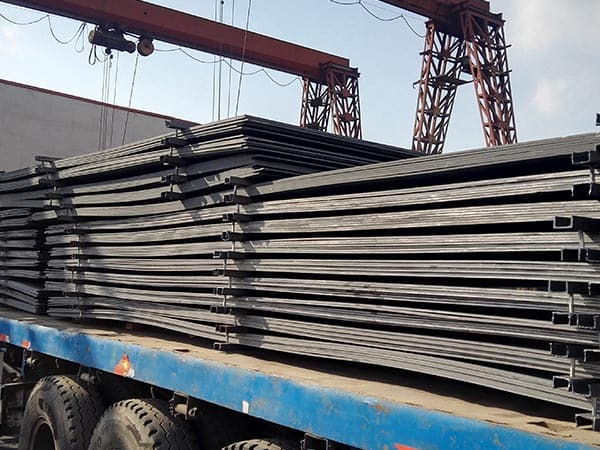
Understanding S900MC: The Backbone of Modern High-Performance Machinery
S900MC is a high-strength, thermomechanically rolled (TMCP) steel specifically designed for the demanding requirements of the construction machinery industry. With a minimum yield strength of 900 MPa, it allows engineers to design lighter, more efficient structures without sacrificing structural integrity. However, the very processes that give S900MC its incredible strength—controlled rolling and accelerated cooling—also make it sensitive to traditional welding methods. To maintain the integrity of the base metal and the heat-affected zone (HAZ), strict adherence to specialized welding protocols is mandatory.
The primary challenge when welding S900MC is avoiding the degradation of its fine-grained microstructure. Excessive heat can lead to grain coarsening and softening in the HAZ, which significantly reduces the load-bearing capacity of the component. This guide delves into the technical nuances of welding S900MC, providing actionable insights for fabricators and engineers.
Chemical Composition and Its Impact on Weldability
The weldability of S900MC is generally excellent compared to traditional quenched and tempered steels of similar strength levels, primarily due to its low carbon equivalent (CEV). A lower CEV reduces the risk of cold cracking, but it does not eliminate the need for caution. The chemical balance is meticulously controlled to ensure that the steel remains ductile even at high strength levels.
| Element | Max Content (%) | Impact on Welding |
|---|---|---|
| Carbon (C) | 0.20 | Lower levels improve toughness and reduce hardening. |
| Silicon (Si) | 0.60 | Deoxidizer, but high levels can affect slag fluidity. |
| Manganese (Mn) | 2.20 | Enhances strength; requires balance to prevent segregation. |
| Phosphorus (P) | 0.025 | Kept low to prevent hot shortness and brittle zones. |
| Sulfur (S) | 0.010 | Low sulfur ensures high lamellar tearing resistance. |
| Aluminium (Al) | 0.015 | Grain refiner, critical for maintaining TMCP properties. |
By keeping the alloying elements at a minimum, S900MC achieves a low Carbon Equivalent Value (typically CEV ≤ 0.48), which often allows for welding without preheating in thin to medium thicknesses, provided the hydrogen levels are strictly controlled.
Critical Welding Precaution: Heat Input Control
The most vital factor in welding S900MC is the management of heat input. Because the strength of S900MC is derived from its specific thermomechanical history, excessive heat will effectively "undo" the tempering and grain refinement. Heat input should generally be kept between 0.5 kJ/mm and 1.5 kJ/mm, depending on the thickness of the plate and the welding process used.
High heat input leads to a slow cooling rate, which results in a wider HAZ and significant softening. Conversely, extremely low heat input might cause insufficient fusion or increase the risk of hydrogen-induced cracking in thicker sections. The cooling time, often referred to as the t8/5 time (the time it takes for the weld to cool from 800°C to 500°C), should ideally be kept within the range of 5 to 15 seconds. Fabricators must use calibrated equipment to monitor voltage, current, and travel speed to ensure the heat input remains within the specified limits.
Filler Metal Selection: Matching vs. Undermatching
Choosing the right filler metal is a strategic decision. For S900MC, there are two primary approaches: matching strength and undermatching strength. Matching filler metals (e.g., AWS A5.28 ER110S-G or ER120S-G) are used when the full strength of the 900 MPa grade is required across the joint. However, these consumables are more sensitive to cracking and require more stringent control of welding parameters.
In many construction machinery applications, such as long-reach booms or chassis frames, undermatching filler metals (e.g., 700 MPa or even 600 MPa yield strength) are preferred for longitudinal welds or areas where the stress is not perpendicular to the weld. Undermatching consumables offer higher ductility and a much lower risk of cold cracking, which can enhance the overall fatigue life of the structure. The choice must be validated by structural calculations to ensure the joint can handle the intended loads.
Hydrogen Management and Cold Cracking Prevention
Hydrogen-induced cracking (HIC) is a significant risk when welding ultra-high-strength steels. To mitigate this, only low-hydrogen welding processes and consumables should be used. Gas Metal Arc Welding (GMAW/MAG) is the preferred process due to its inherently low hydrogen potential. If Shielded Metal Arc Welding (SMAW) is necessary, basic-coated electrodes must be baked according to the manufacturer's instructions and stored in heated ovens.
- Ensure the weld preparation area is free from moisture, oil, rust, and scale.
- Use high-purity shielding gases (typically Ar/CO2 mixes) with low moisture content.
- If welding in humid environments, slight preheating (approx. 50°C to 75°C) is recommended to drive off surface moisture, even if not required by the CEV.
- Post-heating or hydrogen release treatments can be beneficial for very thick sections (over 20mm) to allow hydrogen to diffuse out of the metal.
Edge Preparation and Joint Design
Proper joint design is essential to minimize residual stresses. For S900MC, a V-groove or X-groove with a generous opening angle is often better than a narrow gap, as it allows for better bead placement and reduces the intensity of the shrinkage forces. Avoid sharp corners and abrupt changes in section thickness, as these act as stress concentrators. Mechanical cleaning of the edges via grinding is superior to thermal cutting alone, as it removes the thin layer of oxide and hardened material produced during plasma or laser cutting.
Mechanical Properties and Environmental Adaptability
S900MC is not just about strength; it is also designed for toughness. It typically maintains excellent impact energy at temperatures as low as -40°C or even -60°C. This makes it ideal for machinery operating in arctic conditions or high-altitude mining environments. During welding, maintaining this low-temperature toughness requires avoiding the formation of brittle martensite or coarse bainite in the HAZ, which again points back to the importance of t8/5 cooling time control.
| Property | Typical Value (S900MC) | Significance |
|---|---|---|
| Yield Strength (ReH) | ≥ 900 MPa | Allows for significant weight reduction in booms and frames. |
| Tensile Strength (Rm) | 930 - 1200 MPa | Ensures high ultimate load capacity. |
| Elongation (A5) | ≥ 10% | Provides necessary ductility for cold forming and safety. |
| Impact Energy (Charpy-V) | ≥ 27J at -40°C | Critical for preventing brittle fracture in cold climates. |
Advanced Processing: Bending and Cutting
While welding is the focus, the overall performance of S900MC depends on how it is handled before it reaches the welding station. S900MC has excellent cold-forming properties. When bending, the minimum mandrel radius should be strictly followed (typically 3 to 4 times the plate thickness) to prevent micro-cracking on the outer radius. These micro-cracks can act as initiation points for fatigue failure or hydrogen embrittlement once the component is welded and put into service. Laser cutting is the preferred method for S900MC due to the narrow HAZ it produces, but the edges should still be inspected for any thermal defects before welding begins.
Optimizing the Welding Sequence
In complex construction machinery assemblies, the welding sequence plays a vital role in managing distortion and residual stress. Symmetric welding, where two welders work simultaneously on opposite sides of a joint, is highly effective. Back-step welding and skip welding techniques can also help distribute the heat more evenly across the structure. Minimizing residual stress is particularly important for S900MC because high internal stresses, combined with the high yield strength of the material, can increase the susceptibility to stress corrosion cracking in certain environments.
Quality Control and Non-Destructive Testing (NDT)
Post-weld inspection for S900MC should be more rigorous than for standard structural steels. Visual inspection (VT) should be followed by Magnetic Particle Testing (MT) or Dye Penetrant Testing (PT) to check for surface cracks. For critical load-bearing welds, Ultrasonic Testing (UT) or Radiographic Testing (RT) is essential to detect internal flaws like lack of fusion or porosity. It is often recommended to wait at least 24 to 48 hours after welding before performing the final NDT, as hydrogen-induced cracks can be "delayed" and may not appear immediately after the weld has cooled.
By integrating these precautions—meticulous heat management, strategic filler selection, and rigorous hydrogen control—manufacturers can fully leverage the benefits of S900MC. This steel represents the future of heavy equipment, enabling the production of machines that are stronger, lighter, and more durable than ever before. Successful fabrication is simply a matter of respecting the metallurgical science behind this advanced material.
Leave a message