
S960MC steel for construction machinery considered mild steel?
Explore the technical differences between S960MC and mild steel. This guide covers mechanical properties, processing, and applications in construction machinery.
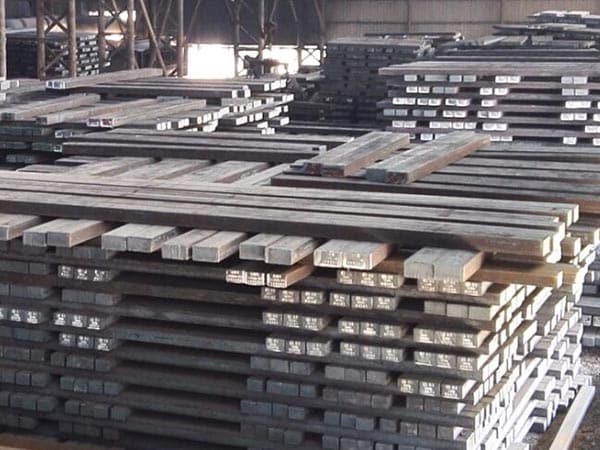
Understanding S960MC: Beyond the Definition of Mild Steel
When discussing materials for heavy-duty engineering, a common question arises: Is S960MC steel for construction machinery considered mild steel? To provide a definitive answer, we must first look at the classification of steel. Mild steel, typically categorized as low-carbon steel (such as S235JR or ASTM A36), usually possesses a yield strength ranging from 235 to 280 MPa. In stark contrast, S960MC is an ultra-high-strength structural steel (UHSS) with a minimum yield strength of 960 MPa. This means S960MC is nearly four times stronger than traditional mild steel, placing it in an entirely different category of performance and metallurgical engineering.
The Chemical Architecture of Ultra-High Strength
The performance of S960MC is not accidental; it is the result of precise chemical composition and advanced thermomechanical rolling processes. While mild steel relies on a simple carbon-manganese balance, S960MC utilizes micro-alloying elements to achieve its extraordinary properties without sacrificing weldability. The carbon content is kept low (typically below 0.20%) to ensure the material remains ductile and easy to weld. Elements such as Niobium (Nb), Vanadium (V), and Titanium (Ti) are added in minute quantities to refine the grain structure during the cooling process.
| Element | Max Content (%) | Function |
|---|---|---|
| Carbon (C) | 0.20 | Ensures strength while maintaining weldability |
| Manganese (Mn) | 2.20 | Improves hardenability and tensile strength |
| Silicon (Si) | 0.60 | Acts as a deoxidizer and strengthens the ferrite |
| Niobium (Nb) | 0.09 | Grain refinement and precipitation hardening |
| Titanium (Ti) | 0.25 | Prevents grain growth at high temperatures |
This chemical balance allows S960MC to meet the requirements of the EN 10149-2 standard, which governs hot-rolled flat products made of high yield strength steels for cold forming. Unlike mild steel, which has a relatively coarse grain structure, S960MC features a fine-grained microstructure that contributes to its superior toughness and fatigue resistance.
Mechanical Superiority: Why 960 MPa Changes Everything
The primary reason S960MC is favored in construction machinery is its strength-to-weight ratio. In the world of cranes, excavators, and heavy-duty trailers, every kilogram saved in the structure translates to an additional kilogram of payload capacity. Mild steel is often too heavy and bulky for modern high-performance designs. S960MC provides a solution that allows for thinner plates without compromising the structural integrity of the machine.
- Yield Strength: S960MC offers a minimum yield of 960 MPa, whereas mild steel offers around 235 MPa.
- Tensile Strength: S960MC ranges between 980 and 1250 MPa, providing a massive safety margin under extreme loads.
- Elongation: Despite its high strength, S960MC maintains an elongation of at least 7-10% (depending on thickness), allowing for necessary deformation before failure.
- Impact Toughness: It is designed to perform in harsh environments, often maintaining ductility at temperatures as low as -20°C or -40°C.
By using S960MC, engineers can reduce the weight of structural components by up to 70% compared to using S235 mild steel. This reduction is critical for the mobility of construction equipment and the reduction of fuel consumption during operation.
Cold Forming and Fabrication: Precision in Toughness
One might assume that a steel four times stronger than mild steel would be impossible to bend or shape. However, S960MC is specifically designed for cold forming. The "MC" in its name stands for Thermomechanically Rolled (M) and Cold Forming (C). This means that despite its hardness, it can be bent to tight radii if the correct equipment and techniques are used.
When bending S960MC, fabricators must account for its high yield strength by using larger bending radii than they would for mild steel. The springback effect is also significantly more pronounced. Using high-quality CNC press brakes and ensuring the bending direction is perpendicular to the rolling direction are essential steps for successful fabrication. This capability makes it ideal for manufacturing complex telescopic booms and chassis components that require both strength and intricate geometry.
Welding S960MC: Mastering the Heat-Affected Zone
Welding is where the distinction between S960MC and mild steel becomes most apparent. Mild steel is incredibly forgiving; it can be welded with standard techniques and high heat input without much concern for the loss of properties. S960MC requires a more disciplined approach. Because its strength is derived from thermomechanical rolling, excessive heat input can soften the material in the heat-affected zone (HAZ), leading to a localized drop in yield strength.
To maintain the integrity of S960MC welds, operators must control the cooling time (t8/5). This refers to the time it takes for the weld to cool from 800°C to 500°C. If the cooling is too slow, the grain structure coarsens; if it is too fast, there is a risk of hydrogen cracking. Using low-hydrogen consumables and matching strength filler metals (or slightly under-matching for better ductility) is the industry standard for ensuring the joint is as reliable as the base metal.
Industry Applications: Revolutionizing Construction Machinery
The transition from mild steel to S960MC has revolutionized the design of heavy machinery. We see this impact most clearly in the following sectors:
- Mobile Cranes: The telescopic booms of modern cranes are almost exclusively made from S960MC or higher grades (like S1100). This allows for longer reach and higher lifting capacities without increasing the vehicle's total weight.
- Concrete Pumps: The long arms of concrete pumps must withstand immense pressure and vibration while remaining light enough to be mounted on a standard truck chassis.
- Heavy Trailers: The main longitudinal beams of low-loader trailers benefit from S960MC, allowing for a lower deck height and increased durability under concentrated loads.
- Mining Equipment: Large dump truck bodies and underground mining supports utilize S960MC for its combination of wear resistance and structural strength.
These applications demonstrate that S960MC is not just a stronger version of mild steel; it is a specialized material that enables engineering feats that were previously impossible with conventional carbon steels.
Economic and Environmental Advantages of Lightweighting
Choosing S960MC over mild steel is often driven by economic and environmental factors. While the price per ton of S960MC is higher than that of mild steel, the total cost of ownership is often lower. Reduced material usage means fewer welding consumables are needed, and shipping costs for the raw material are decreased. More importantly, the end-user benefits from a machine that is more fuel-efficient and has a higher resale value due to its advanced construction.
From a sustainability perspective, the use of S960MC contributes to a lower carbon footprint. Lighter machines require less energy to manufacture and less fuel to operate. Furthermore, the longevity and fatigue resistance of S960MC mean that the equipment has a longer service life, reducing the frequency of replacement and the associated environmental impact of producing new steel.
Final Technical Comparison
To clarify the distinction once and for all, let us look at the fundamental differences between S960MC and a standard mild steel (S235JR) in a direct comparison table:
| Property | S235JR (Mild Steel) | S960MC (UHSS) |
|---|---|---|
| Min Yield Strength | 235 MPa | 960 MPa |
| Tensile Strength | 360 - 510 MPa | 980 - 1250 MPa |
| Carbon Content | ~0.17% | ~0.12% - 0.20% |
| Alloying Strategy | None/Minimal | Micro-alloyed (Nb, Ti, V) |
| Production Method | Hot Rolled | Thermomechanically Rolled |
| Weight Reduction Potential | Baseline | Up to 70% |
S960MC is the pinnacle of modern steel technology for the construction machinery industry. It is not mild steel; it is a highly engineered, ultra-high-strength solution designed for the most demanding structural challenges. By understanding its unique chemical and mechanical profile, manufacturers can push the boundaries of what heavy machinery can achieve, ensuring safety, efficiency, and durability in every build.
Leave a message