
What is the best quality S355MC cold rolled plate zero cut?
Discover the comprehensive guide to S355MC steel plates. Learn about chemical composition, mechanical properties, and the advantages of precision zero-cut services for industrial applications.
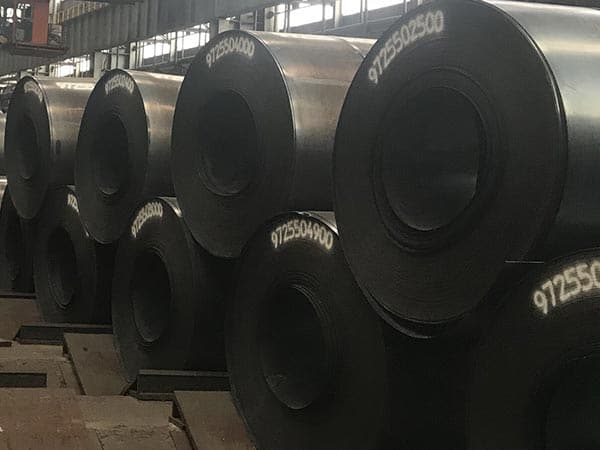
Understanding the Essence of S355MC High-Strength Steel
When searching for the best quality S355MC cold rolled plate zero cut, it is essential to understand that S355MC is a high-yield-strength steel designed specifically for cold forming. Governed by the EN 10149-2 standard, this thermomechanically rolled steel combines exceptional strength with remarkable ductility. While S355MC is technically a hot-rolled product that is often pickled and oiled (HRPO) to achieve a surface finish comparable to cold-rolled steel, the term 'cold rolled' in market contexts often refers to its superior surface quality and its ability to be processed in thin gauges for precision engineering.
The 'MC' designation signifies that the steel has undergone thermomechanical rolling, a process that refines the grain structure through controlled cooling and rolling temperatures. This results in a material that is significantly tougher and more weldable than traditional carbon steels of the same strength level. For manufacturers, selecting 'zero cut' services means obtaining the exact dimensions required for a project, eliminating scrap waste, and reducing internal processing costs.
Chemical Composition and the Science of Micro-Alloying
The superior performance of S355MC is rooted in its precise chemical balance. Unlike standard structural steels, S355MC utilizes micro-alloying elements such as Niobium (Nb), Vanadium (V), and Titanium (Ti). These elements act as grain refiners, preventing grain growth during the rolling process and ensuring a fine-grained microstructure that enhances both strength and toughness.
| Element | Maximum Percentage (%) |
|---|---|
| Carbon (C) | 0.12 |
| Manganese (Mn) | 1.50 |
| Silicon (Si) | 0.50 |
| Phosphorus (P) | 0.025 |
| Sulfur (S) | 0.020 |
| Aluminium (Al) | 0.015 |
| Niobium (Nb) | 0.09 |
The low carbon content (max 0.12%) is a critical factor for weldability. It ensures that the heat-affected zone (HAZ) remains ductile and resistant to cold cracking, which is a common issue in higher carbon steels. This makes S355MC an ideal candidate for complex welded structures in the automotive and heavy machinery industries.
Mechanical Properties: Strength Meets Flexibility
The primary appeal of S355MC lies in its mechanical profile. It offers a minimum yield strength of 355 MPa, providing a high load-bearing capacity while allowing for significant weight reduction in final products. This 'lightweighting' capability is vital for modern transport and logistics equipment where reducing tare weight directly translates to fuel efficiency and increased payload.
- Yield Strength: Min 355 MPa, ensuring structural integrity under heavy loads.
- Tensile Strength: Ranges between 430 and 550 MPa, providing a safe margin against fracture.
- Elongation: Excellent ductility (typically 19-23% depending on thickness), allowing for tight bending radii without surface cracking.
- Impact Toughness: Maintains performance even in low-temperature environments, crucial for outdoor structural applications.
High-quality S355MC plates exhibit isotropic properties, meaning the strength and ductility are consistent both longitudinal and transverse to the rolling direction. This consistency is vital for precision 'zero cut' components that may be oriented in various directions during the fabrication of complex assemblies.
The Advantage of Zero-Cut Precision Processing
The term zero cut refers to a value-added service where the steel supplier provides plates cut to the exact specifications of the client's design. This is not merely about size; it is about the quality of the edge and the dimensional tolerance. Best-in-class zero-cut S355MC plates are typically processed using advanced laser or high-definition plasma cutting technologies.
Laser Cutting Benefits: Laser cutting provides a minimal heat-affected zone, ensuring that the micro-alloyed properties of S355MC are not compromised at the edges. It allows for intricate geometries and tight tolerances (often within +/- 0.2mm), which are essential for automated assembly lines. Furthermore, the clean, burr-free edges eliminate the need for secondary grinding operations.
Waste Reduction: By ordering zero-cut plates, companies shift the burden of scrap management to the service center. This improves cash flow by only paying for the material used in the final product and reduces the logistical costs associated with handling and recycling offcuts.
Processing Performance: Bending and Welding
S355MC is celebrated for its excellent cold-forming characteristics. Because of its fine grain structure, it can be bent to very small radii. For thicknesses up to 3mm, a bending radius of 0.25x thickness is often achievable, provided the correct tooling and grain orientation are considered. This flexibility allows designers to replace multi-part welded assemblies with single-piece bent components, increasing structural rigidity and reducing labor costs.
In terms of welding, S355MC is compatible with all standard methods, including MIG/MAG, TIG, and submerged arc welding. Its low carbon equivalent value (CEV) means that preheating is rarely required for standard thicknesses, further streamlining the manufacturing process. When using zero-cut pieces, the precision of the edges ensures perfect fit-up, which is a prerequisite for high-quality robotic welding.
Environmental Adaptability and Surface Protection
While S355MC is not a 'weathering steel' like Corten, its chemical composition provides a stable base for various protective coatings. High-quality S355MC plates are often supplied in a pickled and oiled state. The pickling process removes mill scale, leaving a clean, silver-grey surface that is ideal for powder coating, painting, or galvanizing.
The adhesion of coatings on S355MC is superior to that on standard hot-rolled steel because the surface is free of the brittle iron oxide layers that can cause delamination. This makes it highly adaptable to harsh environments, such as agricultural machinery exposed to fertilizers or chassis components subjected to road salt and moisture.
Key Industry Applications
The versatility of S355MC zero-cut plates makes them a staple in several high-stakes industries:
- Automotive and Trucking: Used for chassis frames, cross members, and suspension components where high strength and weight savings are paramount.
- Construction Machinery: Essential for crane booms, excavator buckets, and telescopic handlers that require high fatigue resistance.
- Renewable Energy: Utilized in solar tracking systems and wind turbine internal components where precision dimensions are required for modular assembly.
- Storage and Racking: High-load warehouse racking systems benefit from the consistency and strength of S355MC, ensuring safety in high-density storage.
How to Identify High-Quality S355MC Plates
To ensure you are receiving the best quality S355MC, always verify the material test certificate (MTC) according to EN 10204 3.1. A genuine MTC will list the specific chemical heat analysis and the results of mechanical testing for that particular batch. Look for consistency in the yield-to-tensile ratio; a lower ratio typically indicates better ductility and forming potential.
Furthermore, evaluate the supplier's cutting capabilities. A 'best quality' zero-cut service is defined by its ability to maintain flatness after cutting. Internal stresses in steel can cause plates to bow or twist when cut; high-quality S355MC is leveled to minimize these stresses, ensuring that the zero-cut pieces remain flat and ready for the next stage of production.
Leave a message