
What asdvantages does hot rolled automotive steel grade S960MC have
Discover the superior advantages of S960MC hot rolled automotive steel. This guide covers its mechanical properties, weldability, cold forming, and lightweighting benefits.
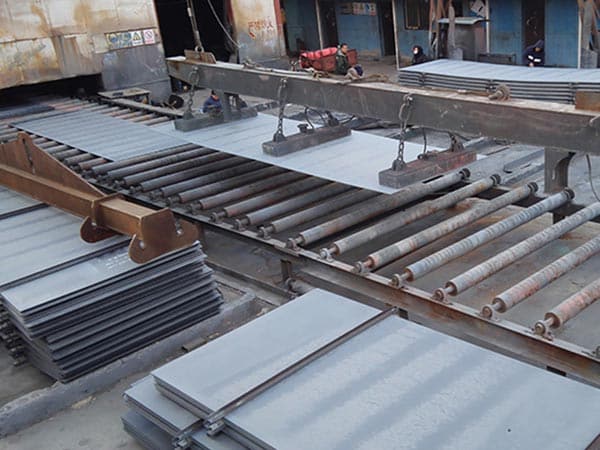
The Evolution of Ultra-High Strength Steel: Understanding S960MC
In the modern engineering landscape, the drive for efficiency, payload maximization, and carbon footprint reduction has placed S960MC at the forefront of material selection. As a thermomechanically rolled, high-yield-strength steel defined under the EN 10149-2 standard, S960MC represents a pinnacle of metallurgical engineering. The "S" denotes structural steel, "960" refers to its minimum yield strength of 960 MPa, and "MC" indicates its thermomechanically rolled condition, designed specifically for cold forming.
Unlike traditional structural steels, S960MC achieves its extraordinary strength not through heavy alloying or quenching and tempering, but through a precision-controlled rolling process at specific temperatures. This method refines the grain structure to a microscopic level, resulting in a material that is both incredibly strong and surprisingly ductile. This balance of properties is what makes it indispensable for the automotive and heavy transport industries.
Exceptional Mechanical Properties and Weight Reduction Potential
The primary advantage of S960MC is its massive yield strength-to-weight ratio. When engineers replace standard S355 or even S700MC with S960MC, they can significantly reduce the thickness of structural components without compromising the load-bearing capacity. This process, often referred to as lightweighting, is critical for heavy-duty vehicles, trailers, and mobile cranes.
By reducing the dead weight of a vehicle's chassis or a crane's boom, operators can increase the legal payload capacity. This directly translates to higher operational efficiency and lower fuel consumption per ton-mile. The mechanical profile of S960MC is characterized by:
- Minimum Yield Strength: 960 MPa, providing immense resistance to permanent deformation.
- Tensile Strength: 980 to 1250 MPa, ensuring structural integrity under extreme tension.
- Elongation: Despite its hardness, it maintains sufficient ductility (typically 7-10% depending on thickness) to absorb energy and resist brittle fracture.
| Property | S355MC (Standard) | S700MC (High Strength) | S960MC (Ultra-High Strength) |
|---|---|---|---|
| Yield Strength (MPa) | 355 | 700 | 960 |
| Tensile Strength (MPa) | 430-550 | 750-950 | 980-1250 |
| Min. Elongation (%) | 19 | 12 | 7-10 |
Superior Cold Forming and Processing Performance
One might assume that a steel with a yield strength nearing 1000 MPa would be brittle or impossible to bend. However, the thermomechanical rolling process ensures that S960MC retains excellent cold forming capabilities. This allows manufacturers to create complex geometries, such as U-channels or specialized chassis rails, using standard hydraulic press brakes.
The fine-grain structure minimizes the risk of cracking during the bending process, provided the recommended minimum bending radii are respected. Typically, for S960MC, the bending radius is roughly 3 to 4 times the plate thickness. This versatility allows designers to move away from heavy, welded box sections toward lighter, single-piece formed components, which reduces welding costs and improves fatigue life.
Weldability and the Low Carbon Equivalent Advantage
For structural applications, weldability is non-negotiable. S960MC is engineered with a very low Carbon Equivalent (CEV). By utilizing micro-alloying elements like Niobium (Nb), Vanadium (V), and Titanium (Ti) instead of high carbon content, the steel remains highly weldable using standard techniques such as MAG (Metal Active Gas) or laser welding.
Because the carbon content is kept low (usually below 0.20%), the risk of cold cracking in the heat-affected zone (HAZ) is significantly reduced. However, users must be mindful of the heat input. Excessive heat during welding can cause "softening" in the HAZ, where the refined grain structure is slightly altered, leading to a localized drop in strength. Using low heat input and optimized welding parameters ensures that the joint remains nearly as strong as the base metal.
Environmental Resilience and Lifecycle Benefits
The environmental advantages of S960MC extend beyond fuel savings. Because less material is required to achieve the same structural performance, the total volume of steel produced, transported, and processed is reduced. This leads to a lower overall CO2 footprint for the finished product. Furthermore, S960MC exhibits good surface quality, which is beneficial for coating and painting, providing a layer of protection against atmospheric corrosion in harsh environments.
In the agricultural and mining sectors, where equipment is subjected to abrasive conditions and high cyclic loads, the toughness of S960MC at low temperatures (often tested at -20°C or -40°C) ensures that components do not fail suddenly in cold climates. This reliability reduces maintenance intervals and extends the service life of the machinery.
Strategic Industry Applications
The unique properties of S960MC have opened doors for innovation across several heavy-duty industries:
- Mobile Cranes and Lifting Equipment: Telescopic booms made from S960MC allow for greater reach and higher lifting capacities without increasing the weight of the crane itself.
- Heavy-Duty Trailers: Chassis frames and cross-members benefit from thickness reduction, allowing for more cargo per trip.
- Automotive Safety Components: High-strength structural parts that protect passengers during collisions while keeping the vehicle weight low.
- Agricultural Machinery: Large-scale sprayers and harvesters use S960MC to maintain rigidity over wide spans while minimizing soil compaction from heavy equipment.
Optimizing Production with S960MC
Adopting S960MC requires a shift in manufacturing mindset. While the raw material cost per ton is higher than standard structural steel, the total cost of ownership is often lower. Reduced material usage means less weight to ship, fewer welding consumables, and faster assembly times. Laser cutting S960MC is also highly efficient, as the material's clean composition results in smooth edges with minimal dross, reducing the need for secondary finishing operations.
Engineers must ensure that the design accounts for the higher elasticity of ultra-high-strength steel. Since the Young's Modulus remains the same as standard steel, thinner sections will deflect more under the same load. Therefore, structural stiffness must be managed through clever geometry—such as adding ribs or folds—rather than simply relying on material thickness.
The Future of High-Performance Steel
S960MC is not just a material; it is a solution to the modern engineering challenge of "doing more with less." Its combination of extreme yield strength, reliable weldability, and excellent formability makes it the preferred choice for forward-thinking manufacturers. As global regulations on emissions and energy efficiency tighten, the role of ultra-high-strength steels like S960MC will only become more prominent, driving the next generation of high-performance machinery and transport solutions.
Leave a message