
Who sale the 700mce hot rolled automotive steel
Find the best suppliers for 700MCE hot rolled automotive steel. Learn about its mechanical properties, welding capabilities, and why it is the top choice for lightweight truck frames and chassis.
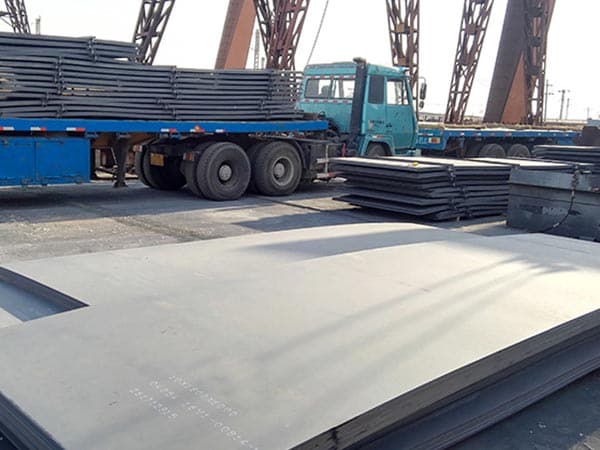
The Rising Demand for 700MCE Hot Rolled Automotive Steel
The global automotive industry is undergoing a radical transformation driven by the dual needs of fuel efficiency and structural safety. At the heart of this shift is the adoption of advanced high-strength steels (AHSS) and high-strength low-alloy (HSLA) steels. Among these, 700MCE hot rolled automotive steel stands out as a critical material for manufacturers aiming to reduce vehicle weight without compromising load-bearing capacity. If you are asking who sale the 700mce hot rolled automotive steel, you are likely involved in the production of heavy-duty truck frames, crane booms, or complex chassis components that require a perfect balance of strength and formability.
700MCE is a thermomechanically rolled steel grade characterized by a minimum yield strength of 700 MPa. The "MC" designation typically refers to thermomechanically rolled steel suitable for cold forming, while the "E" often denotes specific impact energy requirements or enhanced ductility standards depending on the regional mill specification (such as EN 10149-2). This steel is engineered to replace heavier, traditional carbon steels, allowing for thinner gauges that can handle identical or superior stresses.
Core Mechanical Properties of 700MCE Steel
Understanding the mechanical profile of 700MCE is essential before sourcing it from a supplier. Unlike standard structural steels, 700MCE undergoes a precise cooling process during rolling, which creates a fine-grained microstructure. This microstructural refinement is the secret behind its high strength-to-weight ratio.
| Property | Value (Typical) |
|---|---|
| Yield Strength (ReH) | Min. 700 MPa |
| Tensile Strength (Rm) | 750 - 950 MPa |
| Elongation (A5) | Min. 12% - 14% |
| Bending Radius (90°) | 0.5t to 1.5t (depending on thickness) |
The high yield strength ensures that the steel can withstand significant loads before permanent deformation occurs. For automotive engineers, this means the ability to design thinner longitudinal beams for trailers, which directly translates to higher payloads and lower fuel consumption for the end-user.
Chemical Composition and Micro-Alloying Strategy
The performance of 700MCE is not just a result of the rolling process but also its sophisticated chemical makeup. Suppliers who sale the 700mce hot rolled automotive steel ensure that the carbon content is kept extremely low, usually below 0.12%. This low carbon content is vital for weldability and preventing brittleness.
- Niobium (Nb) and Vanadium (V): These elements are added in trace amounts to facilitate grain refinement and precipitation hardening.
- Titanium (Ti): Helps in stabilizing the nitrogen and further refining the grain structure during the thermomechanical rolling process.
- Manganese (Mn): Enhances the hardenability and increases the tensile strength of the ferrite matrix.
- Sulfur and Phosphorus Control: Premium suppliers maintain ultra-low levels of these impurities to improve the steel's toughness and fatigue resistance.
This chemical synergy allows 700MCE to remain ductile even at high strength levels, a property that is often a trade-off in lower-quality steels.
Processing Performance: Bending and Forming
One of the primary reasons manufacturers seek out 700MCE is its exceptional cold-forming capability. Despite its high strength, this steel can be bent to tight radii without cracking. This is particularly important for the automotive industry, where complex geometries are common in chassis cross-members and reinforcement brackets.
When working with 700MCE, it is important to account for springback. Because the material is significantly stronger than standard S355 or S235 grades, it will attempt to return to its original shape after the bending force is removed. Professional fabricators use CNC-controlled press brakes with precision compensation to ensure the final dimensions meet the strict tolerances required for automotive assembly.
Furthermore, the surface quality of hot-rolled 700MCE is often superior to standard hot-rolled plates. Many suppliers offer it in a Pickled and Oiled (P&O) condition. The pickling process removes the mill scale, providing a clean surface that is ideal for laser cutting and subsequent painting or galvanizing. This clean surface also reduces wear and tear on tooling during the stamping and forming processes.
Superior Weldability for Structural Integrity
In the construction of truck frames and heavy machinery, welding is the most common joining method. 700MCE is designed with a low carbon equivalent (CEV), which makes it highly compatible with standard welding processes such as MAG (Metal Active Gas), MIG (Metal Inert Gas), and Laser welding.
The low CEV minimizes the risk of cold cracking in the heat-affected zone (HAZ). However, it is crucial to manage the heat input during welding. Excessive heat can lead to grain growth in the HAZ, which might locally reduce the yield strength. Suppliers of 700MCE often provide welding guidelines that recommend specific cooling rates to maintain the integrity of the high-strength microstructure across the entire joint.
Environmental Adaptability and Fatigue Resistance
Automotive components are subjected to harsh environmental conditions, including road salt, moisture, and extreme temperature fluctuations. 700MCE exhibits excellent low-temperature toughness, often maintaining its impact resistance at temperatures as low as -20°C or -40°C. This makes it suitable for vehicles operating in arctic or high-altitude environments.
Moreover, fatigue resistance is a critical factor for automotive longevity. The fine-grained structure of 700MCE provides a high resistance to crack initiation and propagation. Under cyclic loading—such as the constant vibration and stress shifts experienced by a trailer chassis—700MCE outperforms traditional structural steels, leading to a longer service life and reduced maintenance costs for fleet operators.
Identifying Reliable Suppliers: Who Sale 700MCE?
When searching for who sale the 700mce hot rolled automotive steel, it is important to distinguish between general steel stockholders and specialized automotive steel service centers. Leading global steel mills like SSAB (with their Strenx line), ArcelorMittal, Baosteel, and ThyssenKrupp are the primary producers of these high-grade materials.
Reliable suppliers should provide full traceability and Mill Test Certificates (MTC) according to EN 10204 3.1. These certificates verify the chemical composition and mechanical properties of the specific batch you are purchasing. Additionally, top-tier suppliers offer value-added services such as:
- Precision Decoiling: Leveling the steel coils to ensure high flatness, which is critical for automated laser cutting.
- Slitting: Providing specific widths for automated roll-forming lines.
- Technical Support: Advising on the best bending parameters and welding consumables for the 700MCE grade.
Choosing a supplier that understands the nuances of automotive standards (like IATF 16949) ensures that the material will perform consistently across large production runs, reducing scrap rates and improving overall manufacturing efficiency.
Economic Impact and Lightweighting Benefits
The initial cost per ton of 700MCE is higher than that of standard mild steel. However, the total cost of ownership is often lower. By using 700MCE, engineers can reduce the thickness of a component by 20% to 40% while maintaining the same structural strength. This weight reduction leads to several economic advantages:
1. Material Savings: Less steel is required by weight to build the same structure.
2. Lower Transport Costs: Lighter components are cheaper to ship.
3. Increased Payload: For commercial vehicles, every kilogram saved in the chassis is an extra kilogram of cargo that can be carried.
4. CO2 Reduction: Lighter vehicles consume less fuel, helping manufacturers meet increasingly stringent environmental regulations.
In the competitive landscape of modern manufacturing, the switch to 700MCE is not just a technical upgrade; it is a strategic move to enhance product marketability and sustainability.
Future Outlook for High Strength Automotive Steels
As the industry moves toward electric vehicles (EVs), the importance of 700MCE and similar grades will only grow. EVs require heavy battery packs, making weight reduction in the rest of the vehicle structure even more critical to maintain range. 700MCE provides the necessary strength to protect battery enclosures while keeping the overall vehicle weight within manageable limits.
Sourcing from reputable distributors who specialize in automotive grades ensures that you stay ahead of the curve. Whether you are looking for trial quantities for prototyping or large-scale coil shipments for mass production, finding a partner who understands the technical demands of 700MCE is the key to successful implementation.
Leave a message