
The usage of s460mc 1.0982 en 10149-2 pickling steel sheet
Explore the comprehensive guide on S460MC (1.0982) EN 10149-2 pickling steel sheet. Learn about its mechanical properties, weldability, cold forming capabilities, and diverse industrial applications.
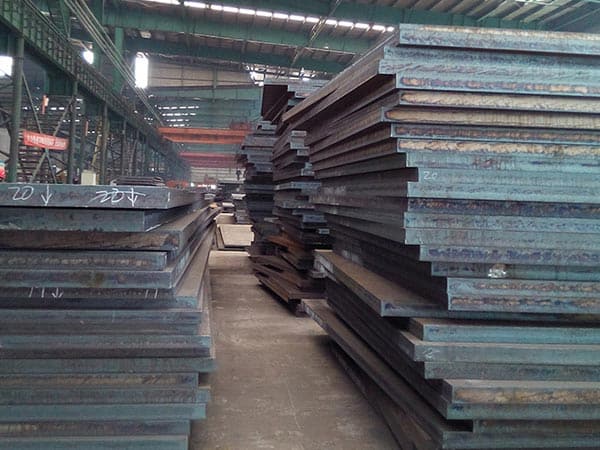
Understanding the Fundamentals of S460MC (1.0982) Steel
S460MC, identified by the material number 1.0982, is a high-yield strength, thermomechanically rolled steel specifically designed for cold forming. Governed by the European standard EN 10149-2, this grade represents a significant advancement in metallurgical engineering, offering a unique balance between high strength and excellent formability. The 'S' prefix denotes structural steel, '460' signifies a minimum yield strength of 460 MPa, and 'MC' indicates that the material is suitable for cold forming (C) and has been produced via thermomechanical rolling (M).
The thermomechanical rolling process is crucial as it involves precise temperature control during the rolling stages, which refines the grain structure of the steel. This fine-grained microstructure is the primary reason why S460MC can achieve such high strength levels without the need for high carbon content, which would otherwise impair weldability and toughness. When supplied as a pickling steel sheet, the material undergoes an acid wash to remove the hot-rolled scale, resulting in a clean, smooth surface that is ideal for precision manufacturing.
Chemical Composition and Micro-alloying Strategy
The performance of S460MC is rooted in its sophisticated chemical composition. To maintain superior weldability and ductility, the carbon content is kept strictly low. The strength is instead derived from micro-alloying elements that facilitate grain refinement and precipitation hardening.
| Element | Maximum Content (%) |
|---|---|
| Carbon (C) | 0.12 |
| Manganese (Mn) | 1.60 |
| Silicon (Si) | 0.50 |
| Phosphorus (P) | 0.025 |
| Sulphur (S) | 0.015 |
| Aluminum (Al) | 0.015 (min) |
| Niobium (Nb) | 0.09 |
| Vanadium (V) | 0.20 |
| Titanium (Ti) | 0.15 |
Elements like Niobium (Nb), Vanadium (V), and Titanium (Ti) are used either individually or in combination. These elements form stable carbides and nitrides that pin grain boundaries during the rolling process, preventing grain growth and ensuring a fine-grained structure. This micro-alloying strategy is what allows S460MC to remain tough even at low temperatures, making it suitable for demanding environmental conditions.
Mechanical Properties and Structural Advantages
The primary appeal of S460MC (1.0982) lies in its mechanical profile. It offers a significant step up from standard structural steels like S355, allowing for substantial weight savings in structural designs. By utilizing a material with higher yield strength, engineers can reduce the thickness of components without sacrificing load-bearing capacity.
- Yield Strength: Minimum 460 MPa (for thicknesses ≤ 16mm).
- Tensile Strength: 520 to 670 MPa.
- Elongation: Minimum 14% (for thickness < 3mm) and 13% (for thickness ≥ 3mm).
- Impact Toughness: While EN 10149-2 focuses on forming, the fine-grain nature inherently provides good low-temperature performance.
The high yield-to-tensile ratio of S460MC is particularly beneficial for parts that must withstand high stress while remaining lightweight. This is a critical factor in the 'lightweighting' trend currently dominating the transportation and heavy machinery industries.
The Critical Role of the Pickling Process
Hot-rolled steel naturally develops a dark layer of iron oxide, known as mill scale, on its surface. For many high-precision applications, this scale is problematic. The pickling and oiling (P&O) process involves passing the steel through a series of hydrochloric acid baths to chemically dissolve the scale. The advantages of using pickled S460MC include:
- Improved Tool Life: Mill scale is extremely abrasive. Removing it prevents premature wear on expensive stamping and bending dies.
- Superior Surface Quality: The pickling process reveals a clean, uniform grey surface, which is essential for aesthetic applications or subsequent coating.
- Enhanced Coating Adhesion: Whether painting, powder coating, or galvanizing, a pickled surface provides a much better substrate for adhesion than scaled steel.
- Precision Laser Cutting: Scale can interfere with the laser beam and cause inconsistent cuts. Pickled sheets ensure clean, high-speed laser processing.
After pickling, a thin layer of protective oil is applied to prevent flash rusting, ensuring the material reaches the production line in pristine condition.
Fabrication: Bending, Welding, and Cutting
Despite its high strength, S460MC is engineered for ease of fabrication. Its low carbon equivalent (CEV) makes it exceptionally easy to weld using standard methods such as MAG (Metal Active Gas), laser welding, and resistance welding. Because the steel is so clean—with very low levels of impurities like sulfur—the risk of hot cracking or lamellar tearing is minimized.
In terms of cold forming, S460MC exhibits excellent bendability. For a 90-degree bend, the minimum recommended inside bend radius is typically 0.8 to 1.5 times the material thickness, depending on whether the bend is transverse or longitudinal to the rolling direction. This flexibility allows for the creation of complex, high-strength geometries that would be impossible with traditional high-carbon steels.
Diverse Industrial Applications
The versatility of S460MC (1.0982) makes it a preferred choice across various sectors where the strength-to-weight ratio is a key performance indicator.
- Automotive Industry: Used extensively for truck chassis, longitudinal beams, cross members, and cold-pressed structural components. It helps reduce vehicle weight, thereby improving fuel efficiency and increasing payload capacity.
- Lifting and Handling Equipment: The high strength of S460MC is ideal for crane booms, telescopic arms, and forklift frames, where reducing the self-weight of the structure allows for greater lifting capacity.
- Construction and Infrastructure: Utilized in the manufacture of high-strength cold-formed sections, purlins, and structural profiles that require both durability and ease of assembly.
- Agricultural Machinery: Frames for plows, trailers, and harvesters benefit from the impact resistance and fatigue strength of S460MC, especially when operating in harsh terrain.
Environmental Adaptability and Sustainability
In the modern manufacturing landscape, sustainability is as important as performance. S460MC contributes to environmental goals through the principle of 'material efficiency.' By using higher-strength steel, manufacturers consume less raw material by weight to achieve the same structural performance. This leads to a reduction in the carbon footprint associated with steel production, transportation, and end-use energy consumption (particularly in the automotive sector).
Furthermore, the high purity and controlled chemistry of S460MC make it fully recyclable. At the end of a product's lifecycle, S460MC components can be melted down to produce new high-quality steel without the loss of its inherent properties, supporting a circular economy.
Technical Comparison: S460MC vs. S355MC
When selecting materials, engineers often compare S460MC with the more common S355MC. While S355MC is a robust and widely used grade, S460MC provides a 30% increase in yield strength. This jump allows for a thickness reduction of approximately 15-20% in many applications while maintaining the same safety factors. While the raw material cost per ton might be higher for S460MC, the total project cost often decreases due to lower material volume, reduced welding consumables, and lower shipping costs of the finished, lighter product.
Storage and Handling Best Practices
To maintain the integrity of the pickled and oiled surface, proper storage is essential. S460MC sheets should be stored in a dry, temperature-controlled environment to prevent condensation, which can lead to 'white rust' or localized corrosion despite the oil film. When handling, using nylon slings or vacuum lifters is recommended to avoid scratching the smooth surface, which could compromise the final finish of the manufactured part.
The usage of S460MC 1.0982 EN 10149-2 pickling steel sheet is a strategic choice for manufacturers looking to bridge the gap between traditional structural integrity and modern lightweight design. Its unique combination of micro-alloyed chemistry, thermomechanical processing, and clean surface finish provides a reliable foundation for the next generation of high-performance industrial products.
Leave a message