
s420mc automotive steel material properties equivalent ASTM steel grade
Comprehensive analysis of S420MC automotive steel, including mechanical properties, chemical composition, processing performance, and ASTM equivalents for global engineering applications.
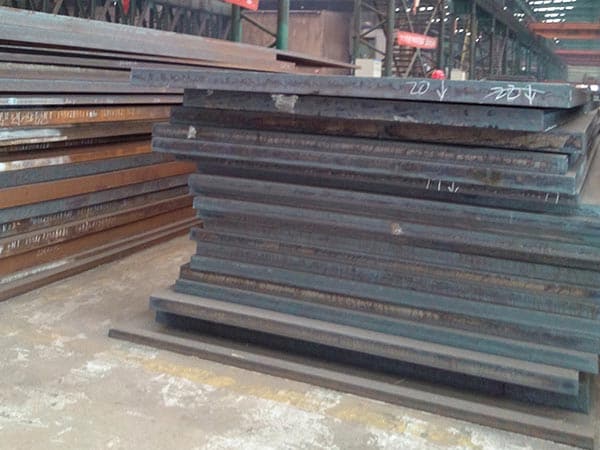
The Engineering Excellence of S420MC High-Strength Low-Alloy Steel
In the modern landscape of automotive manufacturing, the drive toward vehicle lightweighting and enhanced structural integrity has propelled S420MC steel to the forefront of material selection. As a thermomechanically rolled, high-strength low-alloy (HSLA) steel governed by the EN 10149-2 standard, S420MC is specifically engineered for cold forming applications where weight reduction and high load-bearing capacity are non-negotiable. This material bridges the gap between traditional carbon steels and ultra-high-strength grades, offering a balanced profile of ductility and strength.
The 'S' in S420MC denotes structural steel, '420' represents the minimum yield strength of 420 MPa, and 'MC' indicates that the steel is thermomechanically rolled (M) and intended for cold forming (C). Understanding these nuances is critical for engineers transitioning between European (EN) and American (ASTM) standards, as the substitution of materials requires a deep dive into chemical metallurgy and mechanical behavior.
Chemical Composition and Micro-Alloying Strategy
The superior performance of S420MC is not accidental; it is the result of precise micro-alloying. Unlike standard carbon steels, S420MC utilizes small additions of niobium (Nb), vanadium (V), and titanium (Ti). These elements act as grain refiners during the thermomechanical rolling process, creating a fine-grained microstructure that enhances both strength and toughness simultaneously.
| Element | Max Content (%) | Role in Metallurgy |
|---|---|---|
| Carbon (C) | 0.12 | Ensures weldability while maintaining strength. |
| Manganese (Mn) | 1.60 | Increases hardenability and tensile strength. |
| Silicon (Si) | 0.50 | Deoxidizer and solid solution strengthener. |
| Phosphorus (P) | 0.025 | Kept low to prevent brittleness. |
| Sulfur (S) | 0.015 | Controlled for improved lamellar tearing resistance. |
| Nb + V + Ti | 0.22 | Grain refinement and precipitation hardening. |
By maintaining a very low carbon content (max 0.12%), S420MC achieves exceptional weldability. This is a critical factor in automotive assembly lines where robotic spot welding and MIG/MAG welding are prevalent. The low carbon equivalent (CEV) ensures that the heat-affected zone (HAZ) does not become excessively brittle, maintaining the structural integrity of the frame or chassis.
Mechanical Properties: Yield, Tensile, and Elongation
The primary reason for selecting S420MC is its high yield-to-tensile ratio. For automotive structural components, the yield strength is the most critical parameter, as it defines the point at which permanent deformation occurs. S420MC provides a reliable safety margin for components subjected to dynamic loads.
- Yield Strength (ReH): Minimum 420 MPa (for thicknesses ≤ 16mm).
- Tensile Strength (Rm): 480 – 620 MPa.
- Elongation (A80mm): Minimum 16% to 19% depending on thickness.
- Bending Radius: Can typically be bent 180° with a radius of 0.5 to 1.5 times the thickness.
These properties allow manufacturers to use thinner gauges of steel compared to traditional S235 or S355 grades without sacrificing the load-carrying capacity of the vehicle. This "down-gauging" is the cornerstone of reducing CO2 emissions through vehicle weight reduction.
Identifying the ASTM Equivalent Steel Grade
For global procurement and engineering, finding the ASTM equivalent to S420MC is a frequent challenge. While no two standards are identical in every parameter, the closest matches are found within the ASTM A1011 and ASTM A572 specifications.
ASTM A1011 Grade 60 (Class 1) is often cited as the most functional equivalent for sheet and strip applications. Both materials target a yield strength in the 415-420 MPa range. However, S420MC typically offers tighter controls on impurities and a more refined grain structure due to the 'MC' thermomechanical processing requirement, which is more stringent than the standard hot-rolling processes often used for ASTM A1011.
| Feature | EN 10149-2 S420MC | ASTM A1011 Gr. 60 | ASTM A572 Gr. 60 |
|---|---|---|---|
| Yield Strength (min) | 420 MPa | 415 MPa (60 ksi) | 415 MPa (60 ksi) |
| Tensile Strength | 480-620 MPa | 520 MPa (min) | 520 MPa (min) |
| Formability | Excellent (Cold Forming) | Good | Moderate (Structural) |
| Processing | Thermomechanical Rolled | Hot Rolled | Hot Rolled |
When substituting S420MC with ASTM A1011 Grade 60, engineers must verify the minimum bending radius. S420MC is specifically optimized for tight bends in complex automotive geometries, whereas ASTM A1011 may require slightly larger radii to avoid micro-cracking on the outer tension surface.
Cold Forming and Processing Performance
The "C" in S420MC stands for cold forming, and this is where the material truly shines. It is designed to undergo significant deformation without failing. This makes it ideal for complex pressings, longitudinal beams, and cross-members in truck chassis. The consistency of the mechanical properties across the coil ensures that spring-back is predictable during automated stamping processes.
Laser Cutting and Punching: Due to its fine-grained structure and low internal stress, S420MC exhibits excellent behavior during laser cutting. The edges remain clean with minimal dross, and the material stays flat after cutting, which is essential for subsequent assembly steps. Similarly, in punching operations, the steel shows high resistance to edge cracking.
Welding Characteristics: S420MC is suitable for all standard welding methods. Because of the low carbon and low alloy content, preheating is generally unnecessary for standard thicknesses. This speeds up production cycles and reduces energy costs in the manufacturing plant.
Diverse Applications in the Automotive and Heavy Industry
While the automotive sector is the primary consumer of S420MC, its utility extends to any industry requiring high strength-to-weight ratios. In the automotive world, it is the standard for chassis parts, suspension systems, and reinforcement frames. The ability to absorb energy during an impact also makes it a candidate for certain crash-relevant components.
Beyond passenger cars, S420MC is widely used in:
- Heavy Truck Manufacturing: Frame rails, cross-members, and mounting brackets where durability under vibration is key.
- Agricultural Machinery: Plow frames, harvester components, and trailer chassis that must withstand harsh outdoor environments.
- Crane and Lifting Equipment: Telescopic booms and structural supports where weight savings at height translate directly to increased lifting capacity.
- Cold Pressed Profiles: Custom C-sections and Z-sections used in industrial racking and solar panel mounting structures.
Environmental Adaptability and Fatigue Resistance
S420MC demonstrates robust performance in varying environmental conditions. While it is not a "weathering steel" like Corten, its fine-grained structure provides a slightly better substrate for protective coatings (galvanizing or E-coating) than traditional hot-rolled steels. The surface quality of S420MC is typically superior, allowing for a more uniform zinc layer during hot-dip galvanizing, which is vital for long-term corrosion resistance in vehicle underbodies.
Fatigue resistance is another hallmark of this grade. Automotive components are subjected to millions of cycles of stress. The homogeneous microstructure of S420MC reduces the presence of "stress raisers" like large inclusions or coarse grains, thereby extending the fatigue life of the finished part. This reliability is why it remains a preferred choice for safety-critical structural components.
Procurement and Quality Assurance Considerations
When sourcing S420MC or its ASTM equivalents, it is imperative to request Mill Test Certificates (MTC) that comply with EN 10204 3.1. Buyers should pay close attention to the actual yield values and the elongation results. In high-precision automotive stamping, the consistency of these values from the start to the end of a coil is more important than the absolute maximum strength.
The market availability of S420MC is generally high, as it is a staple product for major steel mills worldwide. However, when exporting designs from Europe to North America, specifying "S420MC or ASTM A1011 Grade 60 with guaranteed minimum bending radius" ensures that the production line will not encounter unexpected cracking issues during the forming stage.
By leveraging the high-strength properties of S420MC, manufacturers can achieve a significant reduction in material consumption. This not only lowers the raw material cost per unit but also reduces the environmental footprint of the final product, aligning with global sustainability goals in the transport and construction sectors.
Leave a message