
What is the strongest s700mce galvanealed coil?
Discover the engineering excellence of S700MC galvannealed coils. This guide explores their 700MPa yield strength, micro-alloying chemistry, superior weldability, and corrosion resistance for high-performance industrial applications.
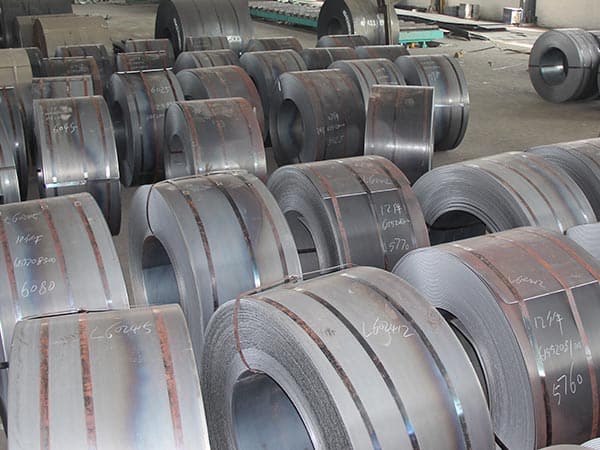
The Engineering Definition of S700MC Galvannealed Excellence
When discussing the peak of high-strength low-alloy (HSLA) steel performance, the S700MC grade stands as a benchmark for structural integrity and weight reduction. The "S" denotes structural steel, while "700" signifies a minimum yield strength of 700 MPa. The "MC" suffix indicates that the material has undergone thermo-mechanically controlled rolling, a process that refines the grain structure to achieve a balance of strength and toughness that traditional normalized steels cannot match. When this substrate is combined with a galvannealed (ZF) coating, the result is a material that not only supports immense loads but also provides an optimized surface for welding and painting in corrosive environments.
Mechanical Properties: Beyond the 700 MPa Threshold
The core appeal of S700MC galvannealed coils lies in their exceptional mechanical profile. While the 700 MPa yield strength is the headline figure, the tensile strength typically ranges between 750 and 950 MPa. This narrow window ensures predictable behavior during structural loading. Unlike lower-grade steels, S700MC maintains significant elongation properties, often exceeding 12% to 15% depending on the thickness, which allows for complex forming without immediate fracture risks.
| Property | Value (Metric) | Significance |
|---|---|---|
| Minimum Yield Strength | 700 MPa | High load-bearing capacity |
| Tensile Strength | 750 - 950 MPa | Resistance to ultimate failure |
| Minimum Elongation (A80mm) | 10-12% | Ensures ductility during forming |
| Impact Strength (-20°C) | 40J (Typical) | Low-temperature reliability |
The strength-to-weight ratio provided by S700MC allows engineers to reduce the thickness of structural components by up to 30% compared to S355 steel. This reduction is critical for mobile machinery and transport sectors where every kilogram saved translates directly into fuel efficiency or increased payload capacity.
The Galvannealing Process: A Superior Surface Solution
The "galvannealed" aspect of the coil refers to a specialized heat treatment applied after the hot-dip galvanizing process. In a standard galvanized (GI) coating, the zinc remains as a pure layer on the surface. In contrast, galvannealing involves heating the zinc-coated steel to approximately 500-560°C, inducing a diffusion reaction between the iron in the steel and the zinc on the surface. This creates a zinc-iron alloy coating, typically containing about 8% to 12% iron.
Why choose Galvannealed (ZF) over Galvanized (GI)?
- Enhanced Weldability: The iron content in the coating increases the electrical resistance, which is highly beneficial for spot welding processes commonly used in automotive assembly lines.
- Superior Paint Adhesion: The matte, microscopic matte-gray surface of a galvannealed coil provides an excellent mechanical key for powder coatings and liquid paints, eliminating the need for complex primers.
- Coating Hardness: The Zn-Fe alloy layers (Gamma, Delta, and Zeta phases) are significantly harder than pure zinc, offering better resistance to scratching and flaking during heavy-duty fabrication.
- Corrosion Protection: While the coating is thinner than some heavy GI coatings, the alloy layer provides a more stable barrier in specific atmospheric conditions, preventing the "white rust" common in pure zinc layers.
Micro-Alloying Chemistry and Grain Refinement
The strength of S700MC is not merely a result of heat treatment but is deeply rooted in its chemical composition. The use of micro-alloying elements such as Niobium (Nb), Vanadium (V), and Titanium (Ti) is essential. These elements facilitate grain refinement during the thermo-mechanical rolling process. By keeping the carbon content low (typically below 0.12%), the steel achieves excellent weldability and toughness without the brittleness associated with high-carbon structural steels.
The controlled addition of Manganese (up to 2.10%) enhances hardenability and solid solution strengthening, while Silicon levels are kept optimized to ensure the galvannealing reaction proceeds uniformly. This precise chemical balance ensures that the steel can withstand the thermal cycles of the galvannealing line without losing its 700 MPa yield strength.
Formability and Processing Characteristics
Despite its high strength, S700MC galvannealed coil is designed for cold forming. However, the high yield point requires specific considerations during the fabrication process. The minimum bending radius is typically 1.5 to 2.0 times the material thickness. Fabricators must account for "springback," which is more pronounced in 700 MPa steels than in mild steels. Advanced CNC press brakes with angle sensors are often employed to maintain dimensional accuracy.
Cutting S700MC is best achieved through laser or plasma methods. The low carbon equivalent (CEV) of the material ensures that the heat-affected zone (HAZ) remains narrow and does not become excessively hard or brittle. This is vital for maintaining the fatigue resistance of the final component, especially in parts subject to cyclic loading.
Strategic Applications Across Heavy Industries
The adoption of S700MC galvannealed coils is widespread in industries where performance and durability are non-negotiable. Within the heavy transport sector, it is the preferred material for truck chassis frames, cross-members, and side-protection devices. The ability to use thinner gauges without sacrificing safety allows for the design of lighter trailers that can carry more cargo.
In the lifting and construction equipment sector, S700MC is utilized for crane booms, outriggers, and telescopic sections. The high yield strength ensures that these components can withstand the immense bending moments experienced during operation. The galvannealed coating is particularly valued here, as these machines often operate in harsh outdoor environments where paint durability and corrosion resistance are paramount.
The renewable energy sector also benefits from this material. Support structures for solar trackers and wind turbine internal components utilize S700MC for its structural rigidity. The galvannealed surface ensures that these structures remain maintenance-free for decades, resisting the corrosive effects of moisture and UV exposure.
Welding Performance and Integrity
Welding S700MC requires an understanding of its thermo-mechanical origins. Because the strength is derived from grain refinement rather than high alloy content, the steel is remarkably easy to weld using standard methods like MAG (Metal Active Gas) or MIG (Metal Inert Gas). However, to preserve the mechanical properties in the heat-affected zone, heat input must be strictly controlled. Low heat input prevents excessive grain growth, which could otherwise lead to a localized reduction in strength.The galvannealed coating further assists in the welding process. Unlike pure zinc coatings which can cause significant spatter and electrode contamination, the Zn-Fe alloy layer is more stable. This results in cleaner welds and longer electrode life in automated production environments.
Environmental Adaptation and Sustainability
The move toward S700MC galvannealed steel is also a move toward sustainability. By enabling lightweighting, this steel reduces the carbon footprint of vehicles over their entire lifecycle. Less steel is required to build the same structure, reducing the initial energy consumption during manufacturing. Furthermore, the galvannealed coating is free from lead and hexavalent chromium, aligning with modern environmental regulations like REACH and RoHS.
The long-term durability provided by the Zn-Fe alloy layer means that structures have a longer service life, reducing the need for frequent replacements and lowering the total cost of ownership for end-users. This combination of high-strength performance and environmental resilience makes S700MC one of the most versatile materials in the modern metallurgical catalog.
Technical Comparison: S700MC vs. Standard Grades
To appreciate the "strongest" aspect of S700MC, one must compare it to the ubiquitous S355 grade. While S355 is the workhorse of the construction industry, S700MC offers double the yield strength. This allows for a radical redesign of structural components. In comparison to S500MC, the S700MC provides an additional 200 MPa of yield, which is often the tipping point for achieving significant weight savings in high-end engineering projects.
The integration of the galvannealed coating adds a layer of functionality that cold-rolled or standard hot-rolled S700MC lacks. It bridges the gap between raw structural power and finished-product aesthetics, making it a unique solution for manufacturers who require both strength and a high-quality surface finish without the need for secondary galvanizing after fabrication.
Final Technical Perspective
The S700MC galvannealed coil represents a sophisticated synergy of metallurgy and surface science. Its 700 MPa yield strength provides the foundation for advanced structural designs, while the micro-alloyed chemistry ensures that this strength does not come at the expense of fabricability. The galvannealed coating provides the final touch, offering a weldable, paintable, and durable shield against the elements. For industries ranging from automotive to heavy machinery, this material is not just a component; it is an enabling technology for the next generation of high-performance engineering.
Leave a message